

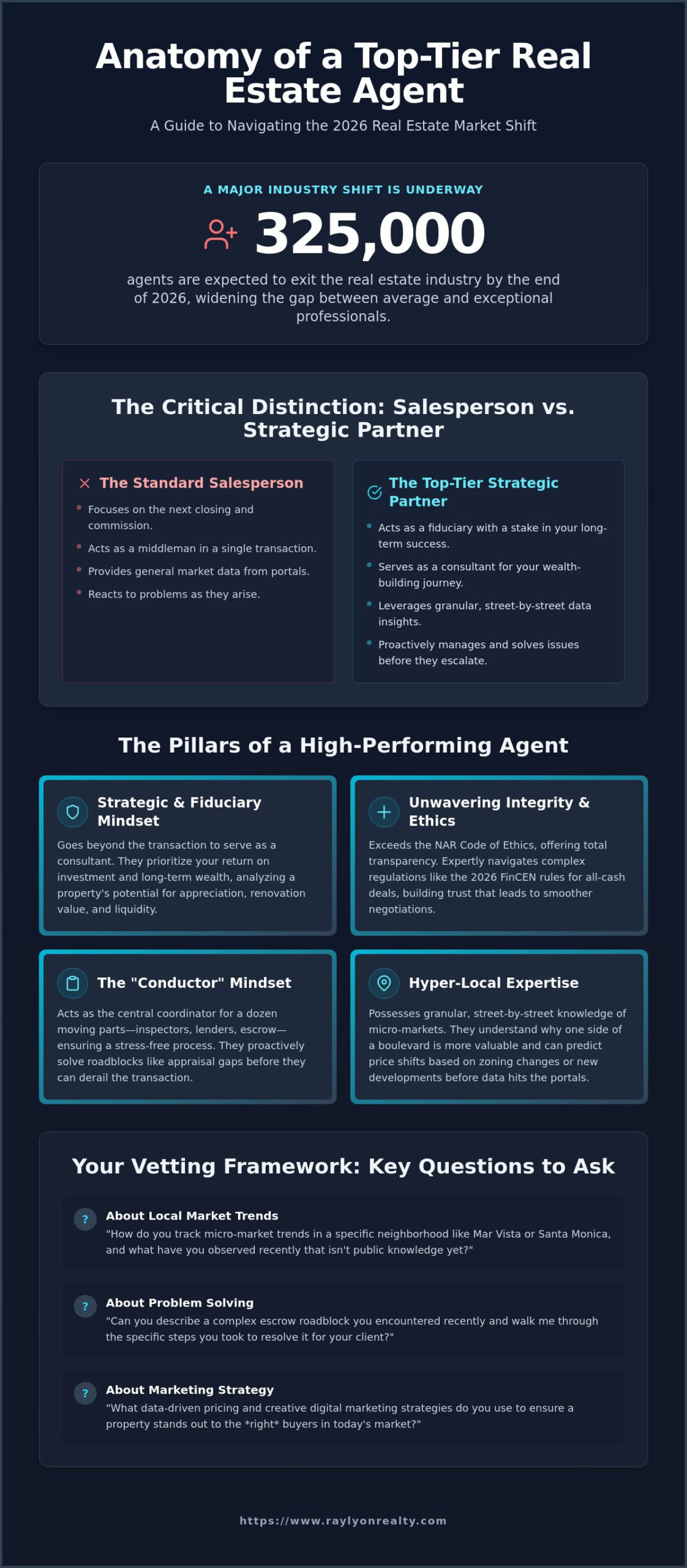
With nearly 325,000 agents expected to exit the industry by the end of 2026, the real estate market is undergoing a massive shift. You aren’t just looking for someone with a license; you’re looking for a strategic advantage. Understanding what makes a good real estate agent in this climate means looking beyond a friendly smile or a local bus bench ad. You need a partner who understands the 2026 FinCEN reporting rules for all-cash deals and the nuances of the post-NAR settlement commission landscape.
It’s stressful to think you might overpay for a home or undersell your biggest asset because of mediocre advice. You deserve more than feeling like just another transaction in a busy agent’s folder. We’ll show you how to identify a savvy negotiator who can save you thousands and provide access to off-market opportunities others miss. This guide breaks down the essential traits, from granular local data expertise to the high-level communication skills that ensure a stress-free escrow. We will explore how the best agents use deep market insights and strategic networking to win for their clients today.
Key Takeaways
- You’ll learn why a top-tier agent acts as a strategic consultant with a personal stake in your long-term success.
- Discover how granular, neighborhood-specific data, such as micro-market trends in Mar Vista or Santa Monica, provides a critical edge in a competitive market.
- Identify the specific negotiation tactics and problem-solving skills that determine what makes a good real estate agent when navigating complex escrow roadblocks.
- Understand the shift toward data-driven pricing and creative digital strategies that ensure your property stands out to the right buyers.
- Master a simple framework for vetting potential partners to ensure they have the specific experience and communication style your transaction requires.
Beyond the License: Defining a High-Performing Real Estate Agent
A license is just the ticket to enter the game, but it doesn’t guarantee a win. In 2026, the gap between a standard salesperson and a top-tier professional is wider than ever. A top-tier agent is a strategic consultant with a personal stake in the client’s long-term success. While many focus on the next closing, a high-performer acts as a fiduciary who prioritizes your return on investment over a quick commission check. They view themselves as a partner in your wealth building, not just a middleman in a transaction.
To understand the foundational requirements of the role, it helps to look at what a real estate agent does on a daily basis. They manage everything from legal disclosures to market analysis. However, what makes a good real estate agent stand out is the transition from being a “salesperson” to becoming a “strategic real estate partner.” This means they don’t just find you a house; they analyze the property’s potential for appreciation, renovation value, and long-term liquidity.
To better understand the skills that separate the good from the great in today’s market, watch this helpful video:
The Baseline: Integrity and Professional Ethics
Honesty isn’t just a moral choice; it’s a practical business tool. In a market shaped by the 2026 Financial Crimes Enforcement Network (FinCEN) reporting requirements for all-cash deals, transparency is non-negotiable. A reputable agent uses their integrity to build trust with other professionals, which often leads to smoother negotiations and faster problem-solving. They should also provide clear guidance on different estate agency structures so you know exactly who they represent. This clarity protects you from the legal and financial risks that come with complex modern regulations. Adhering to the NAR Code of Ethics is the bare minimum. The best agents exceed these standards by offering total transparency in every communication.
The “Conductor” Mindset: Managing the Transaction Symphony
A real estate deal involves a dozen moving parts, from inspectors and lenders to escrow officers and title companies. A great agent acts as the conductor of this symphony. They coordinate every detail to ensure you don’t feel the stress of the process. In high-pressure market conditions, roadblocks like appraisal gaps or sudden repair demands are common. A resourceful agent stays calm and finds solutions before these issues derail the sale. Their attention to detail in contracts is what prevents expensive legal delays. It’s this level of proactive management that truly defines what makes a good real estate agent in a challenging economy. They handle the noise so you can focus on the big picture.
Granular Local Knowledge: The Strategic Advantage of an Insider
“Los Angeles” is a category, not a market. When you’re buying or selling on the Westside, you need more than a generalist who works the entire county. You need someone who understands why a house on one side of Venice Blvd carries a different premium than the other. While the official duties of a real estate agent include researching property listings and local market conditions, the best in the business dig much deeper. They track micro-market trends in neighborhoods like Santa Monica and Mar Vista with surgical precision.
This level of insight is what makes a good real estate agent a strategic asset rather than just a tour guide. They don’t wait for portal data to tell them where prices are going. They see the shifts in real time because they’re active on these streets every day. They know which new coffee shop openings signal a neighborhood’s rise and which upcoming zoning changes will impact your property value five years down the road. This foresight allows them to predict price shifts before they ever appear on major real estate portals.
Street-by-Street Nuance in the Westside LA Market
Value in the Westside can shift significantly within a few hundred yards. School district boundaries, historic preservation zones, and even the direction of ocean breezes can impact a home’s worth. A professional doesn’t just look at “comps” in a three-mile radius; they look at the specific history of your street. For example, our Mar Vista neighborhood guide serves as a benchmark for the kind of granular detail you should expect. Your agent should know the difference between the Hilltop and the flats, and how those nuances affect your long-term ROI. If you want to gain this competitive edge, reaching out to a local specialist is the most effective way to start your search.
Access to Off-Market and Non-Public Opportunities
In a competitive market, the best opportunities are often found behind the scenes. You’ve likely heard of “pocket listings.” While the industry has changed how these are handled, the reality remains that networking is king. A well-connected agent leverages deep roots in Santa Monica to identify potential sellers before they ever hit the MLS. They act as your filter, giving you a first look at “coming soon” inventory that never reaches public portals. This insider access is a primary driver of what makes a good real estate agent essential in a low-inventory market. They find the deals that others don’t even know exist, ensuring you aren’t just fighting for the same picked-over listings as everyone else.
Mastering the Art of Empathetic Negotiation and Problem Solving
Negotiation isn’t about being the loudest person in the room. The most effective negotiators often listen far more than they speak. By understanding the motivations of the other party, a professional can find leverage that isn’t always tied to the price tag. Strategic empathy is the ability to understand a seller’s emotional or logistical needs to win a bidding war without overpaying. This psychological edge is a core part of what makes a good real estate agent in a market where inventory remains tight.
Finding “win-win” solutions keeps deals from falling apart when emotions run high. Instead of pushing for a “win” at the other party’s expense, a savvy agent looks for concessions that satisfy everyone. This might mean adjusting a closing date or offering a lease-back period. These qualities of a good real estate agent go beyond just signing paperwork; they require a high level of emotional intelligence and deep market experience.
Anticipating and Solving Escrow Roadblocks
A pro doesn’t wait for a problem to appear. They anticipate potential issues like appraisal gaps or difficult inspection reports before they even happen. If an appraisal comes in low, a problem-solver mindset is essential. They don’t just tell you the bad news. They present a plan. This might involve challenging the appraisal with better data or renegotiating the purchase price. This proactive approach is vital in complex scenarios like a 1031 exchange or a trust sale, where timelines and legal requirements are strict. Turning a potential deal-breaker into a minor hurdle is what separates veterans from novices.
Winning Bidding Wars in Competitive Markets
In the Westside market, price is rarely the only factor. Sellers want certainty. Crafting a “clean” offer means removing unnecessary contingencies and showing the seller that you are prepared to close. A skilled real estate agent in Los Angeles CA spends years building rapport with listing agents. This professional respect can be the deciding factor in a multi-offer situation. When a listing agent knows your partner is reliable and easy to work with, your offer moves to the top of the pile.
Data-backed confidence is your best defense against overpaying. By analyzing current market velocity and recent sales, your agent helps you make an aggressive offer that remains safe. Understanding what makes a good real estate agent means finding someone who uses numbers to support your strategy, not just their gut feeling. This approach ensures you win the home you want without the regret of a bad investment.
Modern Marketing and Digital Strategy: Why “Good” Isn’t Enough
Putting a sign in the front yard and uploading a few blurry photos to the MLS won’t cut it anymore. In 2026, the digital landscape moves too fast for passive marketing. Part of what makes a good real estate agent today is their ability to act as a part-time creative director. They don’t just list a property; they launch a brand for it. This involves a sophisticated marketing stack that includes short-form video, hyper-targeted social ads, and immersive digital tours that allow buyers to “walk” the home from across the globe.
Maximizing sale value requires a proactive approach to property presentation. Staging and minor cosmetic upgrades are no longer optional extras. They are essential tools for capturing attention in a crowded digital feed. The best agents have a curated list of specialists, from lighting experts to professional stagers, who know exactly how to highlight a home’s best features. If you’re ready to see how a strategic marketing plan can transform your sale, it’s time to book a consultation with our team.
High-End Staging and Visual Storytelling
In luxury markets like Santa Monica, professional staging offers a significant return on investment. It’s about selling a lifestyle, not just square footage. High-quality visual storytelling uses lighting and narrative-driven photography to create a “vibe” that resonates with high-net-worth buyers. In 2026, this also means adhering to California law regarding digitally altered photos. A professional ensures all alterations are disclosed and provides access to original images, protecting you from potential legal disputes. When a buyer can see themselves living in the space, they’re more likely to make a decisive, high-value offer.
Data-Driven Pricing and Targeted Exposure
Effective pricing goes far beyond looking at a few “comps” or a Comparative Market Analysis (CMA). Top-tier agents analyze absorption rates and buyer heat maps to find the pricing sweet spot. This data-driven approach ensures your home isn’t just sitting on the market, but actively attracting qualified interest. It’s particularly crucial for investment property sales, where the numbers must be airtight to attract savvy buyers.
Targeted exposure is the final piece of the puzzle. Using social media algorithms, an agent can find specific “out of area” buyers who are looking to relocate to the Westside. They leverage a broad professional network to ensure your property is seen by the right people, not just the most people. This combination of creative flair and analytical rigor is exactly what makes a good real estate agent an indispensable partner in 2026.
The Selection Framework: How to Hire Your Real Estate Partner
Hiring an agent shouldn’t feel like a lottery. While many search portals focus strictly on the number of homes sold, volume alone doesn’t tell you what makes a good real estate agent for your specific needs. You need to vet for experience that matches your property type and price point. If you’re selling a luxury listing in Santa Monica, an agent who primarily handles entry-level condos elsewhere won’t have the specific network or strategy required to maximize your return.
This principle holds true in every major city; for instance, if you are looking for similar high-end expertise in the Chicago market, you can read more about how local specialists manage prestigious real estate assets.
Communication is the heartbeat of a successful escrow. Test their responsiveness before you sign a listing agreement. Do they answer their own phone, or are you constantly redirected to a junior assistant? In a market where 30-year fixed mortgage rates sit near 6.5% and new federal regulations like the 2026 FinCEN rules add layers of paperwork, a slow response can derail a deal. You need a partner who is present and proactive, not someone who sees you as just another transaction.
Testing for local granular knowledge is non-negotiable. During your first interview, ask about recent street-level price shifts or upcoming local developments. A true expert should know these details without checking their laptop. Personal investment experience is another major indicator of quality. Agents who have their own “skin in the game” through property flipping or portfolio management offer advice rooted in real-world risk and reward. This background is a core part of what makes a good real estate agent a true advisor rather than just a salesperson.
Key Questions to Ask Every Potential Agent
- “What is your specific strategy for this specific neighborhood?” (Generic answers are a red flag.)
- “How many of your last five deals involved off-market properties?” (This proves their networking strength.)
- “Who on your team will be my primary point of contact?” (Ensure you aren’t being handed off to a novice after the initial meeting.)
The Ray Lyon Advantage: Strategic, Local, and Personal
At Ray Lyon Realty, we bridge the gap between traditional brokerage and property development. Our history with renovation and investment means we see the potential and pitfalls that others miss. We know the risks because we’ve taken them ourselves. This firsthand experience allows us to provide a level of strategic guidance that goes beyond standard market reports. We don’t just facilitate a sale; we manage your asset with a personal stake in your success.
Our boutique approach ensures you are always a top priority. We intentionally limit our active client list to provide high-touch, empathetic service that large, volume-driven teams can’t match. By combining deep Westside roots with a savvy, resourceful nature, we secure exclusive opportunities that give our clients a distinct competitive advantage. We believe in transparency, local expertise, and a commitment to making every transaction as stress-free as possible.
Secure Your Competitive Edge in the 2026 Market
The real estate landscape is shifting toward data-driven strategies and personalized, high-touch service. You’ve learned that a top-tier partner provides more than just access to the MLS. They offer granular insights into micro-markets like Santa Monica and Mar Vista, while leveraging a modern marketing stack to maximize your property’s value. From mastering empathetic negotiation to navigating new federal regulations, the right advisor acts as a fiduciary who is deeply invested in your long-term financial success.
Ultimately, what makes a good real estate agent is the ability to combine local expertise with a savvy, entrepreneurial mindset. At Ray Lyon Realty, we bring firsthand property development and flipping experience to every transaction. Whether you are focused on luxury listings or investment property sales, our boutique approach ensures your goals are our top priority. You don’t have to navigate this complex market alone. Partner with a strategic Westside LA expert; contact Ray Lyon Realty today. We are ready to help you turn your real estate goals into a stress-free reality.
Frequently Asked Questions
What is the most important quality in a real estate agent?
Resourcefulness and strategic thinking are the most important qualities. A top-tier professional doesn’t just show houses; they solve problems before they reach the escrow table. They act as a high-level consultant who prioritizes your long-term wealth over a fast paycheck. This proactive mindset is a key part of what makes a good real estate agent in a fluctuating economy.
How do I know if an agent has good local knowledge?
Test them on hyper-local data points that aren’t available on major search portals. Ask about upcoming city council decisions, local school traffic patterns, or the history of a specific block. If they can’t discuss neighborhood-specific nuances without checking a device, they likely don’t have the deep-rooted expertise you need for a competitive advantage.
Is it better to hire a solo agent or a large real estate team?
It depends on your priority, but boutique agents often provide more personalized, high-touch service. Large teams might have higher transaction volumes, but you may end up working with a junior assistant rather than the lead professional. A solo or boutique partner ensures you are a top priority, offering the direct communication essential for a stress-free transaction.
What should I look for in an agent’s past sales history?
Look for property types and price points that mirror your own. High volume is less impressive than relevance. If you’re selling a luxury estate, an agent who has closed fifty entry-level condos won’t have the right marketing stack or network. Check for a consistent track record in your specific niche to ensure they understand your buyer demographic.
Can a good real estate agent help me find off-market homes?
Yes, a well-connected agent is your best source for inventory that never hits the public market. By leveraging long-standing relationships with other local professionals, they can identify potential sellers before a listing is finalized. This insider access is a primary driver of what makes a good real estate agent essential during periods of low inventory.
What are the red flags of a bad real estate agent?
Poor communication and a lack of data-backed advice are major red flags. If an agent takes days to return a text or agrees with every price you suggest without providing market evidence, they aren’t acting as a fiduciary. Beware of “yes-men” who prioritize getting the listing over giving you the honest, strategic advice needed to win.
How much do the best real estate agents charge in 2026?
Commission rates remain negotiable, though the national average in early 2026 sits at approximately 5.70%. Following the NAR settlement, buyers are now contractually responsible for their agent’s fee, though sellers often offer it as a concession. The best agents justify their cost by saving you far more through expert negotiation and avoiding expensive contractual errors.
Should I hire an agent who specializes in my specific neighborhood?
Neighborhood specialization is vital for micro-market accuracy. Real estate values on the Westside can change street by street. An agent who knows the specific demand for a neighborhood like Mar Vista can price your home more effectively than a generalist. This granular focus helps you avoid overpaying or underselling based on broad, inaccurate averages.