

If you’ve ever watched a British property show, you’ve likely heard the term ‘estate agency’ and wondered how it applies to the American market. Is it just another name for a real estate brokerage, or is there more to it? The truth is, while the terms are often used interchangeably, understanding the structure and function of a modern estate agency is the first step toward a successful property transaction. It can feel overwhelming, but having the right information makes all the difference.
For example, if you are looking in the high-end market, you’ll want a team with a specific portfolio in that area. It can be helpful to discover more about Luxury Estate Sales to see how a specialized agency presents its services and expertise.
This guide is designed to cut through the jargon and give you clarity. We’ll break down exactly what these professionals do beyond just showing homes, from strategic marketing to navigating complex negotiations. You’ll learn the key differences between an agent, a broker, and a Realtor, and get a transparent look at how commissions really work. By the end, you’ll feel confident and equipped to choose the right partner for your property journey, ensuring you have a dedicated expert in your corner.
Key Takeaways
- Learn the key difference between a UK “estate agency” and a US “real estate agency” to start your property search with clarity.
- Discover the full range of services top agents provide, from strategic pricing for sellers to uncovering off-market deals for buyers.
- Understand why local, expert representation is crucial for gaining a competitive advantage in a fast-paced market like the LA Westside.
- Get a practical, step-by-step checklist to help you vet and select the perfect real estate partner for your specific needs.
Demystifying the Term: Estate Agency vs. Real Estate Agency in the US
If you’re searching for an “estate agency” in the United States, you’ve come to the right place-you just need a quick translation. The term estate agency is standard in the United Kingdom, but here in the US, we call it a real estate agency or, more commonly, a brokerage. While the names are different, the core mission is the same: to provide dedicated, professional representation for people buying and selling property.
To help clarify the concept, this short video gives a great overview of how these businesses operate:
A real estate brokerage is the operational hub where licensed professionals work together. Understanding the different roles within the agency is key to knowing who you’re working with and the expertise they bring to your transaction. It’s not just a collection of individuals; it’s a structured team designed to support you.
Key Roles Explained: Agent, Broker, and Realtor®
Navigating the titles can be confusing, but the hierarchy is straightforward. Here’s a simple breakdown of the main professionals you’ll encounter:
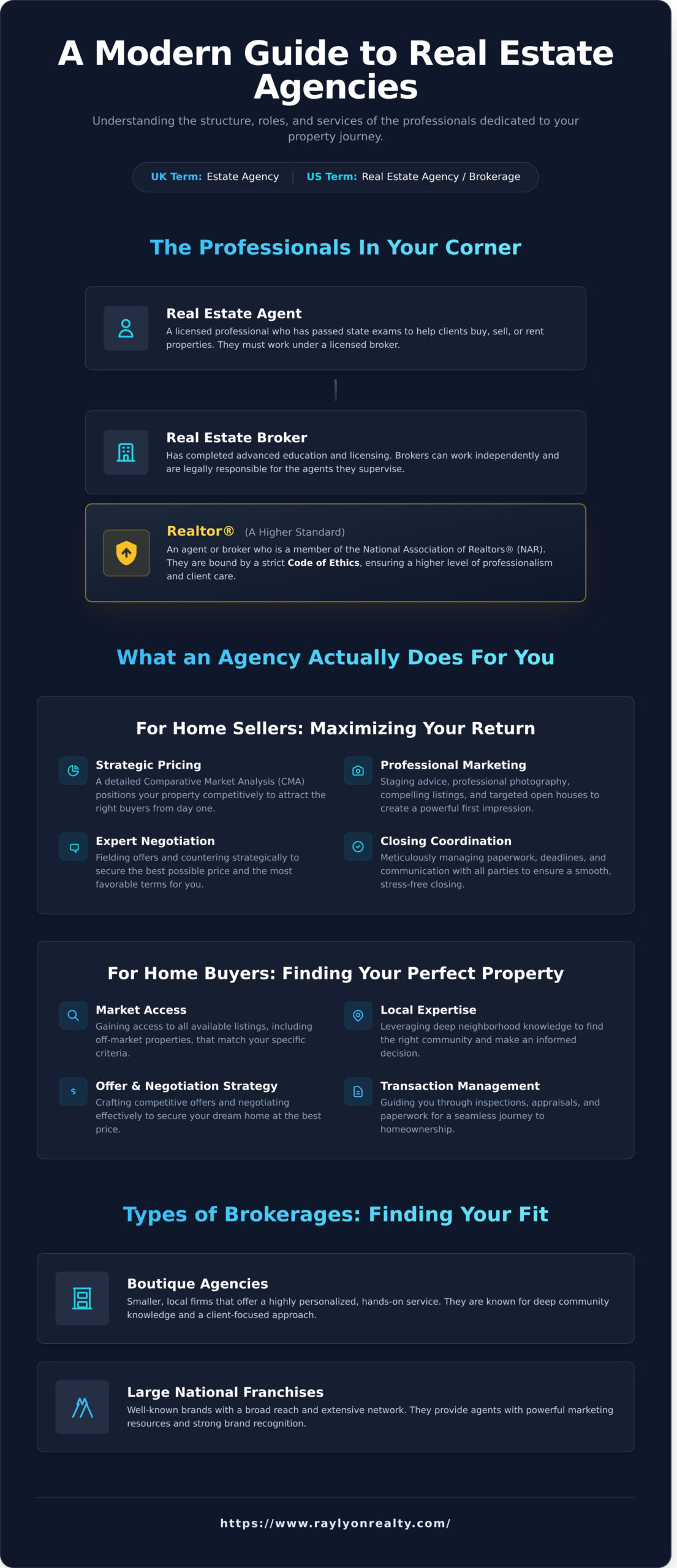
- Real Estate Agent: A licensed real estate agent is a professional who has passed state-required exams to help clients buy, sell, or rent properties. They must work under a licensed broker to conduct business.
- Real Estate Broker: A broker has completed advanced education and licensing requirements beyond the agent level. They can work independently and supervise other agents, taking on legal responsibility for their transactions.
- Realtor®: This isn’t a generic job title. A Realtor® is a licensed agent or broker who is a member of the National Association of Realtors® (NAR). They are bound by a strict Code of Ethics, which holds them to a higher standard of professionalism and client care.
The Structure of a Modern Brokerage
Every real estate agent works under the umbrella of a brokerage, led by a managing broker. This structure ensures legal compliance, provides administrative support, and offers agents access to powerful marketing resources. Brokerages come in all sizes, from small, local boutique agencies that offer highly personalized service to large national franchises known for their broad reach and brand recognition. The right choice often depends on your specific needs, but a brokerage’s local reputation and deep community knowledge are always critical factors for success.
The Core Services: What a Real Estate Agency Actually Does for You
It’s a common misconception that real estate agents just unlock doors and collect a check. The reality is that a dedicated estate agency provides a suite of strategic, analytical, and negotiation services designed to protect your interests and maximize your investment. The value is earned through a complex process, and understanding how real estate commissions work helps clarify the immense expertise a professional brings to the table. Going it alone often means facing market analysis, legal paperwork, and high-stakes negotiations without a guide. With an agent, you have a professional partner navigating every step.
For Home Sellers: Maximizing Your Return
Our goal is to sell your home faster and for top dollar, removing stress from the equation. We manage the entire process with a data-driven strategy, turning a potentially overwhelming task into a streamlined success. This includes:
- Strategic Pricing: We don’t guess your home’s value. We conduct a detailed Comparative Market Analysis (CMA) to position your property competitively from day one.
- Professional Marketing: We create a powerful first impression with professional photography, staging advice, compelling listings on all major platforms, and targeted open houses.
- Expert Negotiation: From fielding multiple offers to countering strategically, we work to secure the best possible price and the most favorable terms for you.
- Closing Coordination: We meticulously manage the paperwork, deadlines, and communication between inspectors, appraisers, and attorneys to ensure a smooth closing.
For Home Buyers: Finding Your Perfect Property
In a competitive market, you need more than just an app-you need a competitive advantage. We act as your personal guide, providing the deep market knowledge and strategic counsel necessary to find and win your ideal home.
- Needs Assessment & Search: We listen to your goals to curate a list of properties that fit your life, including exclusive access to off-market opportunities you won’t find online.
- Deep Neighborhood Knowledge: We provide true “block-by-block” insights on schools, amenities, and market trends to help you find the right community.
- Crafting Winning Offers: We help you structure a competitive offer that stands out in a bidding war, advising on contingencies and terms that protect your interests.
- Transaction Management: We coordinate with your lender, home inspector, and escrow officer to keep the process on track from offer acceptance to getting the keys.
Specialized Services for Investors
For those looking to build wealth through real estate, our services extend beyond traditional buying and selling. A savvy estate agency can be a crucial partner in growing your portfolio. We offer guidance on identifying properties with high ROI potential, navigating complex deals like 1031 exchanges, and advising on strategies for flipping or building a rental portfolio.
How Real Estate Agencies Get Paid: A Clear Guide to Commissions
Understanding the financial side of a real estate transaction is key to feeling confident and in control. Let’s demystify how agents are compensated for their expertise and hard work. The most common structure is the commission model, which is designed to align your agent’s success directly with your own.
The Traditional Commission Split
In a typical residential sale, the commission is paid by the seller from the proceeds of the home sale at closing. This means there are generally no out-of-pocket fees for the seller to hire an agent. This single commission is then divided among multiple parties. Here’s a simple breakdown:
- Listing Agency & Buyer’s Agency: The total commission is first split between the seller’s brokerage and the buyer’s brokerage. This split incentivizes buyer’s agents to bring qualified purchasers to the property.
- Agent & Brokerage: From there, each agent (buyer’s and seller’s) shares a portion of their commission with their managing brokerage. The brokerage provides essential support like legal compliance, marketing resources, and office administration.
Is the Commission Rate Negotiable?
Yes, real estate commissions are not fixed by law and can be negotiable. The rate often reflects the level of service, the agent’s experience, and local market conditions. While it may be tempting to choose an agent based on the lowest fee, it’s crucial to consider the value provided. A top-tier estate agency invests heavily in professional marketing, strategic pricing, and expert negotiation-all services designed to secure you the highest possible sale price. Choosing a discount option might save a percentage point on commission but could cost you much more in the final sale price.
Alternative Models: Flat-Fee and Discount Brokerages
While the traditional model is standard, you might encounter other options. Flat-fee services charge a set price for listing your home, often with “a la carte” options for additional support. Discount brokerages offer a lower commission rate but may provide limited services. These can be viable for experienced sellers, but they often require you to manage more of the process yourself, from showings to negotiations. For most people, the comprehensive support and fiduciary duty offered by a full-service agent provide peace of mind and deliver a superior financial outcome.
Why an Agency is Crucial in a Competitive Market like Los Angeles
In a real estate market as fast-paced and competitive as Los Angeles, simply finding a home is only half the battle. On the Westside, from Santa Monica to Mar Vista, high demand and historically low inventory create an environment where every advantage counts. This is where a professional estate agency isn’t just a convenience-it’s a necessity for success. An expert partner provides the strategy, network, and local knowledge needed to navigate this challenging landscape.
Navigating Bidding Wars and Multiple Offers
When a desirable property hits the market, you can expect multiple offers. An experienced agent does more than just submit your bid; they craft a compelling offer designed to win. This involves strategic pricing, advising on contingencies, and using tools like escalation clauses to stay competitive. Crucially, they manage communication with the listing agent, positioning you as the strongest and most reliable buyer at the table.
Access to Off-Market Properties
Did you know that some of the best properties never appear on public websites? These “pocket listings” or off-market deals are shared within a trusted network of agents. Partnering with a well-connected local agent gives you exclusive access to these opportunities, allowing you to see and make offers on homes before the general public even knows they’re for sale-a significant competitive advantage for any serious buyer.
Expertise in Local Regulations and Nuances
Each LA neighborhood has its own unique character, zoning laws, and building regulations. An agent with deep, block-to-block knowledge of areas like Mar Vista or Santa Monica can help you avoid costly mistakes, from understanding ADU (Accessory Dwelling Unit) potential to navigating local permit processes. This hyper-local expertise from a dedicated estate agency ensures you’re making a sound, informed investment.
From securing an off-market deal to winning a bidding war, the right guidance provides the strategic edge essential for success. It’s about turning a stressful, competitive process into a confident and successful transaction. Navigating the LA market requires a dedicated expert on your side. See how we can help.
How to Choose the Right Real Estate Agency: A Practical Checklist
Selecting the right partner for your real estate journey is one of the most important decisions you’ll make. The right agent can secure you a better price, a smoother process, and genuine peace of mind. This checklist is designed to empower you to vet candidates and find a dedicated professional who truly aligns with your goals.
Step 1: Research and Shortlist Candidates
Start by doing your homework online. Look for an estate agency with consistently positive reviews on Google and other reputable online platforms, and check their website for client testimonials and a portfolio of recent sales. Pay close attention to their specialization-do they have deep, block-to-block knowledge of your desired neighborhood? Ensure they have proven experience with your property type, whether it’s a condo, a single-family home, or an investment property. Finally, a quick search on your state’s real estate commission website can verify their license is active and in good standing.
Step 2: Key Questions to Ask in an Interview
Treat this process like a job interview, because it is. You are hiring a professional to manage a significant financial asset. Prepare a list of questions to ask each potential agent:
- How long have you been a full-time agent in this specific market?
- What is your marketing strategy for a home like mine? (For sellers) / How do you find off-market opportunities? (For buyers)
- Can you provide references from two or three recent clients?
- How will you communicate with me, and how often can I expect updates?
- What sets you apart from other agents?
Step 3: Red Flags to Watch Out For
Just as important as knowing what to look for is knowing what to avoid. Be cautious of agents who:
- Suggest an unrealistically high price. This tactic, known as “buying the listing,” often leads to price reductions and a longer time on the market.
- Pressure you to sign. A true professional will give you the time and space needed to make an informed decision without feeling rushed.
- Communicate poorly. If they are unresponsive or unprofessional before you’ve even signed on, it’s a preview of the service you’ll receive.
- Work part-time. Real estate moves quickly. A part-time agent may not have the availability required for timely showings and negotiations.
Ultimately, the best professional relationship is built on trust, expertise, and shared goals. We believe in earning that trust from our very first conversation. If you’re ready to work with a dedicated team, we’re here to help.
The Right Agency Makes All the Difference
Navigating the property market, whether you’re buying or selling, requires a trusted partner. As we’ve covered, a real estate agency does more than just list homes; they provide expert guidance, manage complex negotiations, and ensure your financial interests are protected. In a dynamic market like Los Angeles, this partnership isn’t just a convenience-it’s a critical advantage for achieving top dollar or securing your dream home.
If you’re ready to partner with a dedicated estate agency that combines a proven track record with a personalized, client-first approach, we’re here to help. At Ray Lyon Realty, our deep, block-to-block knowledge of the LA Westside-from Santa Monica to Mar Vista and Venice-gives our clients an undeniable edge. We believe your success is our success, and we’re committed to making your real estate goals a reality.
Ready to see how an expert can make a difference? Find out what your home is worth with a local expert. Your successful property journey starts here.
Frequently Asked Questions About Real Estate Agencies
What’s the difference between a real estate agency and a brokerage?
Think of a brokerage as the licensed company and the agency as the professional relationship. A brokerage is the business entity, run by a managing broker, that all agents must work under. The terms are often used interchangeably, but the brokerage is the legal umbrella that ensures compliance and oversees all transactions. An agent from a brokerage acts on your behalf, creating the agency relationship and representing your interests.
Do I have to sign an exclusive agreement with a real estate agency?
While not required to start a conversation, signing an exclusive agreement is a standard and highly recommended practice. For sellers, this is a listing agreement; for buyers, it’s a buyer-broker agreement. This contract formalizes the relationship, ensuring your agent is fully committed to representing your best interests. It dedicates their time, resources, and expertise to achieving your specific goals, creating a partnership built on trust and focus.
Can I use an agent to help me buy a new construction home from a builder?
Absolutely, and you should. The friendly on-site agent at a new development works for the builder, not you. Bringing your own agent ensures you have an expert representing your financial interests. They can help you navigate the builder’s contract, negotiate upgrades or closing costs, and provide an unbiased perspective on the property’s long-term value. It’s crucial to have your agent with you on your very first visit to the model home.
How has technology like Zillow and Redfin changed the role of an estate agency?
Technology has empowered consumers with incredible access to property data, which is a great thing. However, it has shifted the role of a modern estate agency from a gatekeeper of information to an expert interpreter and strategist. An experienced agent provides context to the data, identifies off-market opportunities you won’t find online, and masterfully manages the complex negotiations, inspections, and paperwork required to get a deal to the finish line successfully.
What happens if I’m unhappy with the service from my real estate agent?
Your first step should always be to communicate your concerns directly and clearly with your agent. Open dialogue can often resolve misunderstandings. If you still feel the partnership isn’t working, you should contact their managing broker. The broker oversees all agents at the firm and can offer mediation, provide a solution, or, if necessary, reassign you to another agent who may be a better fit for your needs.
Are boutique agencies like Ray Lyon Realty better than large national brands?
It truly depends on what you value most. Large brands offer name recognition, while boutique firms often provide a more personalized, hands-on approach. With a local boutique agency, you frequently get direct access to the owner or principal broker and benefit from deep, block-by-block market knowledge. This insider expertise can be a significant competitive advantage when finding the perfect home or securing top dollar for your sale.