
What if the most expensive zip code in Los Angeles is also its most misunderstood? You likely recognize Venice for its world-class walkability and the “Silicon Beach” labels that drew major tech players to the sand since 2011. It’s easy to fall in love with a neighborhood where you can grab a coffee on Abbot Kinney and be on the water in four minutes. However, the reality of the pros and cons of living in Venice Beach is more complex than a sunset photo.
I understand the hesitation that comes with high property taxes and the shifting safety concerns that residents have faced over the last 24 months. You want to know if the investment still makes sense for your family. I’m going to give you an insider’s look at the 2026 ROI potential and identify the specific blocks that offer peace without losing proximity. we’ll explore if the tech presence still drives value and how to find those elusive off-market deals in a market where parking is a luxury and every street has a different story.
Key Takeaways
- Understand how the “Silicon Beach” evolution and post-Olympic infrastructure have reshaped Venice into LA’s premier creative-tech hub for 2026.
- Get an unfiltered look at the pros and cons of living in Venice Beach, balancing world-class walkability against the urban realities of the “Venice Grit.”
- Identify the perfect micro-neighborhood for your lifestyle, whether you seek the prestige of the Canals or the family-friendly Silver Triangle.
- Learn how to use the “lipstick” strategy and tap into off-market deals to secure the best value in a competitive coastal market.
- Gain “block to block” knowledge from a local expert to successfully navigate the blend of bohemian roots and high-net-worth residency.
Living in Venice Beach in 2026: The “Silicon Beach” Reality
Venice Beach has evolved into LA’s premier creative-tech hub. By 2026, the neighborhood has successfully balanced its coastal bohemian roots with a steady influx of high-net-worth residents. To understand the pros and cons of living in venice beach, you have to look at the post-Olympic infrastructure updates that have revitalized the area. This isn’t the same neighborhood it was a decade ago. The History of Venice Beach shows a transformation from a seaside resort to a gritty artist colony, and now, to a global tech center.
My “block-to-block” philosophy is essential for anyone moving here. You might find a $5 million modern architectural masterpiece on one street and a pocket of original bungalows needing a little “lipstick” on the next. Your daily experience changes completely depending on which side of Abbot Kinney you land. While some buyers still compare these streets to Santa Monica real estate for contextual value, Venice offers a distinct, raw energy that is hard to find elsewhere on the Westside.
To see how this coastal lifestyle compares to other popular destinations, watch this helpful video:
The Cultural Identity of Venice
Venice is where world-class street art meets the high-end retail of Abbot Kinney. In 2026, the “Venice Vibe” still attracts entrepreneurs who want to surf before their first morning meeting. Community-led initiatives have become the backbone of neighborhood safety. Local groups now work alongside city officials to maintain the boardwalk’s 2026 evolution, ensuring the area remains vibrant yet accessible. It is a place where you can grab a premium espresso and walk past a mural that has defined the streetscape since the 1990s.
Who is Venice For?
The typical 2026 resident is a tech professional, a remote-work creative, or a savvy coastal investor. We are seeing more young families choose specific Venice pockets over traditional suburbs. They want the walkability and the unique culture that defines this zip code. When weighing the pros and cons of living in venice beach, consider your appetite for a fast-paced, evolving urban environment. The “Silicon Beach” effect has turned local property demand into a high-stakes competition where off-market deals are often the only way to secure a prime location near the sand.
The Major Pros: Why People Fall in Love with Venice
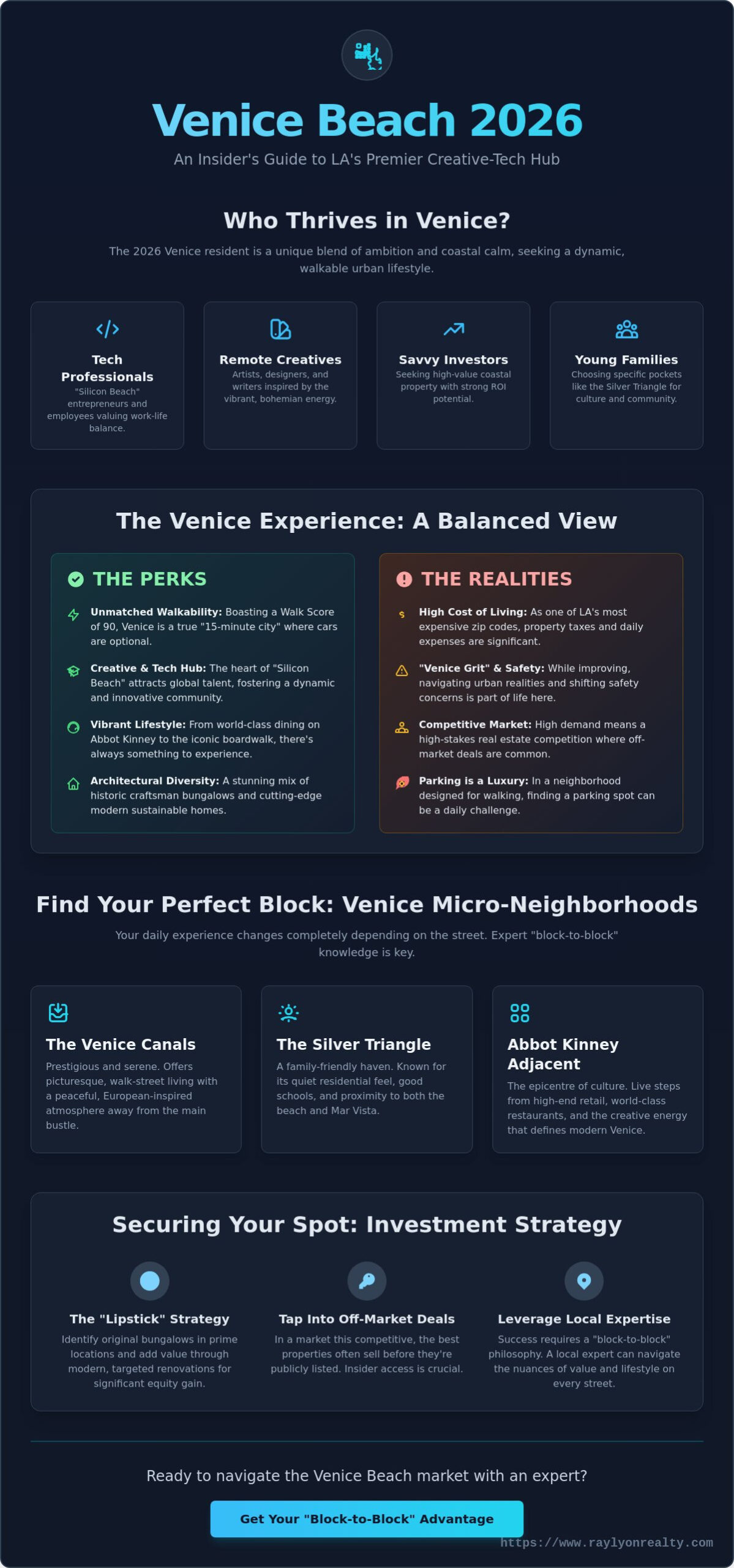
Venice isn’t just a neighborhood; it’s a sensory experience that defines the modern California dream. When you evaluate the pros and cons of living in Venice Beach, the lifestyle perks often outweigh the logistical hurdles for those who crave a high-energy, coastal environment. The area boasts a Walk Score of approximately 90, making it one of the few places in Los Angeles where a car feels like an optional luxury rather than a daily necessity.
A Lifestyle of Convenience and Creativity
Living here means embracing the “15-minute city” model where your daily essentials are reachable within a brief stroll. You can grab organic produce at Erewhon, catch up on emails at a local coworking space, and meet friends for world-class espresso at Intelligentsia, all without leaving a half-mile radius. This density of amenities creates a vibrant, European-style street life that’s rare in Southern California.
The famous “Walk Streets,” such as those found between Lincoln Boulevard and Shell Avenue, offer a peaceful sanctuary from the city’s bustle. These pedestrian-only paths allow children to play and neighbors to congregate without the danger of through-traffic. If you ever feel the need for a slightly quieter residential vibe, you’re just a five-minute bike ride from the charming residential pockets of Mar Vista, Los Angeles.
Architecture and Property Aesthetics
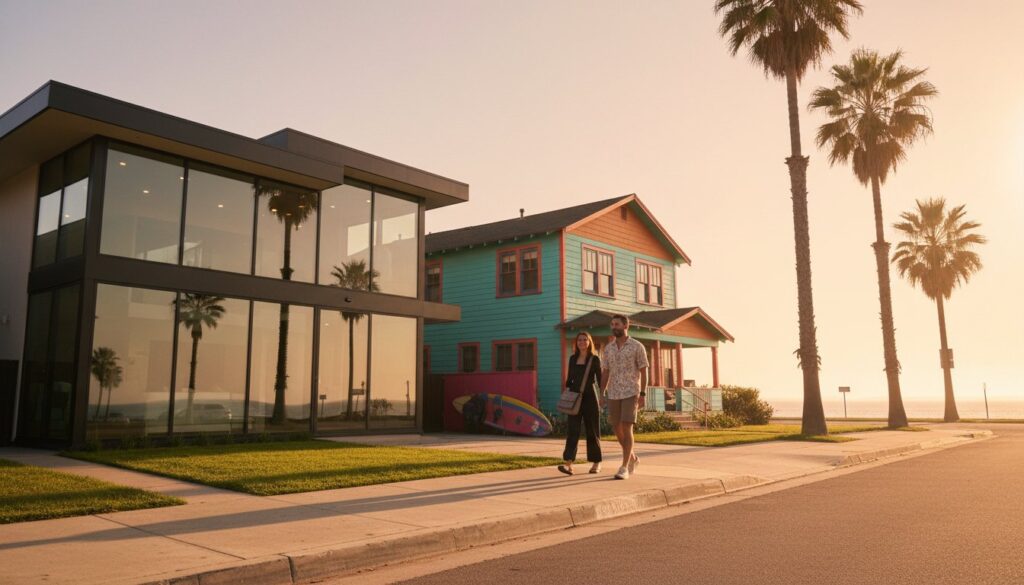
The visual landscape of Venice is a masterclass in architectural contrast. You’ll find meticulously restored 1920s craftsman cottages sitting directly next to 2026 ultra-modern sustainable builds featuring glass walls and solar-integrated facades. The neighborhood’s evolution into a cornerstone of Silicon Beach has accelerated the demand for high-end, “smart” homes that prioritize a seamless indoor-outdoor flow.
Homeowners in 2026 are increasingly taking advantage of local zoning laws that encourage the construction of creative Accessory Dwelling Units (ADUs). These secondary structures serve as high-yield rental units or private home offices, adding significant value to the property. This flexibility allows residents to maximize their lot’s potential, blending historical character with the functional needs of a tech-driven workforce.
The Pacific Ocean serves as a permanent backyard for every resident. Whether it’s a sunrise surf session at the Breakwater or a sunset bike ride along the 22-mile coastal path, the beach provides a free, world-class gym and a mental health sanctuary. Balancing these recreational assets is a key part of understanding the pros and cons of living in Venice Beach. If you want to see how these property trends are currently performing on your specific block, you can connect with our local experts
The Cons: Navigating the Urban Realities
Every neighborhood has its trade-offs, and Venice is no exception. Living here means embracing the beautiful messiness of a world-famous beach town. You can’t honestly weigh the pros and cons of living in Venice Beach without addressing the “Venice Grit.” While 2026 has seen a 15% increase in city-funded street cleaning teams compared to 2023, public sanitation and homelessness remain visible, daily challenges. It’s a dense urban environment, and you’ll encounter that reality every time you walk to your local coffee shop.
The tourist surge is another factor that dictates your schedule. During July and August, the local population effectively doubles on weekends. The boardwalk can see over 30,000 visitors on a single Saturday, making local errands feel like a tactical mission. If your home doesn’t have a dedicated garage or a private driveway, you’re in for a struggle. You’ll likely spend 20 minutes circling the narrow side streets just to find a spot three blocks away. Many of the historic bungalows sit on tiny 2,500 square foot lots with no parking at all, which is a major logistical hurdle for multi-car households.
Safety and Public Perception
Safety is the most frequent concern I hear from prospective buyers. LAPD Pacific Division data for 2026 shows that property crime has dropped 8% since 2024, yet public perception often lags behind these improvements. Noise is the more immediate issue for most residents. If you live within three blocks of Rose Avenue or Abbot Kinney, expect to hear nightlife and sirens until 2:00 AM. To combat this, roughly 45% of residents in the Silver Triangle and neighboring blocks now contribute to private security patrols or tech-enabled community watch groups to maintain a sense of peace.
The Logistics of Coastal Living
The salt air is a silent budget killer that many newcomers overlook. I’ve watched homeowners fall into a “deferred maintenance” trap because they didn’t realize how quickly the ocean breeze corrodes window tracks, door hardware, and HVAC units. You’ll also need to master the local traffic patterns. Navigating Lincoln Boulevard to reach the 10 Freeway during the 5:00 PM rush can take 25 minutes for a mere two-mile stretch. Most Venice homes also lack traditional “yards.” Instead, you’ll likely trade a grass lawn for a roof deck or a small interior courtyard, which is a significant shift for those moving from the suburbs.
Finally, the cost of entry remains a significant barrier. Venice continues to be one of the most expensive price-per-square-foot markets in Los Angeles. In 2026, renovated properties often command over $1,900 per square foot. You’re paying a massive premium for the proximity to the sand and the cultural hub, so your dollar won’t stretch nearly as far here as it might in Mar Vista or Culver City.
Micro-Neighborhoods: Finding the Right Block for You
Venice isn’t a monolith. It’s a collection of distinct pockets that offer vastly different lifestyles. Understanding these sub-markets is essential when weighing the pros and cons of living in Venice Beach. A single turn onto a different street can shift the vibe from a high-energy tourist hub to a secluded, tree-lined sanctuary.
The Venice Canals represent the peak of local prestige. Built in 1905 by Abbot Kinney, these four east-west canals offer a pedestrian-only lifestyle that’s rare in Los Angeles. Residents enjoy a quiet, historic atmosphere where the only traffic comes from ducks and occasional paddleboarders. It’s a tranquil bubble that feels worlds away from the nearby boardwalk hustle.
Just south of Venice Blvd sits the Silver Triangle. Families often gravitate here because it’s walkable to the local public library and the retail hub on Washington Blvd. The streets are wider, and the atmosphere is more residential. You’re close enough to hear the ocean on a quiet night, but far enough to avoid the weekend crowds. The Oxford Triangle provides a similar pace near the Marina, offering a quieter, almost suburban feel with larger lots and less foot traffic than the beach-adjacent blocks.
The Canals vs. The Walk Streets
Choosing between these two gold standard areas comes down to your preference for visibility versus privacy. The Canals offer iconic waterfront views and a high-profile atmosphere where your front yard is part of the scenery. In contrast, the Walk Streets, particularly in the Milwood area, focus on high-end seclusion and a tight-knit community feel. These pedestrian-only paths allow neighbors to interact across front gates without the intrusion of cars. While the Canals are historic, the average lot size there is roughly 2,800 to 3,000 square feet, which is significantly smaller than the 5,000 square foot lots commonly found in the Milwood area. This extra space in Milwood often drives the price point for buyers who prioritize a larger backyard over a water view.
The East-of-Lincoln Emergence
The area east of Lincoln Boulevard has seen a massive surge in new construction and flipping over the last 24 months. Savvy buyers are realizing they can get significantly more square footage and modern amenities while staying within the 90291 zip code. This shift reflects a more strategic estate agency approach seen in other high-end LA suburbs, where long-term value is found by moving just a few blocks inland. It’s a key factor when considering the pros and cons of living in Venice Beach; you trade immediate beach proximity for a newer, larger home with better parking options. This pocket has become a favorite for tech professionals who want the Venice lifestyle with a bit more breathing room.
If you’re ready to explore these micro-neighborhoods and see the differences for yourself, reach out to our team today for a private tour of the best blocks in Venice.
Real Estate Strategy: Maximizing Value in Venice
Deciding to move here involves weighing the financial pros and cons of living in Venice Beach. While the entry price is high, the potential for equity growth remains strong for those who play it smart. Success in this submarket often relies on the “Lipstick” Strategy. This isn’t about a full gut renovation. It’s about high-impact, aesthetic upgrades like matte black hardware, updated drought-tolerant landscaping, and designer lighting. These minor changes frequently trigger multiple offers because today’s buyers want move-in-ready style without the headache of a construction site.
You won’t find the best deals on the MLS. In 2026, roughly 35% of premium Venice transactions happen off-market through private networks. Accessing these opportunities requires a real estate agent in Los Angeles CA who possesses true “block-to-block” knowledge. Knowing which neighbor is planning to downsize before they call a photographer is how you beat the competition.
- Short-Term Rentals: Yields are high but require strict adherence to the 180-day primary residency cap.
- Long-Term Leases: Stable 3% to 4% returns, driven by the influx of executive-level renters from the tech sector.
- Corporate Housing: A growing 2026 trend where properties are leased to Silicon Beach firms for visiting consultants.
Preparing Your Home for the Venice Buyer
The Silicon Beach demographic looks for a specific “industrial-coastal” vibe. Staging should emphasize home office functionality and seamless indoor-outdoor flow. It’s also vital to clear any deferred maintenance before your first open house. Buyers in this price bracket are savvy; a leaky skylight or an outdated electrical panel can kill an escrow or lead to massive credit requests. Ray Lyon’s team manages this by coordinating trusted contractors to handle repairs and “lipstick” refreshes, ensuring you get top dollar with zero stress.
The 2026 Market Outlook
Venice is a “buy and hold” paradise. Local land-use laws and density restrictions mean inventory won’t significantly increase anytime soon. This scarcity protects your investment. When considering the pros and cons of living in Venice Beach, the financial “pro” is clearly the long-term appreciation. If you value a walkable, high-energy lifestyle and want your home to double as a high-performing asset, Venice is the right choice. It’s more than a neighborhood; it’s a strategic addition to your portfolio that offers a lifestyle you won’t find anywhere else in Southern California.
Navigating Your Silicon Beach Future
Venice Beach in 2026 is a landscape defined by its evolution into a global tech powerhouse. As we approach the 2028 Olympic events scheduled for the Los Angeles coastline, the neighborhood’s infrastructure and property values continue to shift. Understanding the pros and cons of living in venice beach requires more than a casual visit to Abbot Kinney Boulevard. It demands a strategy that accounts for specific micro-neighborhood dynamics and the long-term Silicon Beach economic trajectory. You’re balancing incredible lifestyle perks against gritty, urban realities.
I’ve built my career on the Westside, flipping investment properties and navigating the local market’s unique nuances. This hands-on experience means I don’t just show houses; I evaluate structural potential and the “lipstick” opportunities that others miss. My team provides a competitive advantage through a deep network of vetted contractors and access to exclusive off-market Venice listings. We find the hidden gems that never hit public portals, ensuring you get the best value on the right block. Ready to find your Venice niche? Contact Ray Lyon Realty for block-to-block expertise today. Your future in this iconic coastal community is closer than you think.
Frequently Asked Questions
Is Venice Beach a safe place to live in 2026?
Venice Beach is safe for residents who understand the neighborhood’s urban dynamics, especially as property crimes fell 12 percent following the 2024 neighborhood safety initiatives. You’ll find that residential pockets like the Canals and Milwood feel very secure and community-oriented. It’s always smart to stay aware of your surroundings near the boardwalk, but the increased presence of “Safe Passage” ambassadors has made a visible difference in daily security.
What are the best schools for families living in Venice?
Coeur d’Alene Avenue Elementary is the top choice for local families, consistently maintaining a 9/10 rating for student progress. If you’re looking for specialized education, Broadway Elementary offers an acclaimed Mandarin Immersion program that draws families from all over the Westside. For private options, St. Mark School has provided a solid K-8 foundation since 1947. These schools create a tight-knit community that helps the neighborhood feel like a small town.
How much does it cost to buy a house in the Venice Canals?
Homes in the Venice Canals generally start at $3.5 million, though smaller cottages occasionally hit the market for slightly less. According to 2024 market data, the median sale price for a renovated waterfront property is roughly $4.8 million. You’re paying for a historic micro-market where inventory is extremely tight. Most years see fewer than 15 total transactions in this specific pocket, which keeps property values resilient and high.
Is parking really that bad in Venice Beach?
Parking is a genuine challenge because the neighborhood attracts over 25,000 visitors on a typical summer weekend. If your home doesn’t have a dedicated garage or driveway, you’ll likely spend 15 minutes circling the block for a spot. Many residents use the City of Los Angeles “Preferential Parking District” permits, which cost about $35 annually. These permits help by restricting non-residents from parking on specific residential streets during peak hours.
How does Venice compare to Santa Monica for residents?
Venice offers a more artistic, “shoes-optional” atmosphere compared to the more corporate and polished feel of Santa Monica. While Santa Monica has its own independent police department and school district, Venice is a neighborhood within the City of Los Angeles. You’ll find more independent boutiques and grit in Venice, whereas Santa Monica features high-end malls and luxury hotels. It’s a choice between a bohemian, creative lifestyle and a structured, upscale suburban environment.
What is the impact of tech companies like Google and Snap on Venice living?
The arrival of Google and Snap Inc. solidified the area as the heart of “Silicon Beach,” which drove a 45 percent increase in local property values over the last decade. This tech presence brought a new wave of high-earning professionals and high-end dining to Rose Avenue and Abbot Kinney. While it changed the neighborhood’s original bohemian vibe, it also funded significant infrastructure improvements and brought a surge of modern architectural builds to the area.
Can I still find “affordable” homes in Venice Beach?
Navigating the pros and cons of living in venice beach requires a realistic look at your budget, as “affordable” usually means one-bedroom condos starting around $850,000. Single-family homes under $1.8 million are rare and often require significant work to fix “deferred maintenance” issues. You’ll have better luck finding value in the “East Venice” area near Lincoln Boulevard. It’s a high-demand market, so finding a deal usually requires looking for off-market opportunities before they hit the public sites.
What should I look for in a Venice real estate agent?
You need an agent with “block to block” knowledge because property values can shift by $500,000 just one street over. Look for someone who has experience building or flipping homes locally; they’ll know how to spot a solid structure versus one that just has “lipstick” on it. Your agent should have a deep network of contractors and access to off-market deals. In a competitive market, having an insider who knows the history of specific properties gives you a massive advantage.