

Selling a home in Santa Monica for $8.1 million instead of $7.9 million could actually leave you with less money in your pocket once the final papers are signed. With the current 5.6% transfer tax on high-value properties, a single pricing error can cost you hundreds of thousands of dollars in equity. You’ve likely spent years maintaining your property and watching the Westside market climb, so the last thing you want is a surprise tax bill or a buyer who flakes during escrow. Understanding the specific mistakes to avoid when selling a home in Santa Monica is the difference between a record-breaking closing and a stressful, stalled listing.
I know how much is at stake because I’ve been on both sides of the closing table as an investor and an agent. You deserve a process that feels supportive and results in the maximum net profit possible. In this 2026 guide, I’ll share the hyper-local pitfalls that often catch sellers off guard, from new AI-image disclosure laws to mandatory seismic retrofit deadlines. We’ll walk through ten strategic shifts that ensure your home stands out to serious buyers and closes without a hitch.
Key Takeaways
- Master the strategic pricing moves needed to navigate Santa Monica’s 2026 transfer tax thresholds and keep more equity in your pocket.
- Identify the hyper-local mistakes to avoid when selling a home in Santa Monica to ensure a seamless escrow and prevent buyers from flaking.
- Learn why “Coastal Curb Appeal” and curated outdoor living spaces are non-negotiable for attracting the city’s tech and entertainment-sector buyers.
- Discover how concierge-level home preparation and off-market “pocket” listings can maximize your property’s value while maintaining your privacy.
- Understand how leveraging a professional with an investment and development background can mitigate risks and uncover hidden property liabilities early.
Navigating the Santa Monica Real Estate Landscape in 2026
The real estate market in Santa Monica, California has entered a phase of refined maturity in 2026. While much of the Los Angeles basin reacts to broad economic shifts, the Westside remains insulated by its own distinct micro-economy. We’re seeing inventory levels stay historically tight, which naturally keeps resale values high. However, buyer demand has become more strategic. With mortgage rates stabilizing around 6.43%, buyers aren’t in a frantic rush anymore. They’re patient, highly informed, and looking for properties that justify their investment.
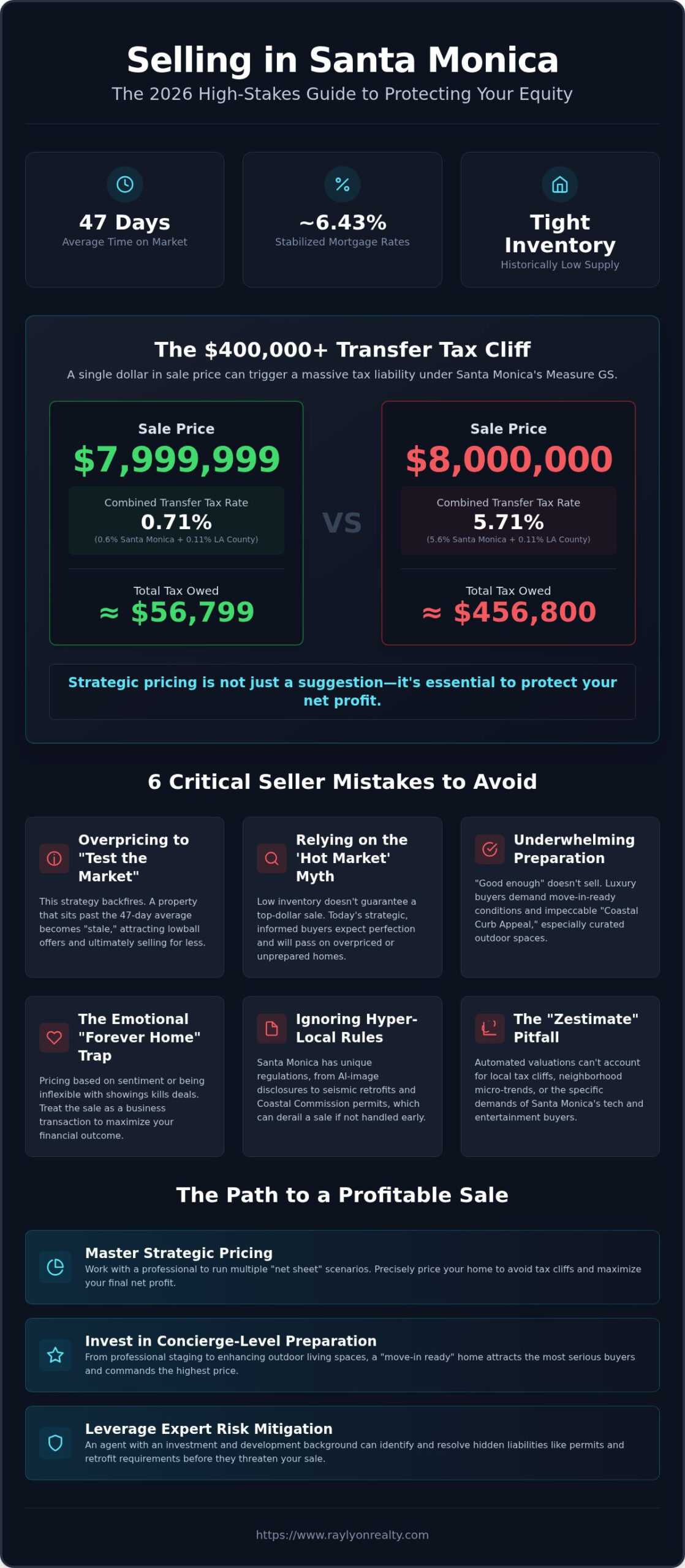
One of the primary mistakes to avoid when selling a home in Santa Monica is relying on the “hot market” myth to do the heavy lifting. Sellers often think that because inventory is low, they can skip the hard work of precision pricing and property prep. In reality, today’s luxury buyers are more discerning than ever. They expect a seamless experience, and if your strategy is sloppy, you’ll likely leave significant money on the table. Identifying these mistakes to avoid when selling a home in Santa Monica early in the process is what preserves your equity.
Understanding Local Inventory Constraints
Santa Monica is essentially geographically locked. There’s almost zero new construction for single-family homes, making your property a rare asset. This scarcity is a double-edged sword. In neighborhoods like North of Montana, luxury buyers will pay a premium, but they now demand “move-in ready” conditions to avoid the headaches of 2026 renovation costs and Coastal Commission permits. Meanwhile, in areas like Sunset Park, we see more competition among tech professionals who are sensitive to value. If your home isn’t positioned correctly for your specific neighborhood’s demand, it will likely sit longer than the current 47-day market average.
The Emotional Trap of the “Forever Home” Sale
It’s easy to get attached to a home where you’ve spent decades or raised a family. I’ve seen this firsthand in my own property developments; emotions can easily cloud professional judgment. You have to treat this sale as a business transaction from day one. If you refuse to accommodate showings because they’re inconvenient, or if you price the home based on sentimental value rather than hard data, you’re working against your own interests. Successful sellers are those who can step back and view their home as a product. This mindset allows for smoother negotiations and a much more profitable closing.
Financial and Pricing Errors That Cost Sellers Thousands
Pricing a home in this area requires more than just a quick look at recent sales. It’s a strategic math problem where a small error can lead to a massive tax bill. One of the biggest mistakes to avoid when selling a home in Santa Monica is ignoring the “cliff” effect of local transfer taxes. In 2026, the Santa Monica Measure GS tax structure remains a critical factor for any high-value sale. If your property sells for $8 million or more, the tax rate is 5.6% of the total sale price. If you sell for $7.99 million, the rate is only 0.6%. That single dollar difference in sale price could cost you nearly $400,000 in additional taxes.
I often see sellers try to “test the market” by overpricing their homes. This strategy almost always backfires. In our current market, where the average time on market is 47 days, a listing that sits for two months becomes “stale” in the eyes of buyers. They’ll assume something is wrong with the property or that you’re unrealistic to deal with. This leads to lowball offers and ultimately a lower sale price than if you had priced accurately from day one. You also need to account for California’s official disclosure requirements early, as financial surprises during escrow can derail 1031 exchange timelines and lead to costly legal disputes.
Miscalculating the Measure ULA Impact
While Measure GS is the local Santa Monica tax, many buyers and sellers colloquially refer to these high-end transfer taxes as the “Mansion Tax.” Beyond the 5.6% Santa Monica rate, you must also factor in the Los Angeles County transfer tax of 0.11%. Pricing your home strategically near these thresholds is essential to maximize your net proceeds. You should consult with an experienced real estate agency to run multiple “net sheet” scenarios before you ever hit the market. If you’re unsure how these taxes will impact your bottom line, reaching out to a local Westside expert can help clarify your actual net profit after all fees are paid.
The “Zestimate” Pitfall
Automated valuation models are notoriously inaccurate in coastal markets. A computer algorithm can’t distinguish between a home North of Montana with a $1,750 price per square foot and a similar sized lot in Mid-City at $1,100. These tools also fail to account for recent legislative changes, such as the 2026 seismic retrofit deadlines or specific coastal commission permit statuses. A local expert’s Comparative Market Analysis (CMA) is the only way to get a true valuation. I use my background in property development to look past the surface, identifying which upgrades actually add value and which ones are just noise to a buyer.
Preparation Pitfalls: Why “Good Enough” Doesn’t Sell in Santa Monica
Santa Monica buyers in 2026 are looking for a specific Westside dream. They aren’t just buying square footage; they’re buying a turnkey experience. If your property feels like a work in progress, you’ve already lost half your audience. One of the most costly mistakes to avoid when selling a home is assuming that the high demand for the area will mask visible wear and tear. Buyers here are often in the tech or entertainment industries and have little time or desire for renovations. Small issues like chipped paint or a leaky faucet signal deferred maintenance, which often leads to aggressive price reductions during the escrow process.
One of the primary mistakes to avoid when selling a home in Santa Monica is neglecting the outdoor living lifestyle. In our coastal climate, the backyard or terrace is essentially an extra living room. If your landscaping is overgrown or your patio is cluttered with old storage, you’re failing to showcase the very lifestyle buyers are willing to pay a premium for. You need to present a cohesive, polished environment from the curb to the back fence to capture top-tier offers.
The Pre-Listing Inspection Advantage
In California, disclosures are everything. Waiting for the buyer’s inspector to find a cracked foundation or an old electrical panel puts you on the defensive. By conducting a pre-listing inspection, you identify deal-killer issues while you still have the upper hand. This transparency builds immediate trust with potential buyers. You can then decide whether to fix the problem yourself using a vetted specialist network or offer a clear credit. This proactive approach prevents the escrow flake where buyers get cold feet after a surprising inspection report.
Staging for the Westside Aesthetic
Empty rooms look smaller and feel cold. In 2026, the Santa Monica aesthetic has shifted toward a refined Modern Coastal look. This means clean lines, organic textures, and a focus on indoor-outdoor flow. Professional staging isn’t just about furniture; it’s about selling the lifestyle. It allows buyers to envision themselves hosting a dinner party or working from a light-filled home office. Depersonalizing the space is also crucial. You want the buyer to see their future, not your past. High-end staging often yields a significant return on investment by helping the property photograph beautifully for architectural shoots.
Marketing and Negotiation Mismatches
Marketing in this coastal enclave requires a sophisticated touch that goes far beyond a sign in the yard. One of the most frequent mistakes to avoid when selling a home in Santa Monica is relying on generic photography. In 2026, California law AB 723 mandates that any listing photos digitally altered or enhanced by AI must be disclosed with a link to the original image. This makes high-end, authentic architectural photography more valuable than ever. Buyers want to see the real soul of a property before they commit to a showing, and grainy or misleading images will cause them to keep scrolling.
A common error is ignoring the power of off-market “pocket” listings. For many luxury sellers, especially those in the entertainment industry, privacy is a top priority. Launching a property as a quiet listing allows you to build exclusive buzz among a vetted network of buyers without the public pressure of a ticking “Days on Market” clock. This strategy often leads to cleaner offers from serious parties who value the exclusivity of a non-public opportunity.
Your choice of representation dictates your final net profit. A generalist agent might understand the basics of a transaction, but a dedicated Santa Monica realtor understands the nuances of the Westside micro-market. They know why a home on the “sun side” of the street commands a premium and how to handle the specific scrutiny of local buyers. Managing a bidding war also requires a steady hand. The highest price isn’t always the best offer if it comes with weak financing or long contingency periods that leave you vulnerable.
The Power of Digital First Impressions
High-end digital assets are non-negotiable for 2026 listings. This includes 3D virtual tours that allow international buyers to walk through the home from their laptop and drone footage that highlights the property’s proximity to the Pacific. Lifestyle marketing is the strategic process of selling the specific experience of Westside living, from the morning beach run to the evening sunset on the terrace, rather than just the property’s physical attributes. Targeted social media campaigns should focus on high-net-worth demographics in the tech and venture capital sectors to ensure your home reaches the right eyes.
Vetting the Buyer Beyond the Price
Vetting the buyer is just as critical as the marketing itself. As of March 1, 2026, FinCEN reporting requirements have expanded for all-cash purchases made by legal entities or trusts. You must ensure the buyer is prepared for this increased identity verification to avoid delays in escrow. Don’t be swayed by a high offer price if the proof of funds is shaky or the lender has a reputation for being difficult. Understanding the length and terms of contingency periods is essential for protecting your equity. If you want to ensure your sale closes with precision, it’s time to work with a strategic Westside partner who understands these moving parts.
The Ray Lyon Advantage: Minimizing Risk in Your Sale
Selling a home on the Westside is a complex financial maneuver that requires more than just a standard listing agreement. It’s about risk management. My personal history in property development and flipping gives me a unique perspective that many agents lack. I’ve navigated the same seismic retrofit ordinances and coastal commission hurdles described in this guide with my own capital. This firsthand experience allows me to help you identify the mistakes to avoid when selling a home in Santa Monica before they become expensive liabilities during escrow. We don’t just guess at what works; we use data-driven strategies honed over decades of local transactions.
We provide a comprehensive solution through the Ray Lyon Realty Concierge. We handle the entire preparation process from A to Z. You don’t have to spend your weekends vetting contractors or managing stagers. I leverage my personal network of vetted specialists to ensure every minor upgrade provides a clear return on investment. This hands-on, founder-led approach ensures your property is strategically positioned to attract the most qualified buyers in the 2026 market. My goal is to reduce your stress by projecting competence and genuine care throughout the entire process.
Local Expertise in Action
Our strategy is built on granular local knowledge. We look at cross-market buyer data from neighboring areas like Mar Vista to understand exactly where your most likely buyer is coming from. This allows us to tailor your marketing to the specific demographics currently searching for Westside properties. Every client receives a personalized strategy session to align the sale with their specific financial goals, whether that involves a complex 1031 exchange or a sensitive trust sale. We believe that transparency and local “insider” knowledge are your greatest assets when navigating the mistakes to avoid when selling a home in Santa Monica.
Your Next Steps to a Successful Sale
A successful closing starts with a clear understanding of your property’s current standing. We begin by providing a custom home valuation that goes far beyond automated estimates. From there, we schedule a detailed walkthrough to identify high-ROI improvements that will make your home stand out. We focus on closing the gap between “Listed” and “Sold” with efficiency and precision. If you’re ready to maximize your equity and ensure a seamless transition, let’s start with a conversation about your property’s unique potential.
Secure Your Westside Equity with Strategic Precision
Success in this coastal micro-market requires more than just luck. It demands a deep understanding of local tax thresholds and the high-end expectations of today’s tech and entertainment buyers. Whether you’re navigating the complexities of Measure GS or managing the new 2026 disclosure requirements, your strategy must be airtight. By identifying the critical mistakes to avoid when selling a home in Santa Monica, you position yourself for a transaction that is both profitable and predictable.
I draw on my personal background in property development and flipping to protect your equity. This isn’t just a listing; it’s a strategic partnership. Our concierge service manages every detail, from vetted contractor networks to high-end architectural shoots. We know what works in neighborhoods like North of Montana and Ocean Park because we’ve been there as both investors and agents. We focus on the hyper-local details so you can focus on your next chapter.
Ready to maximize your Santa Monica home sale? Contact Ray Lyon Realty today for a custom strategy session. You’ve spent years building your home’s value. We’re here to help you cross the finish line with confidence.
Frequently Asked Questions
What is the Measure ULA tax and how does it affect my Santa Monica home sale?
Measure ULA is a City of Los Angeles tax. However, Santa Monica has its own similar tiered transfer tax called Measure GS. Properties selling for $8 million or more trigger a 5.6% “cliff tax” on the entire sale price. This is one of the biggest financial mistakes to avoid when selling a home in Santa Monica. You must price your home strategically around these thresholds to protect your net profit after all taxes are paid.
Should I renovate my kitchen before selling in 2026?
You don’t always need a full renovation to secure a top-tier offer. In 2026, Westside buyers prioritize a “move-in ready” feel. Instead of a gut remodel, focus on high-impact updates like new countertops, modern lighting, and fresh paint. These targeted improvements often yield a higher return on investment. Our team helps you identify which specific upgrades will attract tech and entertainment sector buyers without overcapitalizing on the project before you list.
How long does it typically take to sell a home in Santa Monica right now?
As of May 2026, the average time a home spends on the market in Santa Monica is 47 days. This timeline can vary significantly depending on your neighborhood and pricing strategy. Homes North of Montana might move faster if they are turnkey; while properties with deferred maintenance often linger. Pricing accurately from day one is the most effective way to stay within this average and avoid your listing becoming stale in the eyes of buyers.
Is it better to sell my home off-market or list it on the MLS?
Off-market listings offer privacy and exclusivity, which is ideal for high-profile sellers who want to avoid public showings. Listing on the MLS provides maximum exposure to the broadest pool of buyers, often driving up the final price through competition. We often use a hybrid approach, starting with a quiet “pocket” listing to build buzz among our vetted network before going public. This strategy helps you test the market without the pressure of a public clock.
What are the mandatory disclosures when selling property in California?
California requires several mandatory disclosures, including the Transfer Disclosure Statement and the Seller Property Questionnaire. Effective January 1, 2026, you must also disclose any history of thirdhand smoke or vaping residue inside the home. Additionally, if you use AI-edited listing photos, you are legally required to provide a link to the original, unedited images. Providing a comprehensive disclosure package early in escrow builds trust and prevents buyers from flaking after the home inspection report.
Can I sell my Santa Monica home while it is currently rented?
Yes, you can sell a rented home, but it requires careful planning. Properties in Santa Monica are often subject to the Rent Stabilization Ordinance, which dictates how you interact with tenants during the sale. You must disclose the property’s rental status and provide all existing lease agreements to the buyer. Selling a tenant-occupied home can affect your buyer pool, so we help you navigate these regulations to ensure a smooth transition for all parties involved.
What is the “concierge service” in real estate and do I need it?
A real estate concierge service manages the entire process of preparing your home for the market. This includes coordinating staging, minor repairs, and professional architectural photography. At Ray Lyon Realty, we leverage our vetted network of specialists to handle the heavy lifting for you. This service is essential for busy professionals who want to maximize their home’s value without the stress of managing contractors. It ensures your home meets the high aesthetic standards of Westside buyers.
How do I choose between multiple offers if they all look similar?
When offers are similar in price, you must look at the strength of the terms. Prioritize buyers with a substantial down payment, a reputable lender, and short contingency periods. It’s also important to verify proof of funds for all-cash offers, especially with the 2026 FinCEN reporting requirements. We help you analyze these details to find the buyer most likely to close on time and without asking for significant credits during the escrow process.