
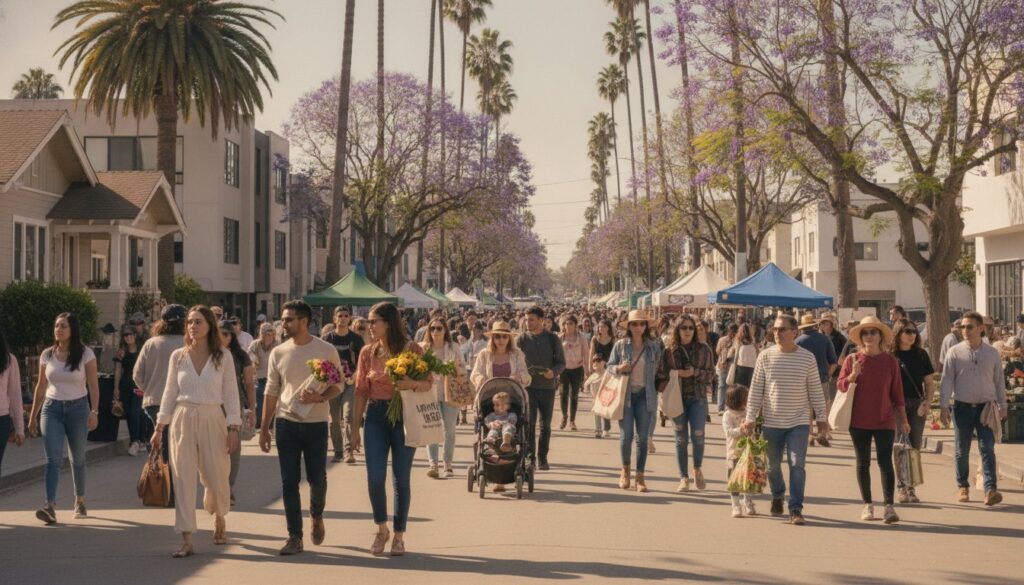
Imagine waking up on a Sunday morning and leaving your car in the driveway because the Mar Vista Farmers Market is just a three-minute stroll from your front door. For many, the idea of a “fifteen-minute city” in Los Angeles feels like a myth, but the current mar vista walkability score of 75 proves this neighborhood is a rare and functional exception. You likely want a home that balances suburban quiet with urban accessibility, yet the fear of being trapped in soul-crushing traffic remains a constant concern when choosing a Westside zip code.
I’ve spent my career as a local expert identifying the specific pockets where lifestyle meets long-term financial value, and Mar Vista is currently at a strategic tipping point. This article will show you exactly how the neighborhood’s pedestrian-friendly design impacts your daily rhythm and your property’s appreciation. We will explore the city’s $42 million infrastructure revitalization plan, the high-demand “Oval District,” and why homes in these walkable zones are currently going under contract in just 12 days. You’ll learn how to find a home that offers a true village feel while securing a major edge in the 2026 real estate market.
Key Takeaways
- Learn why a mar vista walkability score of 75 makes this neighborhood a rare “fifteen-minute city” where most daily errands don’t require a car.
- Pinpoint the most desirable pedestrian pockets, including the vibrant Venice Boulevard corridor and the high-demand “Oval District.”
- Explore how the 2026 infrastructure upgrades and new bike lane expansions are modernizing the Westside’s transit landscape.
- Understand the “walkability premium” to see how pedestrian access directly correlates to higher property appreciation and faster sales.
- Discover how to navigate a low-inventory market by leveraging insider knowledge and exclusive access to off-market property opportunities.
Decoding the Mar Vista Walkability Score
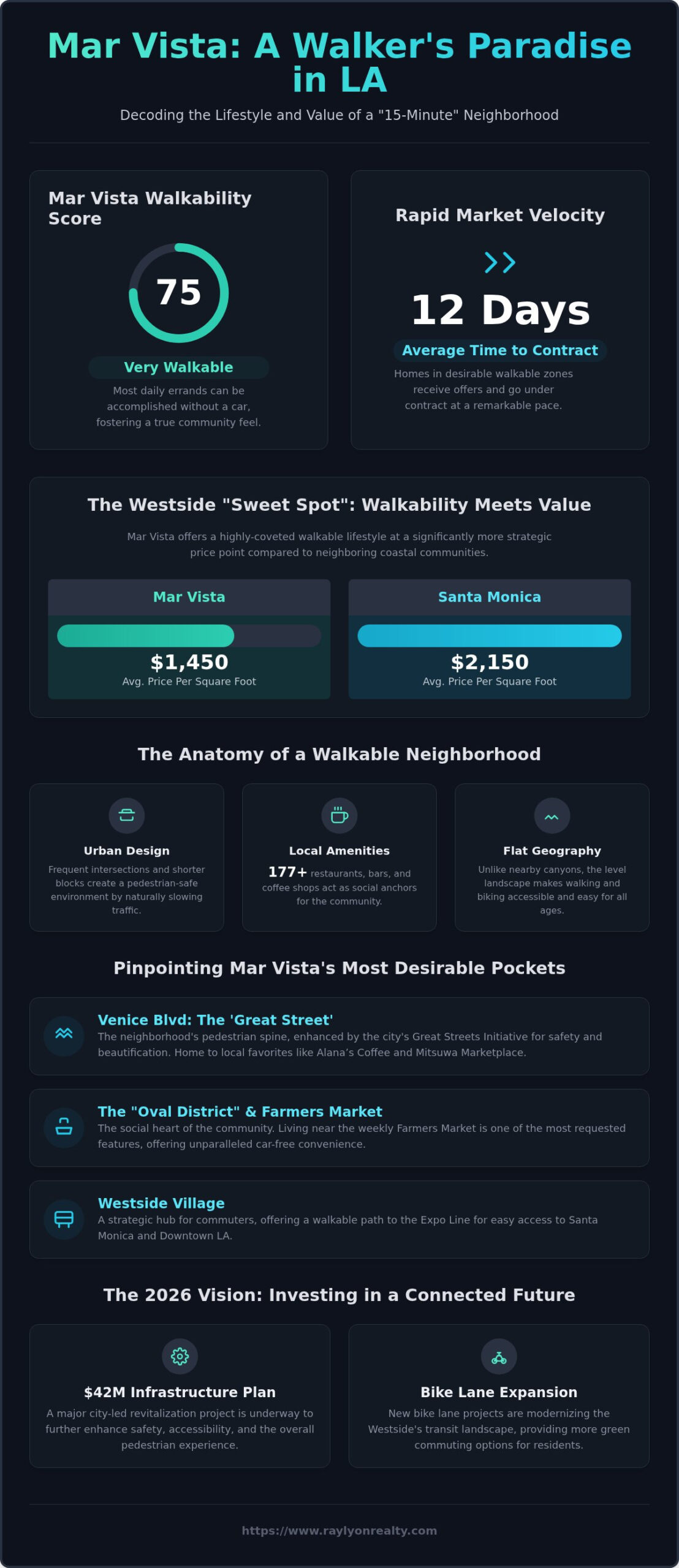
The mar vista walkability score currently sits at 75, which defines the area as “Very Walkable.” This isn’t just a number on a page; it’s a reflection of a lifestyle where most errands don’t require a set of car keys. By 2026, the shift toward “15-minute neighborhoods” has transformed how we view Westside real estate. Residents now prioritize the ability to reach a grocery store, a park, or a cafe within a quarter-hour. This proximity reduces the stress of local congestion and fosters a deeper connection to the community.
What Goes Into a Walkability Metric?
A high score relies on specific urban design elements like intersection density and block length. Mar Vista’s layout features frequent crossings and shorter blocks, which naturally slow down traffic and make pedestrians feel safer. The neighborhood is also home to approximately 177 restaurants, bars, and coffee shops. These “third places” act as social anchors, allowing neighbors to interact away from their homes or offices. Geography plays a role too. Unlike the steep, narrow streets found in the nearby canyons, the flat landscape of Mar Vista, Los Angeles makes walking easy for everyone, regardless of fitness level or age.
Mar Vista vs. The Rest of the Westside
Choosing between Westside pockets often comes down to balancing accessibility with budget. While Santa Monica might offer a slightly higher raw walk score, the cost of entry is vastly different. In early 2026, Mar Vista’s average price per square foot was roughly $1,450. In contrast, Santa Monica reached upwards of $2,150. Mar Vista provides that coveted “village” feel and high walkability at a much more strategic price point.
It’s the “sweet spot” for many professionals relocating from Silicon Beach. You get the quiet, tree-lined streets of a residential suburb without sacrificing the urban perks of a major city. While Culver City and Santa Monica can feel high-energy or tourist-heavy, Mar Vista maintains a grounded, local-centric atmosphere. It’s a neighborhood where you actually know your neighbors; largely because you’re all out walking the same streets every day.
The Most Walkable Pockets in Mar Vista
Mar Vista isn’t a monolith. While the aggregate mar vista walkability score is impressive, your actual lifestyle depends on which “pocket” you choose. Some streets offer immediate access to retail, while others provide a quieter residential feel with a slightly longer trek to coffee. Understanding these micro-neighborhoods is the key to finding a home that truly aligns with your daily routine.
Venice Blvd: The ‘Great Street’ Transformation
Venice Boulevard serves as the neighborhood’s pedestrian spine, connecting local residences to essential commercial hubs. Under the city’s Great Streets Initiative, this corridor has seen significant safety upgrades and beautification. You can start your morning with a pour-over at Alana’s Coffee Roasters and finish with a grocery run at Mitsuwa Marketplace without ever needing your car. This stretch is a primary reason the local Walkability Index remains so high. It creates a seamless transition between work, play, and home.
The Farmers Market Effect
Every Sunday, the intersection of Venice and Grand View Boulevards transforms into a high-traffic pedestrian hub. The Mar Vista Farmers Market isn’t just for produce; it’s the social heart of the community. Living within five blocks of this market is one of the most frequent requests I hear from buyers. In the “Oval District,” residents enjoy a rare level of car-free convenience that rivals the most expensive parts of the Westside. This weekly event anchors the neighborhood, giving it a small-town feel that’s hard to find elsewhere in Los Angeles.
If you prefer views over flat strolls, Mar Vista Hill offers panoramic vistas of the Pacific. While the inclines are steeper, the proximity to the Mar Vista Recreation Center keeps the area active and connected. Meanwhile, the Westside Village area provides a strategic link for commuters. It offers a walkable path to the Expo Line, making it ideal for those who work in Santa Monica or Downtown LA but want a quieter home base.
Navigating these micro-markets requires more than just looking at a map. You need to know which specific blocks offer the best balance of quiet and convenience. If you’re looking for an insider’s perspective on these pockets, exploring local listings with a specialist can help you find those “secret” walkable enclaves before they hit the public market.
Infrastructure Evolution: Biking and Transit in 2026
The city’s commitment to the Westside is visible in the $42 million infrastructure plan scheduled for the latter half of 2026. This investment modernizes road surfaces and expands the network of protected bike lanes that now connect Mar Vista directly to the Pacific coastline. These upgrades are a major driver behind the neighborhood’s high mar vista walkability score, ensuring the area stays ahead of Los Angeles’ evolving transit needs. Urban planners have adopted a “complete streets” approach, reconfiguring lanes to prioritize people over heavy traffic. This shift supports a “car-lite” lifestyle where residents can easily swap a stressful commute for a breezy bike ride or a short walk to local amenities.
The E-Line Connection
For those working in Santa Monica or Downtown LA, the E-Line provides a reliable alternative to the gridlock of the 405. The Westside Village pocket is particularly well-positioned for this. Success in urban transit depends on solving the “last mile” problem; the distance between the train station and your front door. Mar Vista’s pedestrian-friendly grid makes this transition seamless. You can comfortably walk or use a micro-mobility option to reach the station, making a rail-based commute a practical daily reality. This focus on Transit-Oriented Development (TOD) isn’t just about convenience. It adds a significant layer of long-term value to homes within a half-mile radius of the transit corridor, as buyers increasingly prioritize proximity to the rail network.
Safety and Pedestrian Infrastructure
Safety is the foundation of any walkable community. In 2026, we’ve seen the rollout of high-visibility crosswalks and “scramble” intersections where pedestrians can cross in every direction, including diagonally, at the same time. These features, combined with the neighborhood’s iconic tree-lined streets, provide a significant psychological benefit for residents. There’s a sense of security that comes from well-lit, active sidewalks where you aren’t constantly competing with high-speed vehicle traffic. Strategic infrastructure investment directly correlates to resident safety by creating physical barriers and clear visual cues that protect pedestrians from vehicles. These updates ensure that as Mar Vista grows, it remains a place where you can confidently let your family walk to a neighbor’s house or bike to the Mar Vista Recreation Center without hesitation. By prioritizing these pedestrian-centric upgrades, the city has future-proofed the neighborhood against the typical growing pains of a densifying urban area.
How Walkability Impacts Mar Vista Property Values
In the competitive Westside market, a property’s financial performance often mirrors its pedestrian access. The current mar vista walkability score of 75 acts as a powerful multiplier for home values. Data from early 2026 shows that single-family homes in this neighborhood are selling at a 104.86% sold-to-list ratio. This means buyers aren’t just paying asking price; they’re actively outbidding each other for the privilege of a walkable lifestyle. For a deeper look at the local market, check out our Mar Vista, Los Angeles: A Complete Neighborhood Guide for full context.
The Seller’s Advantage
If you’re selling a home in Mar Vista, your proximity to a local park or a coffee shop is just as important as your kitchen renovation. We’ve seen homes in highly walkable pockets go under contract in a median of just 12 days. My strategy for sellers involves highlighting these specific “micro-walks” in every listing. We don’t just mention the house; we stage the lifestyle. This might mean emphasizing a three-minute stroll to the Sunday Farmers Market or a short bike ride to the beach via the newly expanded lanes. When buyers can visualize their morning routine without a car, they’re more likely to see the property as a “must-have” asset rather than just another house.
The Buyer’s ROI
From an investment perspective, walkability is one of the most reliable hedges against market volatility in Los Angeles. While car-dependent suburbs may see fluctuating demand, the desire for “15-minute neighborhoods” is a permanent shift in urban living. Buyers are currently paying a median of $1,115 per square foot for single-family homes here because they recognize the long-term value retention. Walkability also reduces the total cost of homeownership. When you can accomplish 70% of your errands on foot, you save significantly on fuel, maintenance, and the general stress of LA traffic.
I often help clients identify “undervalued” streets that are positioned just outside the current commercial hubs but are set to benefit from the city’s $42 million infrastructure investment. These pockets offer the best potential for appreciation as the neighborhood becomes even more connected. If you’re ready to secure a property with a strong walkability profile, you can request a strategic valuation or a list of exclusive off-market opportunities to get ahead of the competition.
Finding Your Walkable Home with Ray Lyon Realty
Finding a home in a neighborhood with a high mar vista walkability score is only half the battle. In a market where inventory remains 15% below the ten-year average, simply refreshing a public real estate app won’t get you into the most desirable pockets like the Oval District. You need a strategic partner who understands the nuance of every single street. My team and I specialize in identifying those “secret” walkable enclaves that often trade hands before they ever hit a public database. This access to off-market opportunities is a cornerstone of our strategy-first approach. If you’re currently planning on Selling Your LA Home, we also know exactly how to leverage that pedestrian-friendly lifestyle to secure the premium sold-to-list ratios typical for this area.
Granular Local Knowledge
A raw number can’t tell you if a street feels quiet at night or if the walk to the local elementary school is truly safe for a stroller. My deep roots in the Westside allow me to provide a granular level of local knowledge that an algorithm simply can’t replicate. We help you balance priorities like school district boundaries with your desire for a five-minute walk to Alana’s Coffee. During our personalized neighborhood tours, we focus on your specific lifestyle needs. We might look at the “up-and-coming” pockets near the $42 million infrastructure upgrades or find a spot with a flat route to the E-Line. This level of detail ensures you don’t just buy a house; you buy into a community that fits your daily rhythm.
Your Next Steps in Mar Vista
The 2026 market moves incredibly fast. With single-family homes going under contract in a median of just 12 days, you need to be ready to act with confidence and precision. We start with a comprehensive consultation to map out your search based on the most walkable zones. Our negotiation strategy is built on years of hands-on experience in property renovation and portfolio management. This gives us a distinct advantage when competing for high-demand assets in Mar Vista Hill or the Venice Boulevard corridor. We handle the complex technical details and contractual clauses so you can focus on your move. Ready to explore the best of the Westside? Contact Ray Lyon Realty today to get started on your journey toward a truly walkable lifestyle.
Securing Your Future in a Pedestrian-First Neighborhood
Mar Vista represents a rare shift in the Los Angeles landscape. It’s a place where the “15-minute city” isn’t just a goal; it’s the current reality for residents in the Oval District and along the Venice Boulevard corridor. With a mar vista walkability score of 75 and $42 million in upcoming infrastructure improvements, this neighborhood is positioned for sustained desirability and property appreciation. Choosing a home here means trading hours in traffic for a lifestyle centered around local coffee shops, parks, and the iconic Sunday Farmers Market.
As a Westside specialist with deep roots in these micro-markets, I provide the strategic advice you need to maximize your investment and navigate this fast-moving market. My team focuses on granular local knowledge to help you find the perfect pocket that aligns with your commute and community needs. We don’t just find houses; we secure the functional, high-value lifestyle you’ve been searching for in LA.
Ready to find your walkable dream home? Let’s start your Mar Vista search today.
The Westside is evolving quickly, and there’s never been a better time to plant roots in a community designed for people. Let’s make your next move a success.
Frequently Asked Questions
What is the average walkability score for Mar Vista in 2026?
Mar Vista currently holds a walkability score of 75. This classification places the neighborhood in the “Very Walkable” category, meaning most daily errands don’t require a vehicle. This mar vista walkability score reflects the high density of local businesses and the neighborhood’s accessible, flat grid layout. While some hillside pockets vary, the commercial heart of the community ensures that residents can easily navigate the area on foot for groceries, dining, and recreation.
Which part of Mar Vista is considered the most walkable?
The area surrounding the intersection of Venice Boulevard and Grand View Boulevard is widely considered the most walkable pocket. Known as the “Oval District,” this zone is the social and commercial center of the neighborhood. Residents here benefit from immediate proximity to the weekly Sunday Farmers Market and a high concentration of cafes. Living in this specific micro-market allows for a truly car-lite lifestyle where parks and essential retail are just a few blocks away.
How does walkability in Mar Vista compare to Venice or Santa Monica?
Mar Vista offers a unique balance of walkability and residential tranquility that differs from its coastal neighbors. While Santa Monica often boasts higher raw scores, it comes with a significantly higher price per square foot and more tourist traffic. Mar Vista provides a similar “village” feel at a more strategic entry point. It serves as a quieter alternative to the high-energy bustle of Venice, making it ideal for those who want accessibility without the constant noise.
Is Mar Vista safe for walking at night?
Mar Vista is characterized by active, well-lit sidewalks and a strong sense of community that makes it comfortable for evening strolls. The neighborhood’s tree-lined residential streets are frequently used by locals walking dogs or returning from dinner on Venice Boulevard. While you should always remain aware of your surroundings in any urban environment, the consistent foot traffic and neighborhood-watch feel contribute to a secure atmosphere. Recent infrastructure upgrades have also added improved street lighting in key corridors.
Does a higher walkability score increase my home’s resale value?
A high mar vista walkability score directly correlates with stronger property appreciation and faster sales. In the current market, homes in walkable pockets are seeing a 104.86% sold-to-list ratio and often go under contract in just 12 days. Buyers are increasingly willing to pay a premium for the convenience of a 15-minute neighborhood. This lifestyle-driven demand acts as a hedge against market volatility, ensuring that walkable Westside assets retain their value better than car-dependent suburbs.
Are there good public transit options in Mar Vista for those without a car?
Mar Vista offers several reliable transit options, including convenient access to the E-Line rail system. While the neighborhood transit score is 50, the proximity to the Bundy and 26th Street stations makes commuting to Santa Monica or Downtown LA very manageable. Many residents use a “car-lite” approach, combining walking or biking with the rail network for longer trips. Local bus lines along Venice Boulevard also provide frequent service to the beach and other Westside hubs.
What are the best walkable amenities near Venice Boulevard?
Venice Boulevard is packed with high-quality walkable amenities that cater to a variety of needs. You can grab a specialty coffee at Alana’s Coffee Roasters or shop for unique ingredients at Mitsuwa Marketplace. The corridor also features the Mar Vista Recreation Center, which serves as a major hub for outdoor activity and community events. These businesses are clustered closely together, allowing you to complete a full afternoon of errands or social outings without ever needing to move your car.
How has the ‘Great Streets’ initiative improved Mar Vista’s walkability?
The Great Streets initiative has fundamentally reshaped the neighborhood by prioritizing pedestrian safety and commercial vitality. Key improvements include high-visibility crosswalks, expanded protected bike lanes, and modernized road surfaces that slow down vehicle traffic. These “complete streets” upgrades make the Venice Boulevard corridor much more inviting for walkers and cyclists alike. By reconfiguring lanes to create dedicated spaces for various modes of transport, the city has significantly boosted the overall safety and functionality of the neighborhood’s pedestrian spine.