

What if the strongest offer isn’t the one with the highest price? If you’re learning how to make a strong offer on a house, it’s natural to worry that another buyer will outbid you or that you’ll need to give up important protections to compete. But a compelling offer does more than name a price: it shows the seller you’re prepared while keeping your budget and options in view.
Sellers may weigh financing readiness, earnest money, contingencies, and timing alongside the offer amount. The key is deciding which terms make sense for you, not simply making the offer look impressive. A rushed decision or a protection you don’t understand can create risks after the seller accepts.
This guide explains the parts of an offer sellers may consider and how to prepare one that fits your finances. You’ll also learn what to discuss with your buyer’s agent before submitting, from local property context to financing documents and contingency choices. For Westside buyers, informed guidance can help make those decisions clearer, without promising acceptance.
Key Takeaways
- Learn how to make a strong offer on a house by balancing seller appeal with terms that fit your finances and priorities.
- Set a firm budget ceiling before weighing competing bids or considering escalation language.
- Compare the potential appeal of price, financing readiness, timing, and contingency terms before deciding where you can be flexible.
- Use details about the home and the seller’s timing to shape an offer that makes sense for your situation.
- See how Westside buyer representation can connect property context, offer decisions, negotiation, and escrow.
What Makes an Offer on a House Strong?
A strong offer is a credible, coherent proposal, not automatically the highest bid. It gives the seller a clear picture of the price, how you plan to pay, the conditions you need, and your proposed schedule. If you’re learning how to make a strong offer on a house, look beyond the headline number: terms that fit together and reflect your actual finances can make your proposal easier to assess.
There isn’t one formula for every sale. A seller’s priorities may depend on the property and their circumstances, while your need to inspect the home and secure financing matters too. A Westside home in Santa Monica, Mar Vista, or Venice provides context for the discussion, but a neighborhood name alone doesn’t reveal what a particular seller will value.
For a general overview of the elements involved, see this explanation of a real estate contract. To hear practical offer tips, watch this video:
What does a home purchase offer include?
An offer puts the proposed price, terms, timing, and conditions in writing. Its details help both sides understand what’s being proposed and what needs to happen for the sale to move forward. The main components commonly include:
- Price: The amount you’re proposing to pay.
- Financing: Whether you expect to use a mortgage or another form of payment, along with information supporting your ability to proceed.
- Deposit: Funds offered as part of the transaction, subject to the contract’s terms.
- Contingencies: Conditions that may give you contractual protections, such as time to investigate the property or complete financing steps.
- Timing: Your proposed dates for key steps and closing.
Purchase documents, terminology, and procedures can vary depending on the market; while international real estate firms like goldenbricks.ae navigate property purchases under specific regional guidelines in destinations such as Dubai, domestic purchases adhere strictly to local rules. Review California-specific terms and current forms carefully with your buyer’s agent before signing. A general contract overview isn’t a substitute for understanding the documents used in your transaction.
What might make a seller view an offer favorably?
Financial credibility helps a seller understand whether you appear prepared to complete the purchase. Clear terms also reduce avoidable uncertainty: the seller can see what you’re offering, which conditions apply, and the schedule you propose. A realistic timeline should work for both the transaction and your readiness, rather than simply sound fast.
Priorities still vary. One seller may care about timing; another may focus on price or the certainty of the financing plan. The home’s condition and the seller’s situation can shape which terms matter most, so don’t assume one element will always outweigh the rest. Local knowledge can help put a Westside property and its circumstances in context, but it can’t guarantee acceptance.
How to Prepare a Competitive Offer Without Overreaching
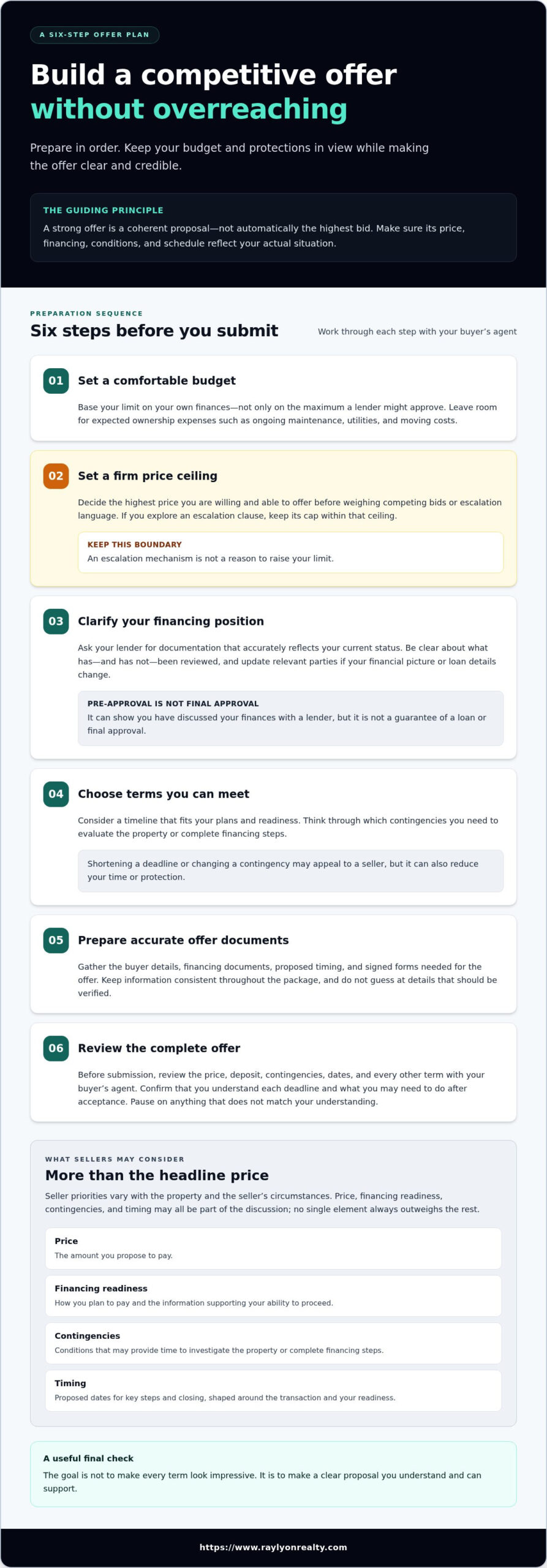
A thoughtful offer starts before you choose a price. Work through the steps in order so competition doesn’t push you into terms that strain your finances or leave you unclear about what you’re agreeing to. This is a practical way to approach how to make a strong offer on a house while keeping your own limits in control.
- Set a comfortable budget. Decide what you can afford based on your own finances, not just the maximum amount a lender might approve. Leave room for expected ownership expenses, such as ongoing maintenance, utilities, and moving costs.
- Establish a firm ceiling. Choose the highest purchase price you’re willing and able to offer before considering competing bids or escalation language. If you later explore an escalation clause with your agent, keep its cap within that ceiling. Don’t treat a mechanism for increasing your bid as a reason to raise your limit.
- Clarify your financing position. Ask your lender for documentation that accurately reflects your current status. A pre-approval can show that you’ve discussed your finances with a lender, but it isn’t a guarantee of a loan or final approval. Be clear about what has and hasn’t been reviewed, and don’t present your financing as more certain than it is.
- Choose terms you can meet. Consider a proposed timeline that fits your plans and readiness. Think through which contingencies you need to evaluate the property or complete financing steps. Shortening a deadline or changing a contingency may appeal to a seller, but it can also reduce your time or protection.
- Prepare accurate offer documents. Gather the buyer details, financing documents, proposed timing, and signed forms needed for the offer. Make sure the information is consistent throughout the package, and don’t guess at details that should be verified.
- Review the complete offer before submission. Go through the price, deposit, contingencies, dates, and every other term with your buyer’s agent. Confirm that you understand each deadline and what you may need to do after acceptance. Pause on anything that doesn’t match your understanding.
Set your budget and confirm your financing position
Your personal comfort limit and a lender’s potential approval amount serve different purposes. Build your offer around your comfort limit, then use current lender documentation to support the financing information in the offer. If your financial picture or loan details change, update the relevant parties rather than relying on an outdated document.
Build a complete offer package
A complete package makes the proposal easier to review, but completeness doesn’t mean removing protections you need. Deposit amounts and contract wording can have important consequences, and California forms and procedures can be specific. Have your buyer’s agent review the offer terms with you. For legal questions or advice about contract language, seek guidance from a qualified California real estate professional, such as an attorney.
For buyers considering homes across the Westside, local buyer guidance connects property context with offer preparation and escrow. The goal is a clear, well-supported proposal that stays within your limits, not a promise of acceptance.
Price, Contingencies, and Timing: Weigh the Trade-Offs
Offer terms work together. A higher price may catch a seller’s attention, but it can also stretch your budget. A shorter timeline might suit the seller, yet leave you less room to coordinate your move. Changing contingencies could make an offer appear simpler, but may reduce protections you need. To decide how to make a strong offer on a house, compare each possible advantage with what it could cost you in flexibility or security.
- Price: A well-supported offer can show you’ve considered the property, not just its list price. Don’t exceed your predetermined limit to keep pace with another buyer.
- Financing: Clear, accurate lender documentation can communicate your current position. It doesn’t guarantee final loan approval.
- Timing: A proposed schedule that fits the seller’s needs may be appealing, provided you can meet it without rushing important steps.
- Contingencies: These may protect you by making the purchase subject to conditions. Shortening, changing, or removing them can reduce your time or options if a concern arises.
No single term guarantees acceptance. A seller’s response depends on the full offer and their priorities, while the right balance for you depends on your finances and ability to evaluate the home.
How should you decide what price to offer?
Look beyond the asking price. Consider relevant details about the property and recent comparable sales, but use comparables only when they’re current, verified, and meaningfully similar. Differences in condition, features, or location affect how useful a comparison is. Local context in Santa Monica, Mar Vista, or Venice can help frame questions, but a neighborhood label alone isn’t evidence of a home’s value. Set your walk-away limit before responding to competition.
If you’re considering an escalation clause, treat it as a contract-specific tool, not a shortcut to the right price. It may set out how your offer could increase in response to another offer, subject to terms and a maximum you define. Discuss how it would work in your particular offer with your buyer’s agent, and have the wording reviewed before signing. An escalation proposal should never override your budget ceiling.
Should you waive contingencies to make an offer stronger?
Inspection, appraisal, and financing contingencies can provide buyers with contractual protections tied to evaluating the home, its value, or the loan. Their exact effect depends on the written terms. Removing or changing a protection may leave you with less recourse or expose you to financial or contractual risk if an issue arises. There’s no blanket rule that waiving one is worthwhile.
Before changing a contingency, consider what you would do if an inspection finds a concern, an appraisal differs from expectations, or financing doesn’t proceed as planned. Review the California contract language, deadlines, and consequences with your buyer’s agent, and seek qualified professional advice for legal questions. A high price or fewer conditions may strengthen an offer’s appeal, but neither guarantees acceptance.
How to Tailor Your Offer to the Home and Seller
A tailored offer responds to the details of a specific sale, not assumptions about a neighborhood or a seller. Before deciding which terms to adjust, gather what you can about the property, the seller’s stated preferences, and your own flexibility. This helps you distinguish a reasonable accommodation from a concession that strains your budget or limits your ability to assess the home.
Find out which terms may matter most to the seller
Your buyer’s agent can communicate with the listing-side representative about practical priorities, such as a preferred closing window or other timing considerations. The answer can help you shape a workable proposal, but it’s information to consider, not a promise about how the seller will decide. Priorities differ from one transaction to another.
Keep the conversation professional and focused on the terms of the sale. A personal letter or a particular closing date won’t necessarily influence every seller, and neither should substitute for an offer that works financially and contractually. If the seller’s preferred timeline conflicts with your plans, discuss what adjustment is realistic before committing to it.
Adapt the offer to the property and local context
Use this checklist to connect the home’s circumstances with terms you can genuinely meet:
- Review the property: Consider its observed condition and any information in available disclosures. Identify questions that may affect your inspection plans or other offer terms.
- Put comparisons in context: Look at relevant, verified comparable sales where available. Similarity matters. A nearby sale may be a poor guide if the homes differ in condition, features, or other meaningful ways.
- Note the stated process: If the seller has disclosed an offer deadline or timing preference, use it to plan your response. Don’t assume an undisclosed deadline or invent urgency.
- Check your flexibility: Decide whether you can adjust proposed dates or other terms without disrupting your finances, move, or ability to evaluate the home.
- Protect your limits: Before agreeing to a concession, consider what it changes for you. Convenience for the seller shouldn’t require exceeding your budget or removing protections you need.
For example, a buyer considering a home in Mar Vista might compare relevant property details and verified sales, then decide whether the proposed timing works with their plans. That’s an illustration of a decision process, not a claim about current Mar Vista prices or market conditions. The same careful approach applies in Santa Monica, Venice, and elsewhere on the Westside. Local context can help interpret a property, but broad neighborhood assumptions can’t replace current, property-specific information.
Tailoring means making informed adjustments, not guessing what will win. A buyer’s agent can relay relevant information and coordinate offer decisions around the home and your priorities. For Westside buyer guidance, connect property context with a clear plan for your offer.
How a Westside LA Buyer’s Agent Helps You Make a Strong Offer
A buyer’s agent connects the research behind a purchase with the decisions that go into an offer. On the Westside of Los Angeles, neighborhood knowledge provides useful context for evaluating a property in Santa Monica, Mar Vista, Venice, or another nearby community. It doesn’t predict what a seller will accept, but it can help you ask better questions and assess the information available for that particular home.
That support can continue through offer preparation, communication with the seller’s representative, negotiation, and escrow. The aim is to make informed choices at each stage, not to promise a winning bid or a particular outcome. If you’re weighing how to make a strong offer on a house, a local agent can help keep your goals and the property’s details in view as you consider your options.
From property research to a considered offer
Before you settle on terms, an agent can help interpret relevant comparable sales alongside the home’s condition, features, and other available property information. A comparable sale is a point of reference, not an automatic price recommendation. Its usefulness depends on how closely it reflects the home you’re considering and whether the information is current and relevant. For buyers tracking active market inventory and assessing local options, viewing current properties represented by an agent like Christopher Seim can provide helpful perspective on how list prices correspond to specific features and home conditions.
Your goals and budget should guide the decision. An agent can talk through how a proposed price, financing information, timing, and contingencies fit together, and explain how the terms may be presented. You remain in control: review the guidance, ask questions about anything you don’t understand, and decide which terms you’re comfortable submitting. A well-prepared offer should reflect your priorities, not pressure you into exceeding them.
What happens after the offer is submitted?
The seller may accept, reject, or respond with a counteroffer. If there’s a counter, your agent can help you understand the proposed changes and organize a response around your budget, timing, and preferred protections. You can decide whether to accept, negotiate further, or step away. Each response is a new decision point, so take time to understand the terms before agreeing.
If the seller accepts, the transaction proceeds into escrow. There are documents to review, funds and other steps to coordinate, and deadlines to track. Your agent can help keep the process organized and flag upcoming dates, while you remain responsible for making decisions and completing the actions required of you. Pay close attention to the written agreement and ask for clarification promptly if a term or deadline isn’t clear.
Ray Lyon Realty represents residential buyers across the Westside, from property search through offer preparation and escrow. Its local perspective helps put property details and offer choices in context, informed by firsthand experience with ownership, development, and investment. For additional perspective on working with an agent in the area, explore our Los Angeles real estate guidance.
Ready to discuss your buying goals and the kind of support that fits your search? Talk with Ray Lyon Realty about buying on the Westside.
Take Your Next Step With a Clear Plan
Your next step can be simple: write down what you need from a home, what you’re comfortable committing, and which questions you want answered before making an offer. That gives you a practical starting point when a property catches your eye, instead of leaving every decision until competition feels urgent.
Learning how to make a strong offer on a house is ultimately about making choices you understand and can stand behind. For a Westside search, Ray Lyon Realty provides residential buyer representation from property search through offer preparation and escrow, with local expertise across Santa Monica, Mar Vista, Venice, and the wider area. A conversation about your goals can help turn your priorities into a focused plan for the homes you’re considering.
Talk with Ray Lyon Realty about your home search, and take the next step with greater clarity and confidence.
Frequently Asked Questions
How do I make a strong offer on a house?
To make a strong offer on a house, make sure the price and terms reflect both the home and what you can comfortably afford. Before submitting, check that your financing documents match your actual lender status, your proposed timing is workable, and you understand each condition in the contract. For example, if you need time to complete an inspection, make sure the relevant terms and deadlines give you a clear opportunity to do so.
Should I offer over the asking price on a house?
Not automatically. The asking price is a starting point, not proof of the home’s value or a signal that you should bid above it. Review relevant, recent comparable sales and consider differences in condition, features, and location. If you decide to offer more, consider how that price fits your budget and what you’d do if the home appraises below your offer. Don’t let competition set your personal limit.
Should I waive contingencies to make my offer stronger?
Not without understanding the protection you may be giving up. An inspection contingency may provide time to investigate condition, while appraisal or financing terms may address valuation or loan-related concerns. The effect depends on the contract language. Before changing or waiving a contingency, consider what could happen if an inspection reveals an issue or your loan doesn’t proceed as planned. Review California-specific terms with your buyer’s agent and qualified advisers.
How much earnest money should I offer?
There’s no amount that fits every purchase. The research cited for this guide describes 1% to 3% of the purchase price as a typical range, but the appropriate deposit depends on the offer, your finances, and the contract terms. A larger deposit may show commitment, but it also means more funds are at stake. Before choosing an amount, understand how the contract treats the deposit and review California-specific language with your agent.
Can a seller accept an offer that is not the highest?
Yes. A seller may find another offer more suitable because of its financing information, proposed timing, contingencies, or other terms. For instance, a seller who needs a particular closing schedule might weigh that alongside price. You can’t know every factor shaping a seller’s choice, and no combination of terms guarantees acceptance. Focus on making a clear offer that fits your finances and gives the seller a realistic picture of your proposal.
What should I include with an offer on a house?
Include the completed purchase documents and the information those forms request, such as your proposed price, financing approach, deposit, contingencies, and timing. Attach lender documentation that accurately reflects your current position, if applicable. Check that names, figures, and dates are consistent throughout, and review the offer’s deadlines before signing. California forms and contract language can be specific, so have your buyer’s agent walk you through the documents.
How can I make an offer more appealing without raising the price?
Look for practical terms you can offer without straining your plans. If your schedule allows, you might propose a closing timeline that suits the seller, or keep your offer documents complete and easy to follow. You could also clarify your financing position with accurate lender paperwork. Don’t shorten a deadline or change a contingency just to appear flexible unless you understand the consequences and can manage the added risk.