
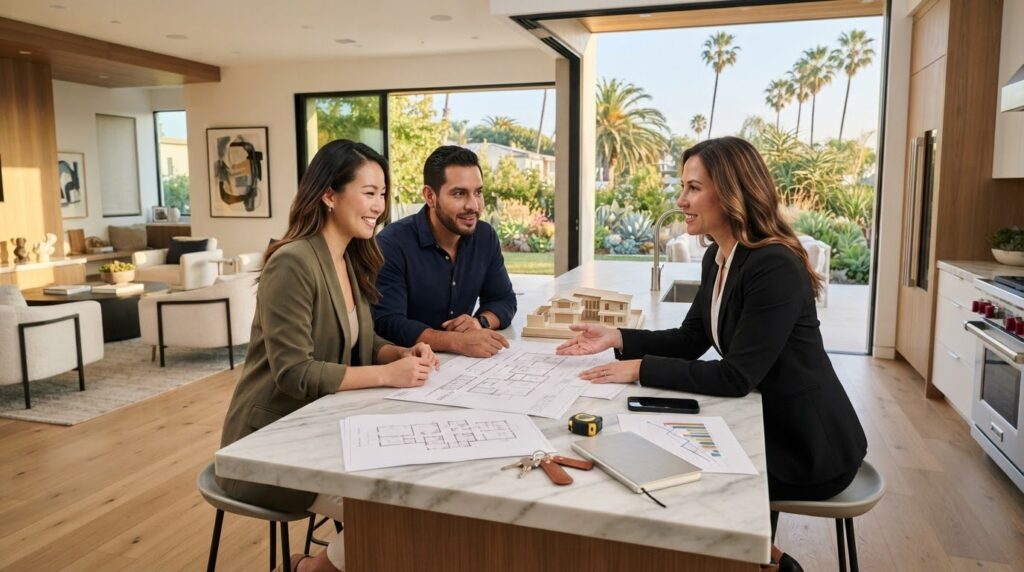
In October 2026, 23.5% of Los Angeles listings had a price cut, according to PicksByProperty. That’s a useful reminder: the right asking price and sale plan matter, even in a market where every neighborhood has its own rhythm. If you’re weighing what to fix, how to price, or whether a faster sale fits your priorities, this home sellers guide to los angeles 2026 offers a practical place to start.
A successful sale isn’t about doing every possible upgrade or copying another seller’s approach. It’s about matching your home’s condition, position, timing, and marketing strategy to your goals. Local context matters too. Nearby sales and buyer expectations in Santa Monica, Mar Vista, and Venice can all inform a pricing decision.
This guide lays out a sequence for planning, preparing, pricing, choosing a selling approach, reviewing offers, and moving toward closing. You’ll also find ways to use staging and targeted minor upgrades to improve presentation without turning preparation into an open-ended project. The goal is a confident sale plan built around what matters to you.
Key Takeaways
- Use the home sellers guide to los angeles 2026 to build a sale plan around your property, goals, and relevant local market evidence.
- Prioritize visible maintenance and presentation, then weigh larger projects against their cost, disruption, and likely benefit.
- Compare a direct sale with an agent-represented listing by timing, preparation, marketing exposure, negotiation, and the level of involvement you want.
- Keep the sale organized with distinct steps for pricing, launch, showings, offer review, negotiation, and escrow.
- Local seller representation can connect property positioning with marketing, offer negotiation, and guidance through closing.
What Los Angeles Home Sellers Should Understand About the 2026 Market
A useful sale plan starts with your home and priorities, not a single Los Angeles market headline. A citywide median can offer context, but it can’t tell you what buyers may pay for a particular home in Santa Monica, Mar Vista, or Venice. Start by assessing your property, its condition, and the buyers most likely to value its features.
Market figures depend on when and where they were measured, as well as the property type they describe. PicksByProperty reported that Los Angeles homes were going pending in about 24 days in October 2026, while Redfin reported an average of 52 days on market for Los Angeles County that month. The figures cover different geographies and measures, so they aren’t interchangeable or a reliable timeline for an individual home.
For a broad overview of the forces shaping local employment and demand, see the Economy of Los Angeles. To consider how neighborhood identity can shape a seller’s perspective, the Mar Vista neighborhood guide explores one Westside community in more detail.
For an overview of questions sellers are weighing in 2026, watch:
Why Los Angeles market headlines need neighborhood context
Citywide and countywide indicators describe broad conditions. Pricing your home calls for a closer look at comparable sales: nearby properties with a similar type, size, condition, and set of features. A renovated house may not be well represented by condo sales, and a home needing updates may not compare closely with turnkey listings. Treat broad figures as background, then focus on recent local evidence that reflects your property.
When reviewing 2026 inventory, pricing, or timing figures, check the publication date, geographic boundaries, property type, and measurement. “Los Angeles” might refer to the city, county, or a specific neighborhood. A close, current comparison is more useful than a striking figure without context.
How location and property type shape a seller’s starting point
Homes, condos, and investment properties can attract different buyers, so the features buyers prioritize may vary. For a home, layout and outdoor space may be key selling points. For a condo, the setting and shared features may matter more. Buyers looking at an investment property may assess its existing use and potential differently from someone searching for a primary residence.
Westside neighborhoods are not interchangeable. Santa Monica, Mar Vista, and Venice each have a distinct character, and buyers may value different aspects of location, architecture, and daily life. Just as sellers in neighboring South Bay coastal communities look to robertneff.com for localized market guidance, Westside sellers must evaluate the specific nuances of their own immediate area. Reflect those differences in the listing rather than assuming demand is identical across the area. This home sellers guide to los angeles 2026 is most useful when you apply market context to your specific property and goals.
How to Prepare and Position Your Los Angeles Home for Sale
Preparation works best as a focused plan, not a long wish list. The aim is to make the home easy to understand and appealing to likely buyers while keeping your time and budget in view. In this home sellers guide to los angeles 2026, each preparation decision connects the property’s condition and presentation to its market position.
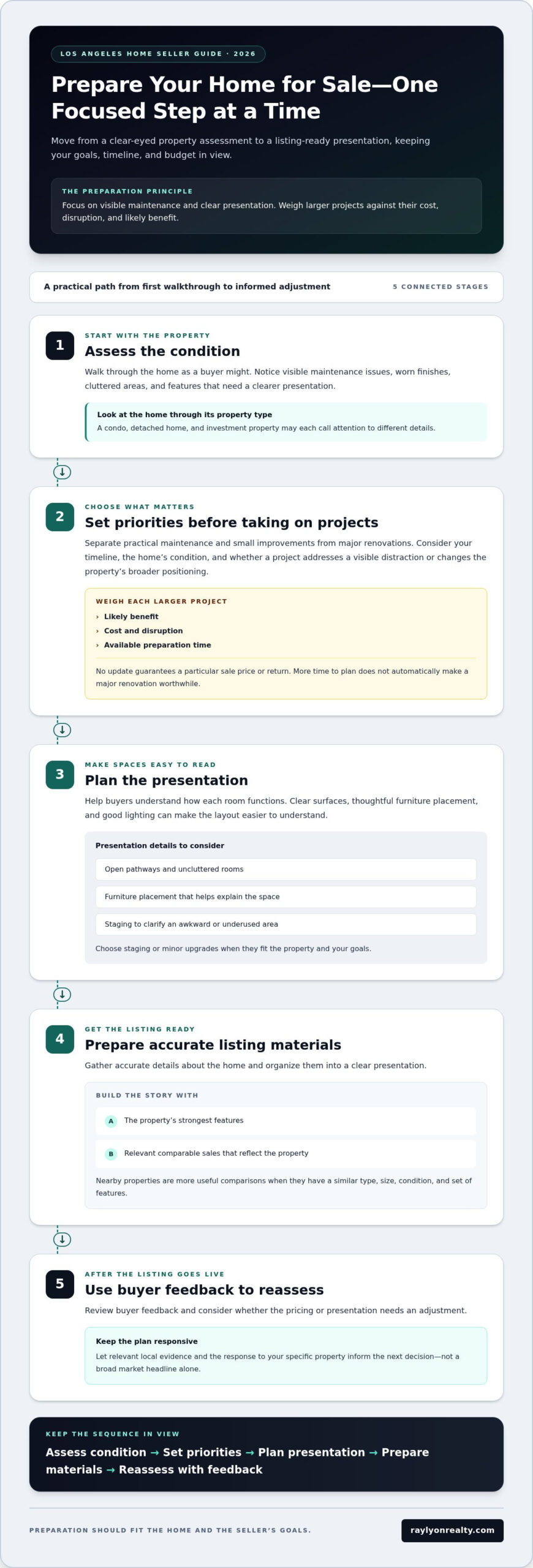
Use this sequence to move from an initial assessment to a listing-ready property:
- Assess the condition. Walk through the home as a buyer might. Note visible maintenance issues, worn finishes, cluttered areas, and features that need a clearer presentation. Consider how the property type shapes your review: a condo, detached home, and investment property may each call attention to different details.
- Set priorities. Separate practical maintenance and small improvements from major renovations. Consider your timeline, the home’s condition, and whether a project addresses a visible distraction or changes the property’s broader positioning.
- Plan the presentation. Decide how each room can show its purpose. Clear surfaces, thoughtful furniture placement, and good lighting can help buyers understand how the space functions. Staging or minor upgrades may support the presentation when they fit the property and your goals.
- Prepare listing materials. Gather accurate details about the home and organize information for a clear presentation. Pair the property’s strongest features with relevant comparable sales. After the listing goes live, use buyer feedback to consider whether pricing or presentation needs an adjustment.
Which repairs and updates deserve attention before listing?
Start with issues buyers are likely to notice during a viewing, such as a damaged surface, a sticking door, or a crowded room that is difficult to use. This helps distinguish straightforward maintenance from larger projects that need careful consideration. A short preparation window may favor focused fixes. More time allows for additional planning, but it doesn’t automatically make a major renovation worthwhile.
Weigh a project’s likely benefit against its cost and disruption. No update guarantees a particular sale price or return. For broader context on statewide expectations, the California Association of REALTORS® 2026 Forecast can inform your market research, but it doesn’t replace property-specific judgment.
How staging and presentation can support a listing
Presentation helps buyers picture how a home lives. Open pathways, uncluttered rooms, and balanced lighting make a layout easier to understand, while staging can clarify the purpose of an awkward or underused area. Choose an approach that reflects the home’s condition and the buyers it is positioned to reach, rather than following a one-size-fits-all checklist.
Ray Lyon Realty supports sellers with staging and coordination of minor upgrades as part of property preparation. For a plan that connects presentation with local positioning, explore Westside home seller representation.
Which Los Angeles Home-Selling Approach Fits Your Priorities?
There isn’t one best way to sell every Los Angeles home. An agent-represented listing and a direct-sale route can differ in preparation, exposure, negotiation, and how involved you are. Start by deciding what matters most to you: convenience, timing, flexibility, or reaching a broad pool of potential buyers.
A represented listing typically involves setting a pricing strategy, preparing and marketing the property, reviewing offers, and negotiating terms with professional guidance. For sellers examining flexible options across different regional markets, brokerages like Congress Realty offer standard and full-service listing plans designed to streamline the transaction. A direct sale generally involves negotiating with a buyer directly, with the process shaped by the offer and the parties’ agreement. Neither approach guarantees a particular timeline or result. Compare the full terms and estimated net proceeds, not just the headline price or a claim about speed.
How a represented listing differs from a direct-sale option
With representation, your home is positioned for the market through pricing, presentation, and marketing. Offers can be assessed for both price and conditions. A direct-sale route may suit you if you prefer a more direct transaction, but its terms depend on the buyer and agreement. For either approach, compare timing, contingencies, costs, and expected proceeds together before deciding.
Factor
Agent-represented listing
Direct-sale route
Timing
The launch and sale timeline depends on preparation, buyer interest, and transaction terms.
The proposed schedule depends on the buyer’s offer and agreed steps.
Preparation
You can plan presentation around the home and intended market position.
The offer may account for the home’s current condition; terms vary.
Marketing exposure
Marketing is designed to present the property to potential buyers.
Exposure depends on the direct-sale arrangement.
Negotiation
Offers and conditions are reviewed and negotiated with representation.
Negotiation is directly between the parties or their representatives.
Seller involvement
You make key decisions while receiving support through the sale.
Your role depends on how the transaction is structured.
How to weigh speed, preparation, and market exposure
Consider the trade-offs in light of your situation. If a move is approaching and you have limited capacity for preparation, convenience may matter more than maximizing marketing exposure. If you can prepare the property and want to reach a wider buyer pool, a marketed listing may fit your priorities better. Neither scenario promises a faster closing or a higher price.
Before choosing, write down your preferred timing, the preparation you can manage, and the flexibility you need around offer conditions. Compare written offers or sale plans against the same criteria, including estimated net proceeds and conditions that could affect closing. This home sellers guide to los angeles 2026 is designed to help you decide based on your priorities, not assumptions about which route always performs best.
Step-by-Step Plan for Selling a Home in Los Angeles in 2026
A sale is easier to manage when each decision has its place. This checklist takes you from setting priorities to closing, with room to adapt to your property, timing, and offer terms. Use it as a working plan, not a substitute for reviewing current transaction requirements.
What to organize before the listing goes live
Before launch, collect property records and details that can help create accurate listing materials. Coordinate preparation, photography, showing access, and timing so the home is ready to be presented consistently. Disclosure forms and transfer-tax requirements can vary with current California and local rules, so include a review of applicable requirements in your planning.
- Set your goals. Clarify your preferred timing, priorities for the sale, and how much preparation and showing activity you can manage. These decisions will guide the steps that follow.
- Review pricing. Use comparable sales that match your property and location. Consider current competition and buyer response when setting an asking-price strategy.
- Prepare the property. Address priority maintenance, plan the presentation, and coordinate staging or minor upgrades where they support your goals. Review larger projects carefully.
- Gather listing information. Organize property records and relevant details for accurate marketing materials. Confirm current disclosure forms and requirements for the home, along with relevant local transfer-tax and transaction requirements.
- Plan the listing launch. Align photography, marketing, showing access, and launch timing. Make sure the home is ready for buyers to view and its features are presented clearly.
- Manage showings and feedback. Track buyer responses and questions. Use relevant feedback to assess whether presentation or pricing needs a thoughtful adjustment.
- Compare offers and negotiate. Review the full terms, not just the offered price, and negotiate with your priorities in mind.
- Move through escrow to closing. Follow the agreed transaction milestones, respond to requests through the appropriate parties, and review closing documents before the sale is finalized.
How to compare offers and move through closing
An offer’s price is only one part of the decision. Compare contingencies, financing, proposed timing, and other contract terms together. A contingency is a condition in the agreement that may give a buyer a way to cancel or renegotiate if specified criteria aren’t met. Details and deadlines depend on the contract, so have the terms explained and review legal questions with an appropriate professional.
During escrow, the parties work through agreed conditions and required transaction steps before closing. The exact process and local practices can vary, so confirm current requirements rather than relying on an old checklist. A home sellers guide to los angeles 2026 can help you stay organized while leaving room for the details of your contract and property.
For a sale plan that connects pricing, preparation, negotiation, and closing, explore Los Angeles seller representation.
How Ray Lyon Realty Supports Los Angeles Home Sellers
A confident sale plan brings local insight and practical decisions together. Ray Lyon Realty represents residential sellers across the Westside, connecting a property’s neighborhood position with pricing, presentation, and marketing choices. Whether you’re selling a home, condo, or investment property, the plan can reflect the property’s features and your priorities rather than a one-size-fits-all checklist.
This home sellers guide to los angeles 2026 has followed the decisions from preparation to closing. Seller representation can keep those stages connected, so the choices made before listing support the way the property is presented, offers are assessed, and the transaction moves forward.
What seller representation can include from preparation to closing
Preparing a home for the market starts with identifying work and presentation choices that suit its condition and positioning. Ray Lyon Realty supports staging and coordinates minor upgrades to improve a property’s appeal. This helps sellers focus on practical steps and weigh larger projects carefully, rather than assuming every renovation is worthwhile.
Strategic pricing and marketing work together. Pricing considers the property and relevant local market context; marketing presents its features to prospective buyers. As offers arrive, seller representation includes reviewing the full terms and negotiating with the seller’s goals in mind, not focusing on price alone. Closing guidance continues through the final stage, helping sellers stay oriented as the transaction progresses.
- Preparation: Coordinate staging and minor upgrades suited to the property.
- Listing: Align pricing and marketing with the home’s features and market position.
- Offer review: Consider price alongside conditions and other terms.
- Closing: Receive guidance as the sale advances toward completion.
Why Westside neighborhood knowledge matters to your sale
Local context can sharpen decisions about how to position a property. Ray Lyon Realty focuses on the Westside, including Santa Monica, Mar Vista, and Venice. These neighborhoods shouldn’t be treated as identical markets. Buyer expectations, property characteristics, and local context can influence which features deserve emphasis in pricing and presentation. Understanding the distinctions helps ground a listing in its actual setting.
For broader context on local representation, the Los Angeles real estate agent guide can help clarify what seller support may involve. The next step is to discuss your property, priorities, and the decisions ahead. Talk with Ray Lyon Realty about selling and explore a plan tailored to your home and goals, even if you haven’t settled every detail.
Make Your Next Sale Decision With Confidence
Turn your priorities into a short, workable plan. Decide what you need from the sale, what preparation feels manageable, and which questions still need answers. That gives you a clearer foundation for weighing your options and keeping the process aligned with your goals.
This home sellers guide to los angeles 2026 can help you move from uncertainty to a plan, but your property and circumstances will shape the details. A thoughtful conversation can clarify where to begin and what deserves attention first, without requiring you to settle every decision in advance.
Ray Lyon Realty provides residential representation focused on the Los Angeles Westside, with seller support spanning pricing, marketing, staging coordination, and offer negotiation. Talk with Ray Lyon Realty about your Los Angeles home sale and take the next step with a plan built around your priorities.
Frequently Asked Questions
Is 2026 a good time to sell a home in Los Angeles?
It may be, depending on your goals, property, neighborhood, and current comparable sales. A home sellers guide to los angeles 2026 should treat the calendar as context, not a guarantee of a strong result. Review recent sales and competing listings near your home, allow time for preparation, and consider how a sale fits your next move. A seller relocating on a fixed schedule may weigh timing differently from one with more flexibility.
How long does it take to sell a home in Los Angeles?
There’s no single timeline for every Los Angeles home. Preparation and marketing happen before a buyer’s offer is accepted; the contract-to-closing period follows and depends on the agreed terms and transaction progress. Pricing, condition, buyer interest, and offer details can all affect the overall schedule. If you’re coordinating a purchase, move, or school calendar, build in flexibility and review activity in your neighborhood rather than relying on a citywide estimate.
Do I need to make repairs before selling my Los Angeles home?
No single repair list fits every property. A visibly damaged surface or a door that doesn’t close smoothly may distract buyers, while a larger renovation could take time and may not suit your plans. Consider safety concerns, the home’s presentation, your timeline, and what buyers are likely to expect for similar properties. A property-specific review can help you decide what to address, but no repair or upgrade guarantees a higher sale price.
What disclosures are required when selling a home in Los Angeles?
Disclosure requirements depend on the property and transaction, and rules may apply at the state or local level. Sellers should provide accurate information and review current requirements with qualified real estate and legal professionals. Before listing, verify applicable California, county, and city requirements using current authoritative sources, since rules can change. This FAQ offers general information, not legal advice, and it isn’t an exhaustive checklist of disclosures for every Los Angeles sale.
What seller costs should I plan for when selling a Los Angeles home?
Potential costs can include transaction-related charges, property preparation, and items negotiated in the purchase agreement. Which costs apply depends on your property, its location, and the final terms, so a general checklist can’t establish your actual net proceeds. Request an itemized estimate for your transaction and review each line before making decisions. Verify current taxes and transfer requirements with authoritative sources, since applicable charges may depend on where the property is located.
Can I sell my Los Angeles home as-is?
You may choose to market a home in its current condition, but “as-is” doesn’t by itself settle disclosure responsibilities or guarantee buyer acceptance. Buyers may weigh visible condition, likely repair needs, price, and contract terms when deciding whether to make or continue with an offer. Consider whether addressing a concern or adjusting the property’s positioning better fits your goals. Review current legal requirements with qualified professionals, and don’t assume an as-is sale will be faster.