

The signing appointment is only the final stretch: closing on a U.S. home often takes 30 to 60 days after an offer is accepted, and you should allow at least two hours for the appointment itself. Knowing what to expect on closing day can help you arrive prepared, review the paperwork carefully, and understand when you’ll receive the keys.
It’s normal to have questions about the final walk-through, funds, and last signatures. This guide explains what to bring, how to prepare for the walk-through, and what happens as the sale is completed. You’ll also learn when keys are typically handed over and why timing can depend on the transfer of funds and local recording steps, so you can plan your move with greater confidence.
Key Takeaways
- Plan for the closing appointment to take at least two hours, and keep your schedule flexible in case signing or funding takes longer.
- Use the final walk-through to check agreed repairs and look for new damage before completing the purchase.
- Bring photo identification, proof of homeowners insurance, and the confirmed form of payment, then review names and figures in the closing documents.
- Keys are typically handed over after signing and funds transfer, but deed recording requirements can affect the timing.
Completing the final walk-through
A wet closing generally means signing paper documents in person; a remote online closing uses electronic signing and remote notarization. Remote closings are possible in many cases, depending on state laws and lender requirements. State and local procedures can also affect deed recording and whether recording must happen before keys are released.
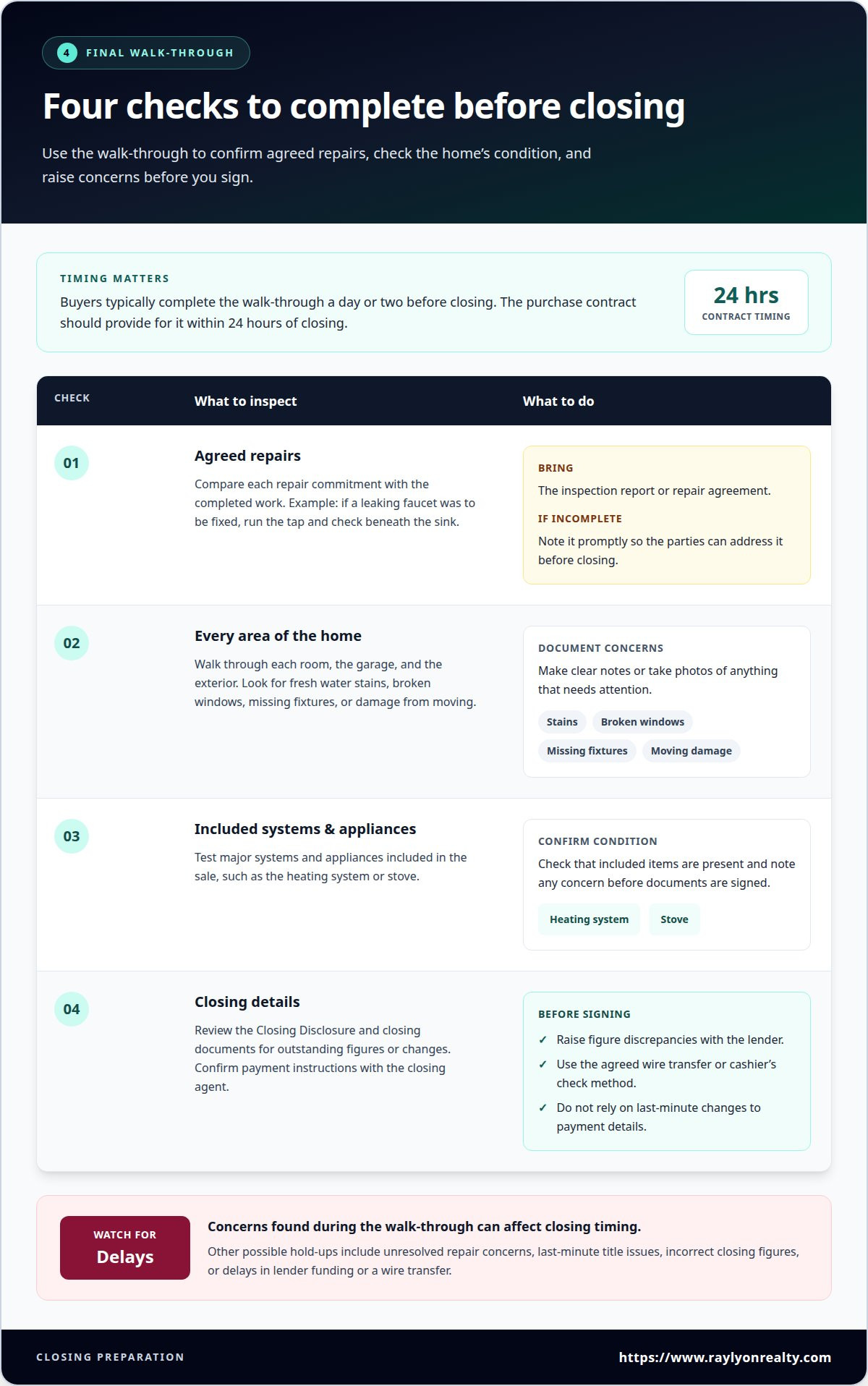
A closing can be delayed by unresolved repair concerns, last-minute title issues, incorrect closing figures, or a hold-up in lender funding or a wire transfer. Use these steps to make the final walk-through count.
- Schedule the final walk-through. Buyers typically complete it a day or two before closing. The purchase contract should provide for the final walk-through within 24 hours of closing. Arrange access with the seller’s agent and leave enough time to report concerns before documents are signed.
- Check the agreed repairs. Bring the inspection report or repair agreement, then compare each commitment with the work completed. For example, if the seller agreed to fix a leaking faucet, run the tap and check beneath the sink. Note incomplete repairs promptly so the parties can address them before closing.
- Look for new damage and confirm the home’s condition. Walk through each room, including the garage and exterior. Look for fresh water stains, broken windows, missing fixtures, or damage from moving. Test major systems and appliances included in the sale, such as the heating system or stove, and document any concern with clear notes or photos.
- Finish preparations before the appointment. Review the closing disclosure and closing documents for outstanding figures or changes, and raise discrepancies with the lender before signing. Confirm payment instructions with the closing agent; use the agreed wire transfer or cashier’s check method. Avoid relying on last-minute instructions that change payment details.
What Should I Bring to Closing?
Prepare your identification, purchase paperwork, insurance details, and funds before the appointment. Then review each legal document carefully before signing.
-
Bring buyer closing documents
Gather a government-issued photo ID, a copy of the purchase contract, and any paperwork requested by your lender or closing agent. Bring proof of homeowners insurance, too. According to the Consumer Financial Protection Bureau, you should receive the Closing Disclosure at least three business days before closing. Keep it with your other documents so you can compare its figures with your latest loan estimate.
-
Prepare funds for closing
Confirm the amount due and acceptable payment method with the closing agent or lender before the appointment. Buyers may pay closing costs by certified or cashier’s check, or by wire transfer, depending on the instructions provided. Bring proof of the transfer if you wire funds. Don’t rely on assumed payment details; the amount and method should match the closing instructions.
-
Review documents, sign, and confirm key handoff
Compare the Closing Disclosure with your latest loan estimate. Some fees may change slightly, but major surprises should be addressed before signing. Check names, spelling, figures, and loan terms across the closing documents. If a figure looks wrong, raise it with your lender or closing attorney before signing.
Read each legal document at a steady pace and ask about any language you don’t understand. Purchase paperwork may include the Closing Disclosure or ALTA Settlement Statement, title documents, and loan forms. Make sure you understand what each signature confirms. Careful checks help keep the real estate closing smooth and reduce confusion about the final figures.
After required documents are signed and funds are transferred, buyers typically receive the keys on closing day. In some places, local government filing must happen first, so the handoff may follow that step. For guidance on a home purchase or investment property, explore real estate buying support.
Choosing a title company and completing a title search
Title work helps clarify ownership before the property transfer. Start early so the title company can review records and prepare the closing paperwork.
-
Choose a title company
Select a title company a few weeks before closing, giving it time to conduct the title search. Confirm who will coordinate the search, escrow, and documents with the lender and other transaction participants. Ask how the company will share its findings and handle questions about the property’s ownership record. Clear coordination helps prevent missing paperwork from holding up the transfer.
-
Coordinate the title search and insurance
Provide the title company with the property details and purchase information it needs to search public records. The search looks for issues that could affect ownership or the seller’s ability to transfer the property. If a record raises a concern, ask how it affects the closing paperwork and what must be resolved before signing.
Review the title insurance documents alongside the deed and loan paperwork. A buyer’s title insurance policy is a one-time purchase that protects the buyer’s financial interests against future title issues for as long as the buyer owns the insured home. Keep the policy with your closing documents after completion.
-
Decide how ownership will be held
Before the deed is prepared, decide whose names should appear as owners and how ownership should be held. A sole buyer and two co-buyers, for example, need different names and ownership details in the transfer documents. The form of ownership can affect a future transfer, so discuss your plans with the closing attorney before the deed is finalized.
Review the deed and related paperwork to ensure the names and property details are consistent. The promissory note records the borrower’s promise to repay the loan, while the deed documents the ownership transfer. Keep these roles clear as you review the closing package, and ask about any mismatch before signing.
Funding, deed recording, and getting the keys
Buyers typically receive keys on closing day after signing and the transfer of funds. Some locations require local government filing first, which can affect when possession begins.
-
Sign mortgage and deed paperwork
Read every document before signing, including the mortgage agreement, promissory note, and deed. The seller must sign the deed, and the buyer may also need to sign. An attorney can explain legal documents and answer questions about contract terms or financial figures. Set aside time for a careful review: buyers may spend one to two hours signing, and some transactions take longer.
Confirm that the names, property details, and loan terms match the agreed purchase. If a document differs from the terms you reviewed days before closing, pause and raise the discrepancy before signing. The signed paperwork authorizes the next steps in completing the sale.
-
Record the deed
The title company submits the deed for recording after the sale closes. A title company employee usually takes it to the county administrative offices. Recording creates the public record of the ownership transfer, and the deed recording fee is typically included in closing costs.
Keep copies of the signed deed and closing paperwork. A few weeks after closing, check with the title company to confirm that the county office has officially recorded the deed. If recording is still pending, ask what step remains and how it affects your ownership documentation.
-
Receive the keys and take possession
Coordinate the handoff of keys, garage door openers, and final property information with your real estate agent. Funds move after the documents are signed and the lender authorizes funding. The seller’s proceeds and agent commissions are disbursed, and existing loans are paid off as part of the process.
Plan your move around the agreed possession timing, not just the signing appointment. If local filing must happen before key release, the transfer may follow recording rather than occur immediately after signing. Before you leave, confirm you have the access items and final information needed for the home.
For guidance as you plan a home purchase and its closing steps, connect with a real estate professional.
Ray Lyon Realty
Ray Lyon Realty can guide buyers and sellers through the residential transaction, from offer decisions to the closing handoff. As your real estate agent, Ray Lyon Realty can help you understand the process, stay informed about next steps, and coordinate practical details such as transferring keys and garage door openers. For buyers considering an investment property, support can also include navigating a purchase involving a 1031 exchange or trust sale. The right time to involve an agent is before you make an offer, so you can discuss your goals and understand the steps that may shape your transaction. Contact Ray Lyon Realty to talk through your real estate plans.
Make your next move with confidence
A clear plan for what to expect at closing day helps you focus on what comes next: how the home fits your needs, what to prioritize after purchase, and how to prepare for the transition. Your real estate agent can help keep the transaction moving and clarify practical next steps as you approach the handoff.
Ray Lyon Realty represents residential buyers and sellers, with experience in new construction sales and luxury listings. Whether you’re planning a purchase or preparing to sell, a real estate professional can help you navigate the process.
Contact Ray Lyon Realty to discuss your real estate plans, and take your next step with a clearer sense of direction.
Frequently Asked Questions
How long does closing on a house take?
A U.S. home purchase commonly takes four to eight weeks after the seller accepts an offer. For buyers wondering what to expect at closing day, the appointment itself is one part of that timeline, and buyers should allow at least two hours. Loan processing, title work, unresolved contract conditions, or funding delays can affect the schedule. Keep moving plans flexible until the transfer is complete.
What happens at closing?
Closing is the stage when the buyer and seller complete the sale through signed paperwork and transferred funds. The package may include a mortgage agreement, promissory note, deed, and settlement statement. The closing or escrow officer helps coordinate the transaction. Before signing, pause if an amount or term differs from what you expected, and ask for clarification.
How do I close?
Start by meeting the deadlines in your purchase contract and responding to lender and title requests. Arrange the final walk-through, review the closing figures, and have your identification and payment ready. At the appointment, read every document before signing and raise discrepancies promptly. Once the lender authorizes funding and required steps are complete, the sale can proceed to handoff.
What is the attorney’s role on closing day?
An attorney can explain legal documents and address last-minute questions about contract terms or financial figures. If a settlement statement differs from the agreed terms, for example, the attorney can help clarify the discrepancy. Attorneys may also review whether the title policy meets the requirements intended to protect the buyer and lender. Their role focuses on legal questions, not loan approval.
Who is actually at the closing table?
An in-person closing may include the buyers, sellers, real estate agents, attorneys for each party, and an escrow or closing officer. Attendance varies; sellers may sign their documents in advance rather than attend the appointment. Remote closings are possible in many cases, depending on state laws and lender requirements, so the signing arrangement can vary.
What happens step by step on closing day when buying a home?
A practical way to understand what to expect at closing day is to follow the transaction sequence. First, the closing officer organizes the documents and confirms the figures due. Next, the buyer reviews and signs the loan, title, and sale paperwork, then provides the required funds. The lender authorizes funding, and the title company handles deed recording. Key transfer follows the required steps, which can include local filing.