

A legitimate-looking offer can still be a trap. Common real estate scams in California include fake buyers who overpay and ask sellers to return the excess, foreclosure-relief pitches that demand upfront fees or promise to erase debt, and property-flipping schemes that use manipulated appraisals to inflate a sale price. Each relies on deception to take money, property, or control of a transaction.
It’s understandable to be cautious when a deal involves your home, savings, or a time-sensitive closing. The best protection is to recognize warning signs before signing documents, transferring money, or handing over title. Treat requests that feel urgent or unusually generous as reasons to pause and verify.
This guide explains how these schemes work, what to watch for in emails and property documents, and practical ways to protect yourself. It also shows how to distinguish suspicious conduct from a legitimate transaction, so you can make decisions with greater confidence.
Key Takeaways
- Be wary of buyers who overpay and ask you to send money back; verify funds and terms before taking action.
- Upfront charges and promises to erase mortgage debt are warning signs in foreclosure-relief offers.
- Independent property appraisals can help reveal inflated values tied to questionable flipping schemes.
- Confirm any changed wire instructions by calling a trusted contact using a number you already know.
1. Fake buyer and overpayment scams
A fake buyer may offer to purchase a California home without the usual questions, then create pressure to act quickly. The check may later prove fraudulent, leaving the seller responsible for money already sent.
Pause if a buyer asks you to return funds, pay a third party, or change agreed payment instructions. Don’t send money based on a check image or the buyer’s assurance. Confirm payment directly with the financial institution, using contact details you find independently, and keep transaction communications and documents together. A complicated explanation for an unusual payment is a reason to slow down.
A straw buyer scheme uses one person to purchase property on behalf of someone else. The person named as the buyer may not be directing the deal or supplying the money. Don’t agree to buy a home for another person without understanding the risks and consequences. Be especially cautious if someone else controls the transaction while asking you to sign documents or make statements about your finances.
Seniors with substantial home equity can be targeted by people who use false pretenses to persuade them to sell or transfer ownership. Before signing a deed or other ownership document, understand which rights you would give up and who would gain control. California homeowners can ask their county recorder’s office whether a deed notification program is available and enroll if offered.
For a purchase or sale, request information about the property’s permits, repairs, and improvements. If a real estate salesperson or broker raises concerns, California consumers can file a complaint with the California Department of Real Estate. These steps help you examine both the payment request and the person or property behind it.
2. Foreclosure relief scams
A foreclosure-rescue pitch often arrives when a homeowner feels pressed to act. A company may promise to stop foreclosure immediately, erase mortgage debt, or negotiate a solution in exchange for an upfront payment. Treat these promises as warning signs. Homeowners seeking foreclosure help shouldn’t pay upfront fees for that assistance, and no loophole can legally cancel a borrower’s mortgage debt.
The MARS Rule bars foreclosure-relief companies from charging homeowners until they have accepted a written offer from their lender. A promise to negotiate is not the same as an accepted lender offer. Be suspicious of anyone who charges a fee to cancel or eliminate mortgage debt, or insists on payment before providing a written result.
Before agreeing to a service, take two steps: seek help from a certified housing counselor, and check whether the company is HUD-approved or affiliated with a legitimate government program. A caller claiming they can stop foreclosure immediately should not replace those checks. Compare specific promises with the written terms, and don’t sign documents with unclear language.
Some foreclosure-rescue schemes ask homeowners to transfer the property title, claiming this will prevent the home from being lost. Don’t hand over ownership based on that promise. A title transfer can give another person control of the property while leaving the borrower with serious financial consequences. Keep copies of every document, payment request, and message, then review the paperwork with the certified housing counselor before signing. If a document says the homeowner is transferring title, pause and understand exactly what ownership rights it changes. For a separate home purchase or investment decision, explore real estate transaction guidance before committing to the property.
3. Property flipping and manipulated appraisals
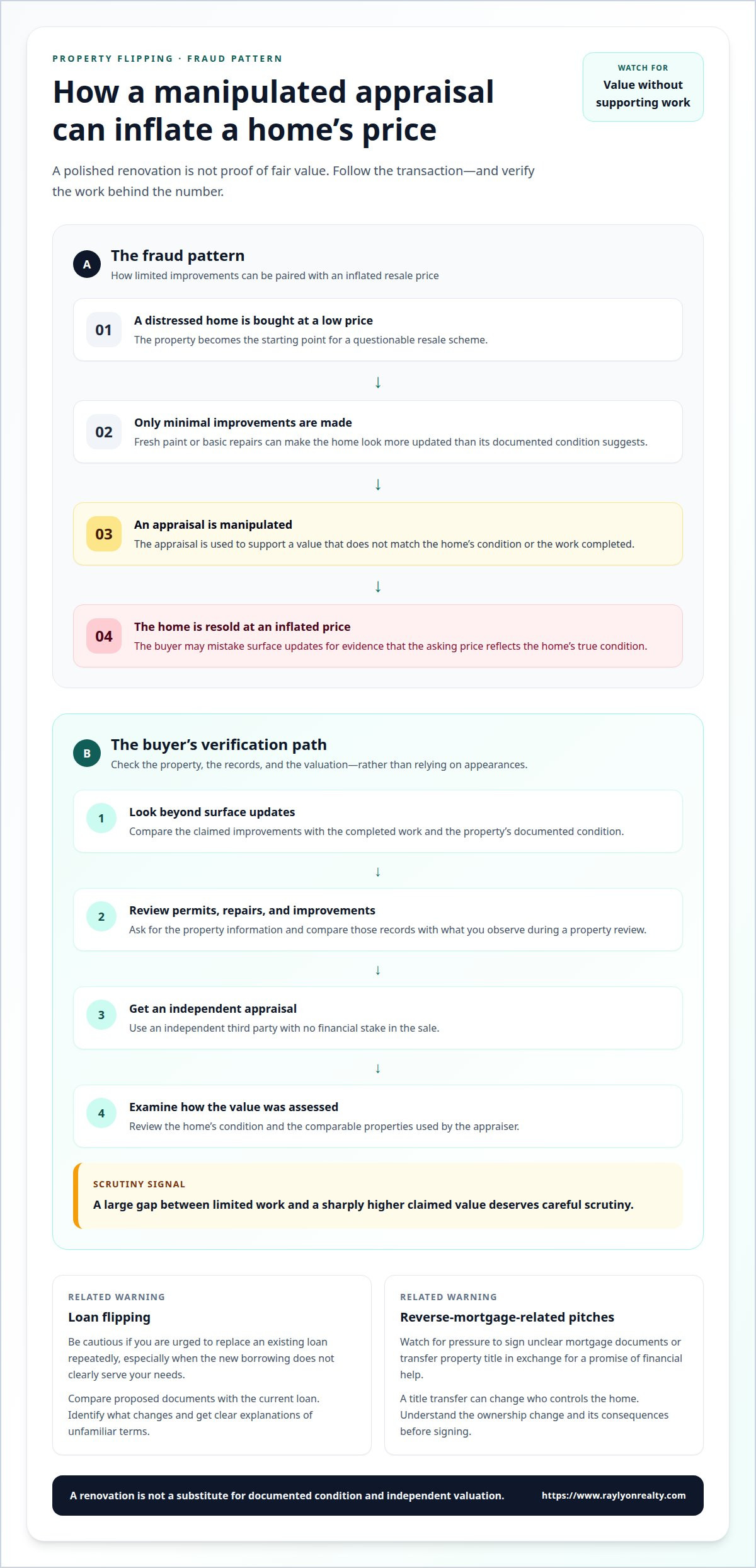
Property-flipping fraud can begin with a distressed home purchased at a low price. A dishonest seller may make minimal improvements, then manipulate an appraisal to support an inflated resale price. Buyers may see fresh paint or basic repairs and assume the asking price reflects the home’s true condition. Look beyond surface updates: compare claimed improvements with completed work and the property’s documented condition.
California consumers should have an appraisal performed by an independent third party with no financial stake in the sale. Review how the appraiser assessed the home, including its condition and comparable properties. Ask for information about permits, repairs, and improvements, then compare those records with what you observe during a property review. A large gap between limited work and a sharply higher claimed value deserves careful scrutiny.
Loan flipping is another warning sign: a borrower may be urged to replace an existing loan repeatedly, even when the new borrowing does not clearly serve their needs. Each new loan can change the borrower’s debt and the terms tied to the property. Before signing, compare the proposed documents with the current loan, identify what changes, and ask for clear explanations of unfamiliar terms. Don’t rely on verbal assurances that the paperwork will benefit you.
Reverse-mortgage-related pitches can also exploit an older homeowner’s equity. Be cautious if someone uses a promise of financial help to pressure an owner into signing unclear mortgage documents or transferring property title. A title transfer can change who controls the home, so don’t sign until you understand the change in ownership and its consequences. For an investment purchase, assess the property’s condition, documented improvements, and independent valuation together. A polished renovation alone is not proof of fair value.
4. What is a real estate scam?
A real estate scam uses deception to take money, property, or control of a transaction. Business email compromise can involve hackers impersonating agents or escrow officers and sending fake wire instructions. Reported U.S. real estate fraud involving bogus emails reached $446.1 million in 2022. The FBI’s Internet Crime Complaint Center tracks real estate fraud as a separate crime category.
To spot fake listings, search the property address online and compare its price and named landlord across listings. The FTC recommends this check for renters. For a home purchase, compare listing claims with the property’s condition and request information about permits, repairs, and improvements. A mismatch between advertised features and the home may point to an undisclosed issue.
Mortgage fraud can involve falsifying income or assets to qualify for a larger loan. Borrowers should disclose their true financial circumstances to lenders. False information can lead to financial loss, foreclosure, and legal consequences.
Deed and title fraud may involve forged documents used to transfer ownership without the owner’s knowledge. Don’t act on unusual property documents before consulting a title company or attorney. Verify agent and financial institution credentials, and use multi-factor authentication for email accounts tied to a transaction.
Before wiring funds, call the escrow officer or agent using a number you already trust. Treat unsolicited payment changes and lookalike email domains as warning signs. For a California property sale or investment purchase, discuss your real estate plans with a professional.
Ray Lyon Realty: New Construction Sales
Ray Lyon Realty helps buyers considering newly built homes through its New Construction Sales service. For clients weighing a new property against an investment opportunity, its Investment Property Sales service can support that decision. Sellers preparing a high-end home for market can explore its Luxury Listing Agent service.
Scams can distort property details, values, and payment requests, so take time to understand the property and transaction before committing. Ray Lyon Realty helps clients with residential buying and selling decisions, including new construction, luxury listings, and investment properties.
Contact Ray Lyon Realty to discuss your real estate plans.
Make Your Next Property Move With Care
Knowing how common real estate scams in California operate can help you ask sharper questions and make a clearer plan for your next property decision. Put that awareness to work before making an offer, preparing a home for sale, or considering a new construction opportunity. A measured process gives you time to understand the property, your goals, and the transaction before committing.
For residential buying and selling, new construction, or luxury home listings, Ray Lyon Realty can help you consider your next steps. Start with the property you’re considering and what matters most to you, whether you’re looking for a home or preparing to sell.
Contact Ray Lyon Realty to discuss your real estate plans and move forward with confidence.
Frequently Asked Questions
What is a real estate scam?
A real estate scam is a deceptive attempt to obtain money, property, or control by misleading someone during a transaction. It may involve a fake identity, false financial details, or a document that misrepresents who owns a home. For example, a forged deed can make it appear that an owner transferred property without ever agreeing to do so.
What are the most common real estate scams in California?
Common real estate scams in California include fake-buyer and overpayment schemes, foreclosure-rescue pitches, inflated property values, fraudulent wire requests, and forged ownership documents. The tactics differ, but each depends on someone acting before checking a payment, claim, or document. Consider what the other party wants you to hand over: money, personal financial information, a signature, or control of the property.
How do California rental listing and fake landlord scams work?
A fake landlord may copy a genuine listing, advertise a property they don’t control, or show a different price or contact name for the same address. The FTC advises renters to search the property address online and be cautious if it appears with another price or landlord. Compare listing details, names, and contact information before discussing payment or sharing personal information.
What are the signs of a California real estate wire transfer or escrow scam?
Watch for an unexpected email changing where closing funds should go, especially if the sender’s address has a subtle spelling or domain difference. A fraudulent instruction may arrive close to closing and appear to come from an agent or escrow officer. Don’t rely on the phone number in the message. Call your known contact using a number from trusted records you already have, and confirm the instructions verbally.
How do title fraud and deed theft affect California homeowners?
Title or deed fraud can involve forged documents that falsely show a property transfer, potentially placing ownership records in someone else’s name without the homeowner’s knowledge. This can put the owner’s control of the home at risk and create problems when selling or borrowing against it. Keep important property notices and ownership documents together, and take unfamiliar transfer paperwork seriously before signing or responding.
What are foreclosure rescue and loan modification scams in California?
These scams target borrowers seeking help with mortgage payments or foreclosure, often using claims of guaranteed debt cancellation or immediate relief. Be wary of a company demanding payment before a lender has accepted a written offer, or anyone asking you to sign unclear loan documents. A mortgage cannot be erased through a supposed loophole. Share accurate financial information with your lender and seek help from a certified housing counselor.