

What if the best sale strategy isn’t asking a tenant to leave, but finding the right buyer for a home that’s already occupied? If you’re selling a tenanted property in los angeles, you may be able to sell with the tenant in place. The buyer generally takes on the existing tenancy and lease, while the tenant’s protections continue to apply. It’s understandable to have questions about timing, access, and whether pursuing a vacant sale is worthwhile.
The right approach depends on the lease, the property’s location, applicable tenant protections, and the buyers most likely to see value in the home. This 2026 guide compares selling with a tenant in place and pursuing a vacant sale, explains which California and local rules to review before setting a timeline, and covers practical ways to plan showings while respecting tenant privacy. You’ll also learn how pricing, presentation, and buyer targeting fit together. For Westside owners in Santa Monica, Mar Vista, and Venice, local market knowledge can help shape a sale plan around the property and its tenancy.
Key Takeaways
- Selling a tenanted property in los angeles can mean selling with the tenancy in place. Selling the home and ending the tenancy are separate decisions.
- Confirm the property’s jurisdiction and review its lease first, since applicable tenant protections can affect your options and timeline.
- Compare an occupied sale with a possible vacant sale by weighing likely buyers, preparation, access, timing, and whether the tenancy continues.
- Plan pricing, marketing, and showings around the property’s condition and occupancy, while respecting tenant privacy and applicable rules.
- A local seller representative can coordinate pricing, presentation, offer analysis, negotiation, and closing around the property’s likely buyers.
Selling a Tenanted Property in Los Angeles: What Can You Decide First?
A tenant-occupied sale transfers ownership, while the existing tenancy may continue. The first decision isn’t simply whether you want the home vacant. It’s which sale paths fit the lease, the property’s location, the tenant’s occupancy, and the likely buyer’s plans. Selling a tenanted property in los angeles may mean marketing to buyers prepared to take on an occupied home, or exploring a vacant sale only if there’s a lawful way to end the tenancy.
A sale transfers the property; it does not, by itself, end the tenancy. Ending a tenancy is a separate legal matter and may require a valid basis and compliance with applicable rules. Don’t promise a buyer vacant possession or set a move-out date until the relevant documents and legal requirements have been reviewed.
What happens to the tenancy when a Los Angeles property sells?
A sale alone doesn’t establish that a tenant must move. The buyer’s obligations can depend on the signed lease, any amendments or renewals, and tenant protections that apply to the property. That can shape the buyer pool: an investor may assess the existing agreement, while a buyer planning to occupy the home may need a different, legally reviewed path. Before setting sale terms, read the lease and related documents closely. For general background on state and local frameworks, see Rent control in California. It isn’t a substitute for checking which rules apply to a specific address.
Which details should you gather before choosing a sale strategy?
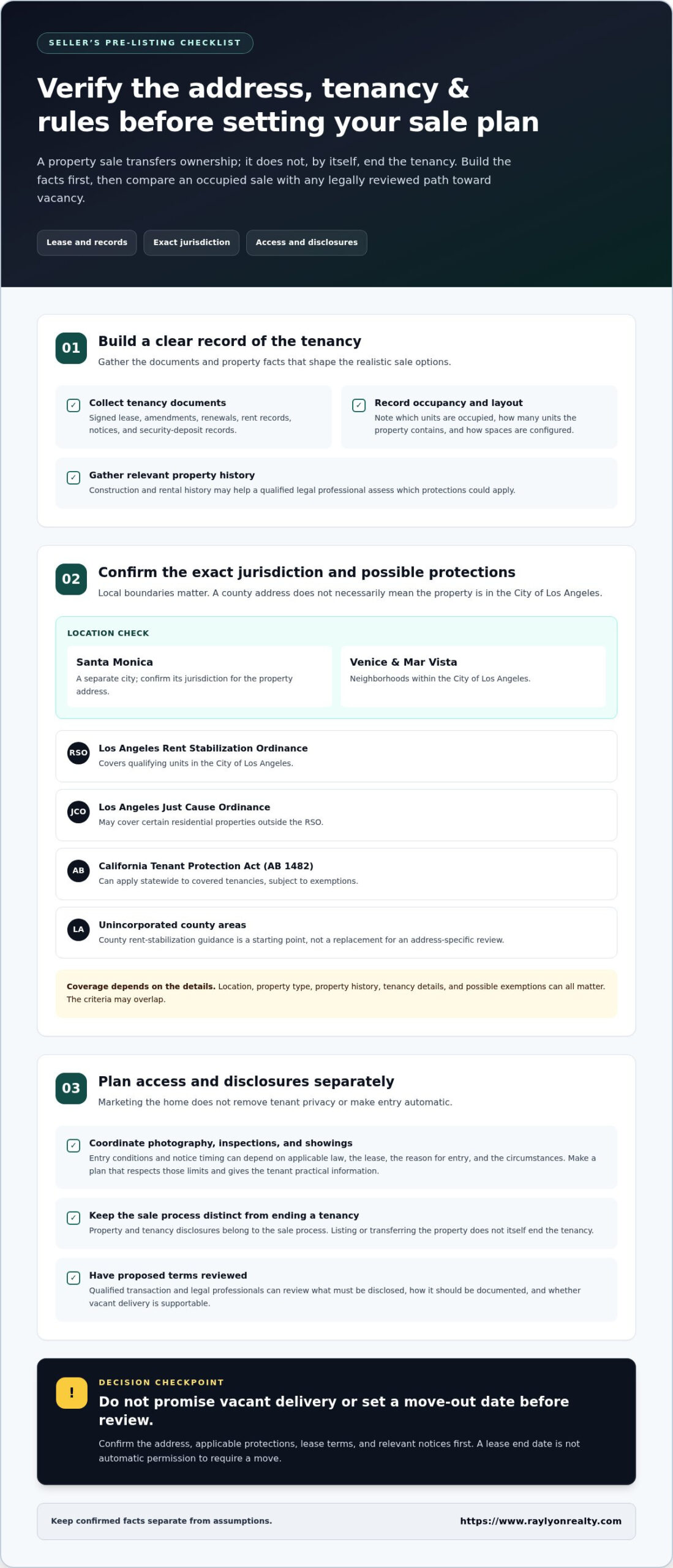
Build a clear record before choosing a timeline or describing the tenancy to prospective buyers. Collect the signed lease, amendments, renewal documents, rent records, notices, and security-deposit records. These documents help establish what has been agreed to and give a qualified legal professional a useful starting point for reviewing the situation.
- Confirm the jurisdiction. A Los Angeles County address isn’t necessarily within the City of Los Angeles. Identify the municipality, since local rules can differ by location.
- Record the occupancy and layout. Note which units are occupied, how many units the property contains, and how the spaces are configured.
- Gather relevant property history. Construction and rental history may help a qualified legal professional assess which protections could apply.
Keep confirmed facts separate from assumptions. For example, don’t treat a lease end date as automatic permission to require a move, or assume that rules applying to one Los Angeles property apply to another. A qualified landlord-tenant attorney can review the address, lease, occupancy, and property history before you commit to a vacancy plan. With that groundwork, compare an occupied sale with a legally reviewed path toward vacant possession, then shape pricing and marketing around the realistic options.
Los Angeles Tenant Protections: Resolve the Legal Questions Before Listing
Before setting a listing date or advertising the property as vacant, identify the rules that apply to its exact address. “Los Angeles” can mean the City of Los Angeles, another incorporated city in Los Angeles County, or an unincorporated county area. Those boundaries matter: a rule that applies to a property in one jurisdiction may not apply next door. An address-first review helps prevent you from building a sale plan around protections or procedures that don’t govern your property.
How do Los Angeles City and nearby local rules differ?
Santa Monica is its own city, while Venice and Mar Vista are neighborhoods within the City of Los Angeles. Don’t assume a county mailing address identifies the governing jurisdiction. Confirm the municipality and property address, then have a qualified legal professional assess which rules may apply.
The City’s Rent Stabilization Ordinance (RSO) covers qualifying units, while its Just Cause Ordinance (JCO) may cover certain residential properties outside the RSO. California’s Tenant Protection Act (AB 1482) can apply statewide to covered tenancies, subject to exemptions. The criteria overlap, so a property’s location, type, history, and tenancy details can all matter. For unincorporated county areas, the county’s Los Angeles County Rent Stabilization Ordinance guidance is a useful starting point, but it doesn’t replace an address-specific review.
What should sellers know about access, notices, and disclosures?
Marketing a home doesn’t remove a tenant’s privacy or make access automatic. Entry conditions and notice timing can depend on applicable law, the lease, the reason for entry, and the circumstances. Before photography, inspections, or showings, coordinate a plan that respects those limits and gives the tenant clear, practical information.
Keep two tracks separate. Property and tenancy disclosures belong to the sale process; ending a tenancy follows its own legal rules and isn’t accomplished simply by listing or transferring the property. Have qualified transaction and legal professionals review what must be disclosed, how it should be documented, and whether a proposed vacant-delivery term is supportable.
Before promising vacant delivery, confirm the current rules for the specific address and tenancy. Check the jurisdiction, potential RSO, JCO, and AB 1482 coverage, possible exemptions, lease terms, and relevant notices before setting buyer expectations. If the review points to an occupied sale, market the property accordingly rather than implying a move-out is certain. For help coordinating a sale strategy around occupancy and likely buyers, explore Los Angeles seller representation.
Sell With the Tenant or Pursue Vacancy? Compare the Los Angeles Paths
The right route depends on your priorities, such as continuity, timing, presentation, or reaching buyers who want to occupy the home. When selling a tenanted property in los angeles, compare the practical trade-offs before choosing a marketing plan. Neither an occupied sale nor a vacant one guarantees a better offer. The property, lease, buyer demand, and lawful options all shape the result.
| Consideration | Sell with the tenant | Explore a vacant sale |
|---|---|---|
| Buyer fit | May suit investors who are comfortable evaluating the existing tenancy. | May appeal to buyers seeking personal use or a home they can prepare themselves. |
| Preparation | Focus on presenting the property as it is, with accurate tenancy information. | May allow broader staging, repairs, or upgrades, subject to a lawful vacancy path. |
| Timing | Can avoid making the sale dependent on obtaining vacancy, though the transaction still has its own timeline. | Depends on whether and when vacancy can lawfully occur, plus any preparation afterward. |
| Access | Showings and other visits need to account for the tenant’s privacy and applicable access rules. | An empty home may make access easier once it is lawfully vacant. |
| Tenancy continuity | The buyer evaluates the existing lease and applicable tenant protections. | Vacancy does not happen merely because the owner lists or sells the property. |
When might selling with the tenant in place fit your goals?
This path may suit sellers who prioritize continuity or want to market to investors. Buyers can assess the lease, rent and payment records, property condition, and applicable tenant protections together. Present those details accurately, since each buyer may weigh them differently. Interest and financing depend on the specific property and transaction, so don’t assume every investor will have the same criteria. For investors and organizations also navigating commercial lease strategy, Resolute Global offers occupier-focused corporate real estate guidance.
When might a vacant sale be worth exploring?
Vacancy may offer more flexibility for presentation, repairs, access, and buyer use. That can be valuable if the home needs work or is likely to attract buyers planning to live there. But vacancy must come through a lawful route, not simply because the owner wants to sell. A voluntary agreement is distinct from a formal termination process, and any proposed route needs legal review.
Compare the potential benefits of a vacant presentation with the time, expense, and legal requirements involved in achieving it. Don’t treat possible added buyer appeal as a guaranteed price advantage. Instead, consider how each route fits the property’s condition, likely buyer pool, and your timeline. An investor may value a clear tenancy record; an owner-occupant may prefer a vacant home, if vacancy is lawfully available. A strategy grounded in those differences is more useful than choosing vacancy by default.
How to Prepare and Market a Tenant-Occupied Los Angeles Property
A well-organized sale plan gives each step a clear place, from reviewing records to coordinating closing. When selling a tenanted property in los angeles, the goal is to present the home accurately without assuming the tenant can accommodate every marketing request. Build the schedule around verified obligations, the property’s condition, and the buyer you’re trying to reach.
What should you organize before the property goes on the market?
Use this sequence to move from preparation to launch:
- Assemble the records. Gather the lease, amendments, renewal documents, rent history, deposit details, and prior notices. Keep copies together in one organized file.
- Confirm the sale plan. Decide whether you’re marketing the property with the tenancy in place or pursuing another legally reviewed path. Make sure the intended possession terms are realistic before they appear in marketing or an offer.
- Set pricing and presentation. Assess the home’s condition, occupancy, and likely buyer. Identify practical repairs or minor upgrades, but don’t schedule work that assumes access or tenant consent without verifying what’s permitted.
- Prepare disclosures. Coordinate accurate property and tenancy information with the transaction professionals involved. Route legal questions to qualified legal counsel and tax questions to a qualified tax professional.
- Agree on marketing logistics. Discuss photography, staging, and showing requests in advance. Plan for privacy and applicable access rules, and communicate proposed arrangements clearly rather than treating every requested time as automatic.
- Launch with consistent information. Ensure the listing, buyer materials, and showing plan describe occupancy and possession accurately. Keep the same verified details available as buyer questions come in.
Presentation should suit the lived-in home. A focused photo plan can highlight the property’s layout, natural light, and well-maintained features while respecting personal belongings and privacy. Staging can be tailored to the space and agreed access. It doesn’t have to mean clearing every room or making disruptive changes. Organized records, realistic access planning, and clear communication help keep marketing and transaction coordination on track.
How do offers, escrow, and tenant records fit together?
Look beyond the offer price. Compare each proposal’s occupancy and possession terms, contingencies, proposed timing, and the buyer’s intended use. An investor may focus on lease details, while a buyer planning to occupy the home may have different expectations. Make sure those expectations align with the lawful sale path and written contract.
During escrow, coordinate the lease, amendments, rent and deposit records, and relevant notices for review and appropriate transaction handling. Confirm required documents and transfer steps with the qualified professionals responsible for the transaction. Keep buyer communications consistent with the signed agreement and verified legal obligations; avoid informal promises that conflict with either.
Ray Lyon Realty coordinates seller-side pricing, marketing, offer negotiation, and closing support for Westside properties, including occupied homes. Plan your tenant-occupied property sale with a strategy shaped around its condition, occupancy, and likely buyers.
Plan Your Los Angeles Sale With a Local Seller Representative
A tenanted sale calls for more than a listing date. Pricing, buyer targeting, presentation, access planning, offer terms, and closing coordination need to work together. Ray Lyon Realty represents residential sellers and investment-property owners on Los Angeles’s Westside, including Santa Monica, Mar Vista, and Venice. Local perspective can help shape a sale plan around the property’s occupancy, condition, and likely buyers, without treating every Westside address as if it follows the same local rules.
For a broader look at the role local expertise can play in a sale, see this guide to real estate agents in Los Angeles. If the property is in Mar Vista, its neighborhood character and buyer context can also inform presentation and pricing; the Mar Vista neighborhood guide offers additional local context.
What should a tailored sale plan address?
Start with the likely buyer. An occupied investment property may call for marketing that clearly presents its rental profile and relevant records. A different buyer audience may place more weight on the home’s layout, condition, and potential use. Accurate positioning helps prospective buyers understand what’s being offered without promising a vacancy or outcome that hasn’t been established.
Next, build a realistic timeline around document review, tenant access, preparation, and transaction milestones. Staging or minor upgrades may be useful when they suit the property and can be coordinated practically. For an occupied home, the best preparation plan may be focused rather than extensive. Pricing strategy, marketing, and showing logistics should reinforce one another, reflecting what buyers can actually see and evaluate.
What happens in an initial seller strategy conversation?
A useful first discussion can cover your goals, property location, lease information, occupancy, and preferred timing. From there, the sale plan can address pricing, marketing, offer analysis, negotiation, and coordination through closing. The goal is to connect each decision to the next, so buyer expectations and the property’s circumstances stay aligned.
Seller representation supports the transaction’s pricing and marketing strategy, offer evaluation, negotiation, and closing coordination. It isn’t property management or legal representation. Questions about tenant protections, notices, or lawful possession belong with qualified legal counsel, while the seller representative can coordinate the sale plan around the guidance you receive.
Selling a tenanted property in los angeles is easier to plan when occupancy and buyer strategy are considered from the start. If you’re weighing timing, presentation, and likely buyers, talk with Ray Lyon Realty about your Los Angeles property sale. Bring the property details, tenancy information, and your goals to focus the conversation on a practical path forward.
Set Your Next Sale Decision in Motion
Turn your priorities into a plan you can act on. Before making commitments, consider what matters most: preserving flexibility, preparing the home for a particular buyer, or aiming for a specific timeline. When selling a tenanted property in los angeles, a thoughtful strategy starts with your goals and the property’s real circumstances, not a one-size-fits-all assumption about vacancy.
Ray Lyon Realty supports residential sellers from pricing and marketing through offer negotiation and closing, with local knowledge of Santa Monica, Mar Vista, Venice, and the wider Westside. The team also advises investment-property owners on specialized transactions, including 1031 exchanges and trust sales. That perspective can help connect the property’s occupancy and investment profile to a clear sale approach.
Bring your questions, property details, tenancy information, and preferred timing to a first conversation. You don’t need every decision settled before discussing a practical direction. Discuss your Los Angeles property sale with Ray Lyon Realty, and take the next step with a plan shaped around your goals.
Frequently Asked Questions
Can I sell a rental property in Los Angeles without the tenant’s permission?
Generally, yes. A tenant’s permission to transfer ownership isn’t usually what determines whether you can sell, but the sale doesn’t cancel the tenant’s rights or automatically require a move. When selling a tenanted property in los angeles, make sure the listing and contract accurately state the occupancy and possession terms. Review the lease and applicable rules before making promises about access, move-out timing, or delivery of a vacant home.
Does a buyer have to honor a tenant’s lease after buying a Los Angeles property?
Typically, the buyer takes ownership subject to the existing lease and applicable tenant protections. The details can depend on the agreement, property, and laws that cover the tenancy, so don’t assume a change in owner resets the lease or ends tenant protections. For example, an investor considering a duplex should review the lease for each occupied unit, not just the property’s overall sale documents. Have any proposed possession terms reviewed before signing.
Can a tenant refuse photos or virtual tours when a Los Angeles home is listed?
There isn’t a safe one-size-fits-all answer. Rules for entry to show a property and the handling of images can depend on the circumstances, applicable law, and the tenant’s privacy interests. A lawful showing doesn’t necessarily mean unrestricted photography or online display of personal belongings. Before arranging photos or a virtual tour, discuss the scope and intended use, protect sensitive items, and have access questions reviewed against current requirements.
What happens if a lease expires while a tenant-occupied property is in escrow?
Escrow doesn’t pause or extend a lease by itself. What happens at expiration depends on the lease language, any later agreement, and tenant protections that apply; the tenancy may not simply end on the date printed in the original contract. Tell the buyer and transaction professionals about the approaching expiration early. For example, if closing is scheduled after that date, get legal guidance before promising that the unit will be vacant at closing.
Can I negotiate a voluntary move-out agreement with a tenant before selling?
You can propose a voluntary agreement, but the tenant must be free to consider it, and the agreement must follow applicable rules. Requirements may vary by property and jurisdiction, including rules about disclosures, language, cancellation rights, or filing. Don’t treat a conversation or informal message as a completed agreement. Before offering terms or setting a move-out date, have qualified legal counsel review the proposed process and documents for the specific property.
Does selling a tenant-occupied home affect a seller’s 1031 exchange?
A tenant-occupied sale doesn’t automatically rule out a 1031 exchange, but occupancy alone doesn’t establish that the transaction qualifies. Eligibility depends on factors such as how the property has been held and the seller’s exchange plan. Exchange deadlines and documentation can be strict, so involve a qualified tax professional and exchange intermediary before closing dates or contract terms are set. A seller’s representative can coordinate transaction milestones, but can’t determine tax eligibility.
Who handles the tenant’s security deposit when a rental property is sold?
The deposit needs clear accounting and documented handling as ownership changes. The sale documents and applicable law determine how the existing deposit is addressed, such as whether funds or a corresponding credit are handled through closing and recorded for the new owner. Reconcile the amount against the lease and deposit records, and don’t assume the buyer has received it just because the deed transfers. Have escrow and qualified legal professionals confirm the proper steps.