

If you’re wondering how to prepare for a home appraisal, focus on helping the appraiser see the property clearly, not on making it look perfect. It’s natural to wonder what will be evaluated and whether repairs, upgrades, or missing paperwork could affect the valuation. A tidy, accessible home and accurate information can provide useful context, but they can’t guarantee a particular result.
An appraiser independently assesses a property’s market value, considering its features, condition, and relevant comparable sales. Your role is to make the visit straightforward, not to steer the conclusion. Tidy key areas, make important spaces accessible, and gather records that accurately describe the home and its improvements.
This guide covers what appraisers typically evaluate, what you can prepare, and how to share useful property details without trying to influence the outcome. You’ll also learn how a local real estate professional can help organize property facts and neighborhood context, and what to review if you need clarification afterward.
Key Takeaways
- Learn how to prepare for a home appraisal with a focused checklist for records, tidying, and access.
- Organize renovation details, dates, permits, and receipts to give the appraiser accurate property context.
- Understand why staging and persuasion can’t guarantee a higher valuation, while clear access and information can make the visit smoother.
- Know what to review in the report afterward, including factual property details that may need clarification.
Home Appraisal: What the Visit Is and Is Not
A scuffed floor, a recent renovation, or a hard-to-access utility area can raise questions about how the appraisal will go. Understanding the purpose of the visit can make how to prepare for a home appraisal feel more manageable. The goal is to present the property clearly and share accurate information, not to persuade the appraiser toward a particular number.
A real estate appraisal is an independent opinion of a property’s value. The appraiser considers the home and relevant market information to develop that opinion. For a neutral overview of the practice and its purpose, see Real estate appraisal. An agent’s comparative market analysis and listing strategy serve a different purpose: they help a seller consider pricing and positioning in the market, but they aren’t an independent appraisal.
For a quick overview of appraisal preparation, watch this video:
What does a home appraiser evaluate?
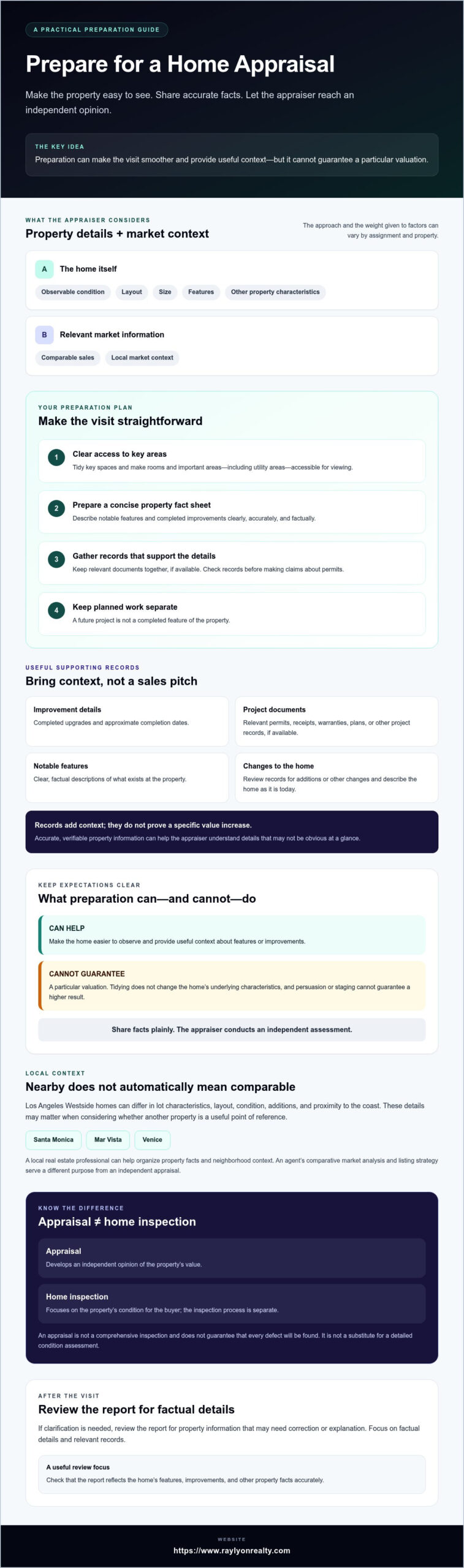
An appraiser may consider the property’s observable condition, layout, size, features, and other characteristics. Relevant comparable sales and local market context may also inform the analysis. The approach and the weight given to each factor can vary with the assignment and property. Clear access to rooms and key areas helps the appraiser observe the home. Accurate records can add context to features or improvements that aren’t obvious at a glance.
Presentation has limits. Tidying can make spaces easier to view, but it doesn’t change the home’s underlying characteristics or guarantee a particular valuation. Share facts plainly and let the appraiser conduct an independent assessment.
How is an appraisal different from a home inspection?
An appraisal develops an opinion of value. A home inspection focuses on the property’s condition for the buyer, and the inspection process is separate. In a purchase transaction, a lender may order an appraisal as part of its process. Requirements and procedures can differ, so confirm details with the lender or transaction contact.
An appraisal isn’t a comprehensive inspection and doesn’t guarantee that every defect will be found. If you need a detailed assessment of the home’s condition, don’t treat the appraisal as a substitute for an inspection.
Prepare Property Records and Local Context for a Los Angeles Appraisal
A short, factual property summary can clarify details that may not be obvious during a visit. When considering how to prepare for a home appraisal, focus on information an appraiser can verify, not a sales pitch or a claim that a particular feature deserves a set dollar amount.
Which home improvements and records should you gather?
Prepare a concise fact sheet and keep supporting documents together. List completed improvements, approximate dates, and relevant records when available. For example, note a kitchen remodel, a replaced roof, or an added feature. Receipts, warranties, plans, and permit records may help confirm the details. Describe the work accurately, and check available records before making claims about permits.
- List completed upgrades and their approximate completion dates.
- Gather relevant permits, receipts, warranties, or project records, if available.
- Identify notable features and describe them clearly and factually.
- Keep planned work separate from completed improvements. A future project isn’t a completed feature of the property.
These documents provide context; they don’t prove that an improvement increases value by a particular amount. Accurate, verifiable property information gives an appraiser useful context for an informed evaluation.
How do Santa Monica, Mar Vista, and Venice details fit?
Los Angeles Westside homes can differ in lot characteristics, layout, condition, additions, and proximity to the coast. These are relevant property details, but a nearby home isn’t automatically comparable. Differences in the lot, configuration, or location may affect whether another property offers a useful point of reference. For a sense of neighborhood character, see this Mar Vista neighborhood guide.
Review records for additions or changes, and make sure your fact sheet describes what exists today. A local real estate professional can help organize property details and explain neighborhood context without speaking for the appraiser. Sellers seeking broader sale preparation or pricing guidance can learn more about Los Angeles Westside seller representation.
Keep your notes and documents available in case questions come up after the report. If a financed transaction involves a possible factual error, the Consumer Financial Protection Bureau explains how mortgage borrowers can challenge inaccurate appraisals through a reconsideration process. The appropriate next step depends on the transaction and lender. Start by identifying specific details that may need review.
Can You Influence a Home Appraisal? What Preparation Can, and Cannot, Change
It’s natural to want your home to make a strong impression, especially when an appraisal matters to a sale or financing. But a spotless room or persuasive conversation can’t guarantee a higher valuation. The appraiser forms an independent opinion based on the property’s characteristics and relevant market evidence. A seller’s unsupported estimate doesn’t replace that analysis.
Preparation improves clarity, not control over an independent conclusion. Clean, accessible spaces help the appraiser observe the home, while accurate records can explain features or improvements. Pressure, coaching, or selective claims don’t make the evaluation more reliable. Keep the focus on making the property and its documented facts easy to understand.
Should you clean, stage, or make repairs before the visit?
Handle ordinary tidying, turn on working lights, and make rooms and relevant areas safe and accessible. Move items that block access to spaces the appraiser may need to see. Staging can make a home feel polished, but cosmetic choices aren’t a substitute for documented condition or market evidence, and they don’t ensure a particular value.
Avoid rushing into upgrades solely to chase an assumed appraisal increase. If a repair is already needed, consider it on its own merits rather than assuming it will raise the valuation. A clean, orderly home can help the visit go smoothly, but it doesn’t change the facts the appraiser must assess.
What should you tell the appraiser?
Offer a brief, neutral list of completed improvements and relevant records, if requested or appropriate for the appointment. Include what was done and when, and distinguish completed work from planned projects. Answer questions honestly. Don’t exaggerate a feature, press for a target number, or present an unsupported estimate as evidence.
If you’re unsure how to share information, ask the lender or the professional coordinating the transaction about the appropriate communication process. Keep the exchange factual and respectful, then let the appraiser carry out an independent evaluation.
For sellers who want help preparing property information or thinking through sale strategy, a local real estate professional can offer a separate market perspective without determining the appraisal result. Ray Lyon Realty represents residential sellers across the Los Angeles Westside; learn more about Los Angeles Westside seller guidance.
A Home Appraisal Preparation Checklist for the Day Before and Visit
A simple plan can make the appointment feel manageable. Preparing for a home appraisal means having the property and relevant information ready, not making an occupied home look like a staged listing. It doesn’t need to be newly renovated or spotless to be evaluated.
What should you do the day before the appraisal?
Start by checking the appointment details, then gather what the appraiser may need to see or what you may want to share. Keep documents together so you can find them easily without interrupting the visit.
- Confirm the appointment: Check the time, access arrangements, and any instructions from the person coordinating the visit.
- Collect records: Put your property fact sheet, improvement records, permits, floor plans, and other relevant documents in one place.
- Check access: Make rooms, garages, utility areas, outbuildings, and relevant exterior spaces reachable. Move items that block doors, systems, or walkways.
- Plan for pets: Secure pets so the appraiser can move through the home safely and without disruption.
- Do a practical tidy: Clear clutter from access points and make sure lights work where possible. Skip rushed repairs or claims about work that you can’t accurately document.
Prepare a concise fact sheet, but don’t feel you need to follow the appraiser from room to room. A lived-in home is still a home. Ordinary belongings and signs of daily life don’t mean you need to recreate a staged interior.
What happens during and after the appraiser’s visit?
The appraiser may view and measure relevant parts of the property as part of the assignment. The exact process can vary, so follow the appointment instructions. Be available to answer questions, keep responses brief and factual, and note any records or information the appraiser asks you to provide.
Once the visit is underway, give the appraiser room to work. If you’re unsure whether a document or detail is useful, offer it neutrally or ask the person coordinating the appointment how to share it. Afterward, keep your records handy in case a follow-up question comes up.
For broader sale preparation, explore this Los Angeles home-selling guide. If you’d like help organizing your selling plans and property information, connect with a Los Angeles Westside real estate professional.
After the Home Appraisal: Understand the Report and Choose Your Next Step
Once the report is available, the next step depends on how the valuation fits the lender’s requirements and the needs of the transaction. Don’t react to the final number alone. Review the property details and supporting analysis available to you, and check that the report accurately describes the home.
What if you disagree with the appraisal?
Start by identifying specific, checkable concerns, such as an incorrect property detail or relevant information that appears to be missing. Separate factual issues from a difference of opinion about the final value. Gather records that support any correction you raise, rather than relying only on your preferred price or a general sense that the result seems low.
If you believe the report contains a factual mistake, ask the lender how to submit the concern and what information its process requires. Procedures can vary, and a request for review doesn’t guarantee a revised conclusion. A real estate agent may help you organize market information, but can’t overturn an appraisal or decide its outcome.
When can a local real estate agent help?
An agent can discuss listing strategy and local market context separately from the appraisal findings. For example, you might review how the home’s features compare with relevant local properties when considering a sale price or timing. That perspective can help inform your plans, but it isn’t a substitute for the appraiser’s independent opinion.
If you’re weighing what the report means for a potential sale, the Los Angeles real estate agent guide offers more context on working with a local agent. Ray Lyon Realty represents residential sellers across the Los Angeles Westside and can discuss pricing strategy, staging, or sale preparation without performing appraisals or determining their conclusions.
Preparing carefully can make the property’s facts easier to understand, but the appraisal remains independent. If you’d like to talk through your home’s sale preparation or broader selling strategy, consider a conversation with Ray Lyon Realty.
Prepare with Confidence and Plan Your Next Move
Knowing how to prepare for a home appraisal means focusing on what you can control: make the home accessible, gather accurate records, and share property details clearly. A tidy presentation and useful documentation can support an informed evaluation, but they can’t guarantee a particular value or replace the appraiser’s independent judgment.
After the visit, review the report’s factual details and ask the lender about its process if something appears inaccurate. Keep appraisal findings separate from your broader sale strategy. Pricing decisions also depend on local market context, your goals, and how the home is positioned for buyers.
Ray Lyon Realty brings residential experience across Santa Monica, Mar Vista, and Venice. Seller support includes pricing strategy, staging, and coordinating minor upgrades, separate from the appraiser’s role. If you’re planning a sale and would like to discuss preparing your home, talk with Ray Lyon Realty about preparing your home for sale.
A clear plan can make the appraisal visit feel more manageable and help you move forward with confidence.
Frequently Asked Questions
How do I prepare for a home appraisal?
To prepare for a home appraisal, confirm the appointment details, gather relevant property records, and make sure the appraiser can access the home’s rooms and key areas. A concise fact sheet can summarize completed improvements, approximate dates, and notable features. Keep supporting documents available, but present them as factual context, not proof of a particular value. Ordinary tidying helps make the property easier to view, but no preparation guarantees a specific result.
Should I clean my house before an appraisal?
Yes, a basic tidy can make it easier for the appraiser to move through and observe the home, but deep cleaning or staging isn’t required to establish value. Clear walkways and access to areas such as the garage or utility spaces, and turn on working lights if helpful. An occupied home doesn’t need to look newly renovated. Focus on access and an accurate view of the property, not on creating a polished impression to influence the conclusion.
What documents should I provide for a home appraisal?
Gather records that help describe the property accurately, such as a list of completed improvements with approximate dates, relevant permits, receipts, warranties, or floor plans. Include documents only when they relate to the home, and check permit details against available records. Keep planned projects separate from completed work. These materials may provide useful context, but they don’t establish that an upgrade adds a specific amount to the home’s value.
Can I be present during a home appraisal?
Ask the person coordinating the appointment or the lender whether you can be present and what arrangements apply. If you attend, be available to answer questions and share relevant documents, but give the appraiser room to work. You don’t need to accompany them through every area or make a case for a target value. Keep communication brief, factual, and respectful, and follow any instructions provided for the visit.
Can repairs increase my home appraisal?
Repairs may affect how the home’s condition is understood, but completing work doesn’t guarantee a higher appraisal. The appraiser considers the property and relevant market evidence, and an improvement’s contribution can depend on its quality, function, and context. Avoid rushing into upgrades solely to pursue an assumed valuation increase. If you complete work before the visit, keep accurate records and describe what was done without suggesting it has a guaranteed dollar-for-dollar effect.
What happens if my home appraisal comes in low?
First, review the report for factual details that may be incorrect, such as a property feature or improvement description. If you find a specific issue or relevant missing information, ask the lender how to raise it and what documentation to provide. The lender’s process and the transaction’s next steps can vary. A review request doesn’t guarantee a changed value, and an agent can offer market context but can’t overturn an appraiser’s conclusion.
Is a home appraisal the same as a home inspection?
No. An appraisal develops an independent opinion of a property’s value, while a home inspection focuses on the home’s condition for the buyer. A lender may order an appraisal as part of a transaction, but it isn’t a substitute for an inspection and doesn’t guarantee that every defect will be identified. If you need a detailed assessment of the home’s condition, ask about the appropriate inspection process for your transaction.