
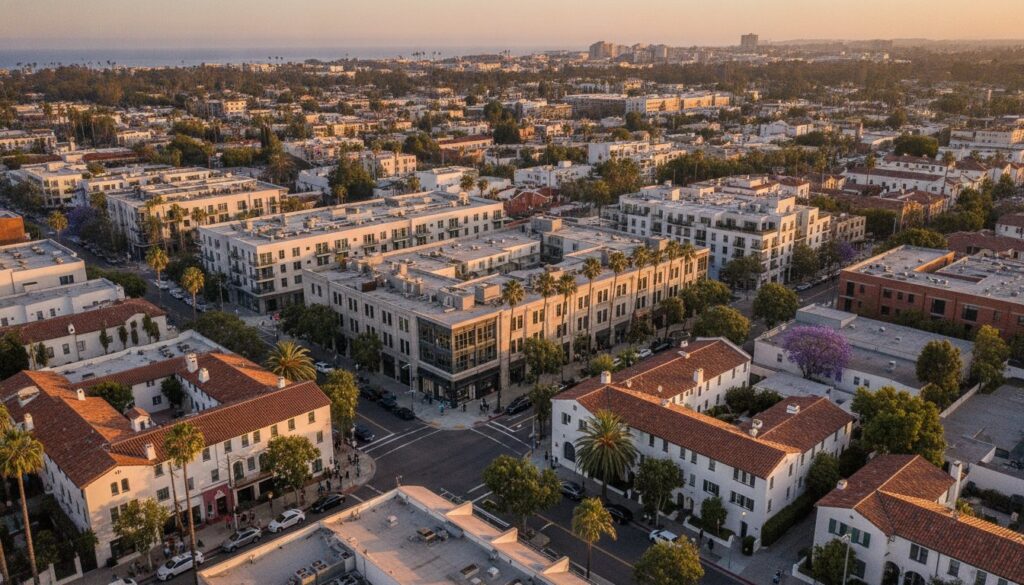
The Culver City Arts District is no longer just a hidden enclave for galleries and design studios; it has evolved into the residential heartbeat of Silicon Beach’s eastern expansion. While many still view it as a weekend destination for brunch at the Platform, savvy buyers recognize that culver city arts district real estate is one of the most competitive and high-potential pockets in Los Angeles. You’ve likely noticed that finding a true neighborhood home is harder than ever. Between the extremely low inventory and aggressive bidding wars from tech-sector buyers, it’s easy to feel like you’re always one step behind.
I understand the frustration of seeing a listing pop up only to realize it’s nowhere near the Hayden Tract, or worse, finding out it’s already under contract. This 2026 guide is designed to help you master the nuances of this market so you can find your creative sanctuary or a high-appreciating residential investment. We’ll look at how to distinguish authentic neighborhood gems from general Culver City listings and analyze the long-term ROI of the area. Most importantly, I’ll show you how to leverage local networks to secure a property before it ever hits the open market.
Key Takeaways
- Define the geographic boundaries of the Arts District and understand how the transition from industrial warehouses to luxury residential enclaves creates unique buying opportunities.
- Identify the architectural hallmarks of the area, from modernist glass and steel structures to meticulously restored 1920s Spanish Colonial homes.
- Develop a winning strategy for culver city arts district real estate by utilizing hyper-local market knowledge to navigate the 2026 bidding climate and escrow contingencies.
- Evaluate the investment potential of the neighborhood by analyzing how “Corporate Anchors” like Apple and Amazon drive rental yields and long-term ROI.
- Learn how access to exclusive, non-public opportunities and strategic negotiation can help you secure your ideal property before it reaches the open market.
Defining the Culver City Arts District Real Estate Market
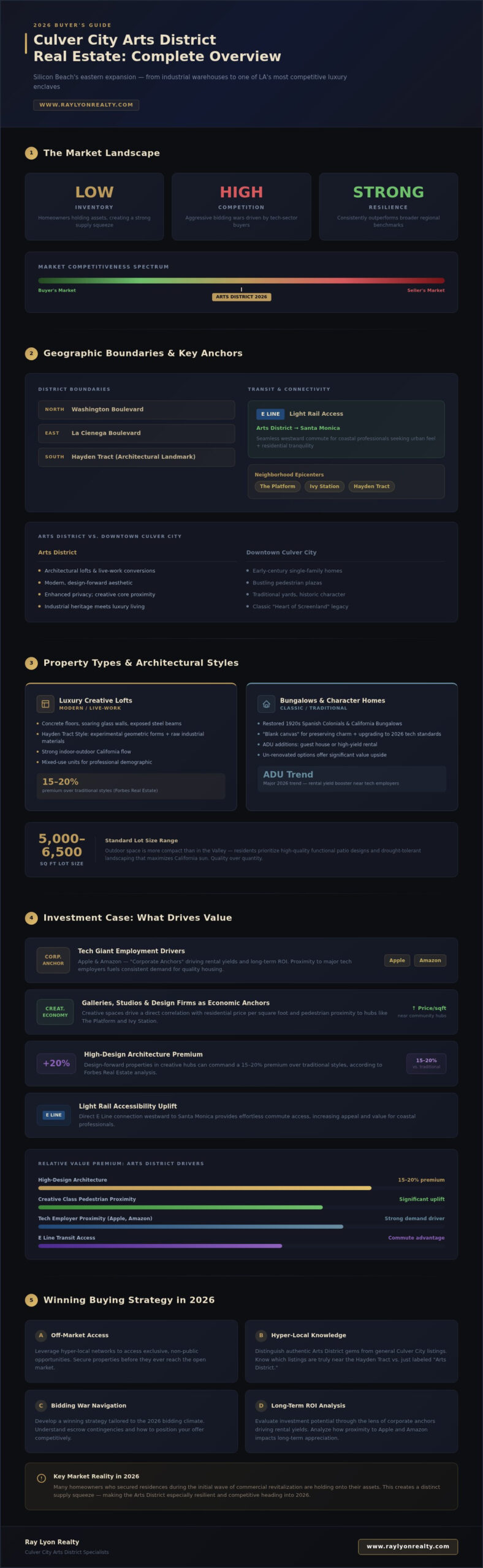
The Culver City Arts District isn’t just a neighborhood; it’s a carefully defined pocket of innovation on the Westside. Its boundaries run roughly along Washington Boulevard to the north, La Cienega Boulevard to the east, and the architectural marvels of the Hayden Tract to the south. This district has undergone a remarkable transformation from its mid-century industrial roots into one of the most sought-after luxury enclaves on the Westside. While the history of Culver City centers on its legendary title as the “Heart of Screenland,” the contemporary Arts District represents its design-forward, creative residential future.
Heading into 2026, the local market is experiencing a notable tightening in available inventory. Many homeowners who secured residences during the initial wave of commercial revitalization are holding onto their assets, creating a distinct supply squeeze. This dynamic makes culver city arts district real estate especially resilient and competitive. Furthermore, direct light rail accessibility along the E Line seamlessly connects the district westward to Santa Monica, providing an effortless commute for coastal professionals seeking an urban feel paired with residential tranquility.
The Creative Class Influence on Property Values
The presence of premier galleries, architectural practices, and design studios does far more than elevate neighborhood aesthetics; these creative spaces serve as economic anchors. At Ray Lyon Realty, our team tracks a direct correlation between residential price per square foot and pedestrian proximity to community epicenters like The Platform and Ivy Station. Discerning buyers consistently pay a premium to live within a short stroll of destination retail and acclaimed dining, establishing a micro-market that regularly outperforms broader regional benchmarks.
Arts District vs. Downtown Culver City: Key Differences
While historic Downtown Culver City is celebrated for bustling pedestrian plazas and early-century single-family homes, the Arts District provides a distinctly modern residential edge. Flexible zoning here accommodates striking architectural lofts, converted live-work environments, and clean-lined contemporary builds on former light-industrial parcels. For buyers prioritizing visionary design, enhanced privacy, and proximity to the creative core over sprawling traditional yards, the Arts District stands out as the premier destination where industrial heritage meets luxury Westside living.
Property Types and Architectural Styles in the Arts District
The visual identity of culver city arts district real estate is defined by a striking contrast between the industrial past and a high-design future. Unlike the uniform suburban tracts found in other parts of Los Angeles, this corridor offers an eclectic mix of housing stock. You’ll find luxury “Creative Lofts” and mixed-use units that cater specifically to the neighborhood’s professional demographic. Standard lot sizes here often range between 5,000 and 6,500 square feet. While outdoor space might be more compact than in the Valley, residents prioritize high-quality, functional patio designs and drought-tolerant landscaping that maximizes every inch of the California sun.
The Appeal of Modern Architectural Homes
Design-forward homes in this pocket are more than just residences; they’re functional art. According to analysis often found in Forbes Real Estate, high-design properties in creative hubs can command a 15-20% premium over traditional styles. These masterpieces feature concrete floors, soaring glass walls, and exposed steel beams. The Hayden Tract Style is a bold architectural movement defined by experimental geometric forms and raw industrial materials that has transitioned from commercial warehouses into high-end residential design. These homes prioritize an indoor-outdoor flow that feels essential for the modern Westside lifestyle.
Bungalows and Character Homes: The Classic Choice
For those who prefer a more traditional aesthetic, the district still holds pockets of restored 1920s Spanish Colonials and California Bungalows. There’s significant value to be found in un-renovated character homes. These properties offer a “blank canvas” for buyers who want to preserve historical charm while upgrading systems to 2026 tech standards. A major trend we’re seeing is the addition of Accessory Dwelling Units (ADUs) on these standard lots. An ADU can serve as a guest house or a high-yield rental, especially given the proximity to major tech employers.
If you’re trying to decide between a sleek modern loft or a classic bungalow, it helps to consult with a local expert who knows the specific block-by-block nuances of the Arts District.
Buying and Selling Strategy in a High-Demand Corridor
Success in this high-stakes corridor requires more than just a healthy down payment. It demands a hyper-local strategy that accounts for the neighborhood’s unique rhythm. In the 2026 climate, many of the most desirable properties are secured via off-market “pocket listings.” These transactions happen through local networks before a sign ever hits the lawn. If you’re relying solely on public search apps, you’re only seeing a fraction of the available culver city arts district real estate. Navigating escrow here also requires a specialized approach to contingencies. Sellers expect aggressive timelines; having your inspections and appraisals lined up in advance is a mandatory move to stay competitive.
Winning Tactics for Arts District Buyers
Winning a bidding war starts with the right financial partners. We consistently see that offers backed by recognized Westside lenders carry more weight with local listing agents. These lenders understand the specific appraisal nuances of the district’s architectural homes, which reduces the risk of the deal falling through. Beyond the numbers, professional presentation is your secret weapon. In 2026, a concise personal letter that demonstrates your appreciation for the home’s design can still sway a seller who has spent years restoring a property. We also help our clients identify “sleeper” streets. These are the blocks just outside the immediate Hayden Tract that offer better value today but are poised for rapid appreciation as the district expands.
Maximizing Value for Arts District Sellers
Selling an Arts District home requires a sophisticated playbook. You aren’t just selling square footage; you’re selling a creative sanctuary to high-level tech and entertainment executives. Staging is the most critical part of this process. We move away from traditional “homestyle” staging and instead focus on a gallery-inspired aesthetic. This means using clean lines, industrial accents, and art-forward furniture that resonates with the local demographic. It’s about creating a “vibe” that justifies a premium price point.
Strategic pricing is another area where local expertise is non-negotiable. The “Mar Vista” approach, which often prioritizes family-friendly metrics, doesn’t work here. The Arts District market is driven by ROI, walkability, and proximity to major corporate headquarters. For more context on how to navigate the broader market, you can explore our insights on Selling Your LA Home. We ensure your property is positioned as a high-value asset that speaks directly to the creative class.
The Investment Case: ROI and Future Appreciation
Investing in culver city arts district real estate isn’t just about buying a home; it’s about securing an asset in a high-growth tech corridor. The “Corporate Anchor” effect is the primary engine behind this neighborhood’s resilience. When giants like Apple, Amazon, and HBO established their regional headquarters here, they created a permanent floor for rental demand. These companies bring thousands of high-earning professionals into the area who prioritize living within walking distance of their offices. This influx ensures that rental yields remain robust even when other parts of Los Angeles experience a cooling period.
Historical data shows that the Arts District often outperforms neighboring pockets like Mar Vista in terms of pure appreciation. While Mar Vista is a fantastic residential choice, it lacks the same concentration of commercial investment that drives the Arts District. Future-proofing your investment here is also easier due to strategic transit expansions and favorable zoning. The demand for culver city arts district real estate continues to outpace supply, making it a primary target for those looking for long-term equity growth.
The Impact of the Hayden Tract Expansion
Residential properties bordering the Hayden Tract are essentially a gold mine. This area has successfully transitioned from a collection of industrial warehouses into the epicenter of Westside creative office space. Based on current commercial permits, we project continued growth through 2028 as more boutique tech firms and production houses migrate east. This commercial momentum often includes new hospitality ventures, frequently sourced through the Restaurant For Sale Marketplace to meet the demands of the growing professional population. Residential properties located near the Culver City Station consistently command higher rental premiums and show faster equity growth compared to those further from the transit hub.
For seasoned investors, using a 1031 exchange to move equity from a slower-growth area into the Arts District is a savvy strategic move. These transactions allow you to defer taxes while upgrading your portfolio with a higher-yielding asset. We also see a fair amount of trust sales in these established blocks. These can be complex to navigate, but they often present the best opportunities to find “fixer” properties with massive upside. My own personal history with property flipping and investment gives me a unique perspective on these deals. I’ve been in your shoes, managing renovations and analyzing cap rates, so I know exactly how to spot the “bones” of a winning investment.
If you want to discuss how to build your Westside investment portfolio with a strategic Arts District acquisition, let’s connect and look at the numbers together.
Why Ray Lyon Realty is Your Arts District Advantage
Finding the right spot in the culver city arts district real estate market requires an agent who does more than just scan the MLS. It requires someone who knows the specific history of the blocks between Washington Boulevard and the Hayden Tract. I’ve spent years building relationships with local gallery owners, long-time neighbors, and fellow investors. This granular knowledge allows me to provide context you won’t find on a data sheet. I can tell you which streets offer the most residential privacy and which ones are about to see a new creative studio move in next door.
My approach is built on strategic negotiation and a deep understanding of value. In a market as competitive as this, securing the best terms isn’t just about offering the highest price. It’s about knowing how to structure an offer that resonates with a seller’s specific needs. We focus on reducing your stress by handling the complex technical details of Westside transactions with professional competence and genuine care. You’re not just a transaction to us; you’re a partner in a high-stakes market.
A Strategic Partner for the Westside
My firsthand experience with property development and renovation is a distinct advantage for my clients. I don’t just see a house; I see the structural potential and the future ROI. This “Savvy Insider” perspective is how I get my clients into homes before the first open house even happens. Most of the best culver city arts district real estate deals are won through local networks before the public ever knows they exist. If you’re also exploring other iconic neighborhoods nearby, our guide to Santa Monica Real Estate offers a similar deep dive into the Westside’s most sought-after residential pockets.
Your Next Steps in the Arts District
Ready to find your creative sanctuary or your next high-performing investment? The first step is a custom search tailored to your specific aesthetic and financial goals. We don’t believe in one-size-fits-all lists. Whether you’re looking for a modernist masterpiece near the Platform or a character bungalow with ADU potential, we’ll build a strategy that works for you. I can also provide a personalized market report for specific pockets of the Arts District to help you understand current pricing trends and upcoming opportunities.
Don’t wait for the next bidding war to start. Schedule your Arts District consultation today and let’s put my local expertise to work for you.
Securing Your Place in Culver City’s Creative Future
The transition of this corridor from an industrial center to a global tech and arts hub is nearly complete. High-design architecture and the “Corporate Anchor” effect continue to drive the value of culver city arts district real estate to new heights. Success in this market requires more than just a search app; it takes a strategy that leverages deep local networks and identifies off-market opportunities before the competition arrives.
With over 15 years of Westside LA expertise, I specialize in the intersection of investment properties and high-design residential sales. My team provides the granular market knowledge and exclusive access required to navigate these complex transactions with confidence. We’re here to reduce your stress and ensure you secure a property that truly aligns with your creative or financial vision. Find your creative sanctuary in the Arts District with Ray Lyon and take the first step toward a successful acquisition. We can’t wait to help you find your place in this vibrant community.
Frequently Asked Questions
Is the Culver City Arts District a safe area to invest in?
The Arts District is considered a highly stable and strategic area for residential investment. Its proximity to major tech headquarters like Apple and Amazon provides a consistent demand floor that shields the neighborhood from broader market volatility. Because inventory remains extremely low and the creative sector continues to expand, property values have shown long-term resilience. Investors often target this pocket for its unique blend of industrial charm and luxury residential growth.
What is the average price for a single-family home in the Arts District?
While prices fluctuate based on specific street location and architectural style, single-family homes in this corridor typically command a premium compared to broader Culver City averages. Buyers should expect entry-level character homes to start in the mid-seven figures, with modernist masterpieces often reaching significantly higher. We recommend requesting a personalized market report for culver city arts district real estate to see real-time data on active listings and recent sales in your specific target pocket.
How far is the Arts District from the Apple and Amazon offices?
One of the primary draws of this neighborhood is its extreme proximity to the major tech hubs. Most residential streets in the Arts District are within a five to fifteen-minute walk of the Apple and Amazon offices located at the Culver Steps and Ivy Station. This walkability is a major driver for culver city arts district real estate values. It allows professionals to enjoy a car-free commute while remaining close to the district’s best galleries and dining.
Are there many condos or townhomes available in the Arts District?
High-density housing like condos and townhomes is relatively limited in the core Arts District compared to other Westside neighborhoods. Instead, the market features luxury creative lofts and mixed-use units that reflect the area’s industrial heritage. These properties are highly sought after by professionals who want the convenience of a condo with the aesthetic of an art gallery. Because these units are rare, they often sell quickly through off-market networks or pocket listings.
What are the best schools serving the Culver City Arts District?
Residents in the Arts District are served by the highly regarded Culver City Unified School District. Key schools often include Linwood E. Howe Elementary, which is known for its strong community involvement and academic programs. Families also benefit from the district’s specialized middle and high schools. We always suggest that buyers verify specific school boundaries and enrollment availability with the district office, as these can change based on current residential zoning and local capacity.
Can I find new construction homes in this neighborhood?
New construction is available but typically takes the form of custom modernist masterpieces or small lot subdivisions rather than large-scale developments. These homes often feature the glass, steel, and concrete finishes that define the Hayden Tract style. Because land is scarce, developers focus on high-end, luxury builds that maximize square footage on existing lots. We frequently represent buyers in new construction sales and can help you identify upcoming projects before they reach the open market.
How does the Arts District compare to Mar Vista for families?
The Arts District offers a more urban and walkable lifestyle compared to the traditional suburban feel of Mar Vista. While Mar Vista is known for larger yards and quiet residential tracts, the Arts District appeals to families who value proximity to cultural hubs and tech offices. It’s a trade-off between the classic backyard experience and a high-design home within walking distance of world-class amenities. Both areas offer excellent long-term value, but the Arts District has a sharper, more modern edge.
What is the parking situation like for residential properties in the Arts District?
Most single-family homes and luxury lofts in the neighborhood include private garages or dedicated off-street parking. However, street parking for guests can be challenging during peak hours due to the popularity of local galleries and restaurants like those at the Platform. If you’re looking at a property with limited on-site parking, it’s vital to check local permit requirements. We help our clients evaluate the parking logistics of every property to ensure it meets their specific lifestyle needs.