
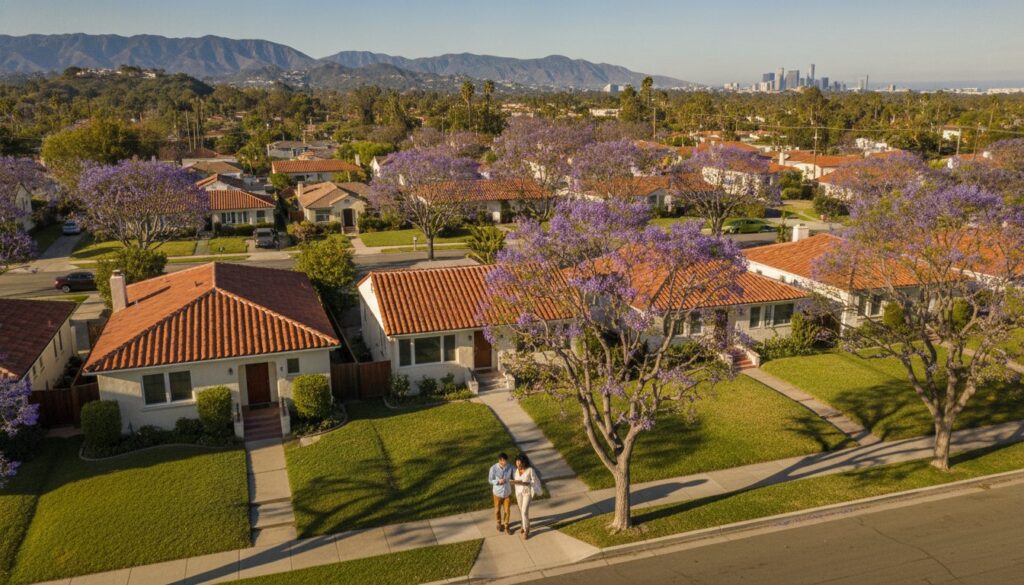
By the time you see a “For Sale” sign on a manicured lawn in the Heart of Screenland, you might already be too late. Buying a home in this pocket of the Westside often feels like a high-stakes race where the finish line moves every Friday afternoon. You’ve likely spent your Tuesday nights refreshing a culver city open house schedule, only to find that the most promising properties are under contract before the first Saturday showing even begins. It’s frustrating to feel like you’re always one step behind the “sold” sticker.
This 2026 guide delivers the strategic framework you need to win. I’ll show you how to navigate the Westside with the confidence of an expert who knows which homes are priced for bidding wars and which ones offer genuine value. You’ll learn how to prioritize your weekend tours to beat the notorious traffic while keeping your focus on the neighborhoods that feed into the highly-coveted Culver City Unified School District.
We’re going to dive into the nuances of different neighborhood pockets, explain how to access exclusive, non-public opportunities that never hit the public portals, and provide a clear plan to help you find a home that’s actually worth the investment.
Key Takeaways
- Learn why the “Heart of Screenland” remains Culver City’s most competitive pocket in 2026 and how to identify homes with the highest appreciation potential.
- Discover the most efficient way to map your culver city open house schedule to bypass the notorious Washington Boulevard and Sepulveda traffic bottlenecks.
- Compare the distinct lifestyle benefits of Lindberg Park and Carlson Park to find the right fit for your family and school district priorities.
- Master an insider’s inspection checklist that focuses on the specific plumbing needs of 1940s bungalows and the high-value “indoor-outdoor” flow.
- Understand how to leverage local agent relationships and professional first impressions to move your offer to the top of the pile.
Understanding the 2026 Culver City Open House Landscape
The Culver City real estate market in 2026 continues to defy broader Southern California trends. While other Westside pockets have seen inventory stabilize, Culver City remains a high-demand “seller’s stronghold.” This is largely due to the massive corporate footprints of Amazon, Apple, and Sony Pictures. These industry giants have turned “The Heart of Screenland” into a permanent destination for tech and entertainment professionals who want to skip the 405 commute. When you look at a culver city open house schedule, you aren’t just looking at homes; you’re looking at a limited supply of assets in a city that is effectively “built out.”
The Culver City Unified School District (CCUSD) remains the primary engine driving the weekend tour circuit. Because the district’s boundaries are so specific, properties within these lines often see double the foot traffic of similar homes just a few blocks away in Los Angeles. Families often plan their entire Saturday around 20-minute showing windows, knowing that a well-priced home here can receive multiple offers before the first weekend is even over.
The “Culver City Bubble” and Price Resilience
Culver City operates within its own economic bubble. Unlike the surrounding City of Los Angeles, this municipality maintains its own independent police, fire, and trash services. This jurisdictional independence is a major selling point for buyers seeking efficiency and safety. We also see a significant price premium near the Expo Line. Walkable open houses near the Ivy Station or the Culver Steps are consistently the most crowded. Buyers are willing to pay more for the “transit-oriented” lifestyle that allows them to reach Santa Monica or Downtown LA without a car.
Seasonal Trends: When to Expect the Most Listings
While the spring surge is the traditional peak, the 2026 winter market has shown surprising strength. Low inventory has forced buyers to be active year-round. To find the best opportunities, you need to look beyond the standard Saturday and Sunday windows. I always recommend my clients keep an eye on the culver city open house schedule for these specific shifts:
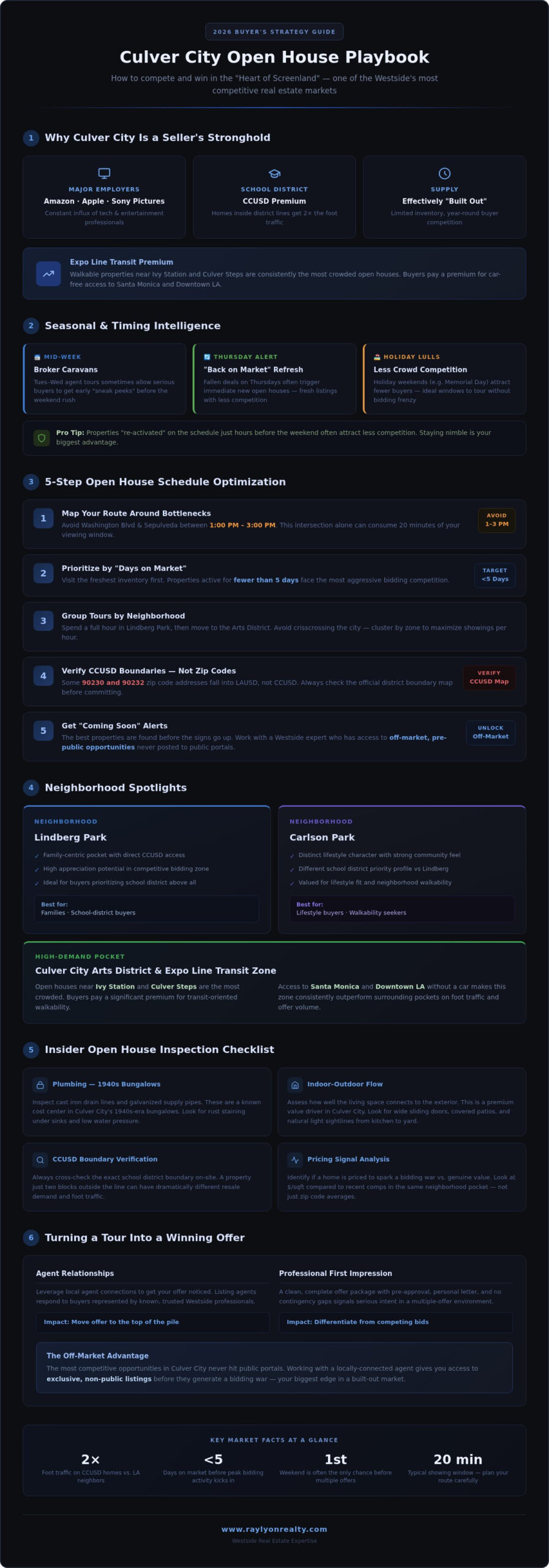
- Mid-week Brokers Caravans: These usually happen on Tuesdays or Wednesdays. While primarily for agents, some listings allow early “sneak peeks” for serious buyers.
- The “Back on Market” Refresh: If a deal falls through on a Thursday, the listing agent will often rush to add an open house for the coming weekend.
- Holiday Lulls: Holiday weekends like Memorial Day often see fewer buyers, making it the perfect time to tour without the usual crowds.
I’ve seen many buyers find their dream home by visiting a property that was “re-activated” on the schedule just hours before the weekend began. Staying nimble is your biggest competitive advantage in this market.
How to Navigate Your Culver City Open House Schedule
Successful touring in Culver City requires more than just a list of addresses. It requires a logistical strategy that accounts for the city’s unique geography and intense weekend crowds. To stay ahead of the competition, your culver city open house schedule needs to be optimized for efficiency rather than just chronologically. A scattered approach leads to missed opportunities and “showing fatigue.”
Follow these five steps to build a winning itinerary:
- Map your route around bottlenecks: Avoid the intersection of Washington Boulevard and Sepulveda between 1:00 PM and 3:00 PM. This is the primary bottleneck that can eat up twenty minutes of your viewing window.
- Prioritize by “Days on Market”: Visit the freshest inventory first. In this market, properties that have been active for fewer than five days will have the most aggressive bidding activity.
- Group by neighborhood: Focus on one pocket at a time. Spending an hour in Lindberg Park before moving to the Arts District saves you from crossing the city multiple times.
- Verify CCUSD boundaries: Don’t rely on zip codes. Some 90230 and 90232 addresses fall into LAUSD instead of Culver City Unified. Always check the official district map before falling in love with a property.
- Get “Coming Soon” alerts: The best properties are often found before the signs go up. Working with a Westside real estate expert gives you access to off-market opportunities that haven’t hit the public schedule yet.
The “Open House Circuit” Strategy
I recommend starting your tour in Lindberg Park or Carlson Park around 11:00 AM if early showings are available. Moving toward the Arts District or Culver West in the afternoon allows you to finish your day near coffee shops or restaurants where you can decompress and review your notes. Parking in dense pockets like Carlson Park is notoriously difficult; don’t be afraid to park two blocks away and walk. For buyers with limited mobility, Soaring Scooters offers rentals that can help you comfortably navigate the blocks between your car and the front door. It gives you a better feel for the neighborhood “vibe” anyway.
Digital vs. Physical: Keeping Your Notes Organized
While the Ray Lyon Realty portal provides real-time data updates, I always suggest my clients carry a physical notebook. Digital photos are great, but they don’t capture property “vibes” like the smell of a damp crawlspace or the noise level from a neighbor’s yard. If you’re comparing Culver City condos with single-family homes on the fly, having side-by-side notes on HOA fees versus maintenance costs is invaluable for making a quick, confident decision.
Culver City Neighborhood Spotlights: Where to Focus
When you’re scanning the culver city open house schedule, you’ll notice that the listings are geographically grouped into distinct pockets. Each neighborhood offers a different lifestyle and investment profile. Choosing where to spend your Saturday afternoon depends entirely on your long-term goals, whether that’s proximity to a top-tier elementary school or a short walk to your office at Amazon or Apple.
- Lindberg Park: This is the quintessential family-friendly neighborhood. It’s centered around a large park with a stone cottage and playgrounds. Homes here are almost exclusively single-family residences, and the sense of community is palpable during weekend showings.
- Carlson Park: Known for its mature trees and lack of through traffic, Carlson Park is a “quiet” favorite. It’s perfectly situated for those who want to be within walking distance of Downtown Culver City and the Ivy Station development.
- Sunkist Park: If you’re looking for mid-century charm, this is your spot. Located in the 90230 zip code, it offers larger lots and easy access to the bike path and Silicon Beach hubs like Playa Vista.
- Lucerne/Higuera: This is the burgeoning Arts District. You’ll find industrial-chic lofts and modern townhomes mixed with older bungalows. It’s the epicenter of the city’s creative energy and tech expansion.
Investment Potential in Culver West
Culver West is a strategic choice for buyers who want the Culver City lifestyle but need a slightly different price point or lot size. It shares a border with Mar Vista Los Angeles, making it easy to do cross-neighborhood value comparisons. I’ve found that this area offers the best opportunities for value-add renovations. If you’re looking to flip a property or build an ADU, the zoning and lot configurations here are often more favorable than in the more established “Heart of Screenland” tracts.
Downtown Culver City: Urban Living and Modern Condos
Living in the downtown core means trading a traditional backyard for the amenities of mixed-use developments like the Culver Steps. These modern condos are in high demand because of their proximity to the major tech headquarters. If you’re touring these units, don’t forget to analyze the HOA fees. While they can be higher, they often cover amenities like secure parking and rooftop decks that are essential in a dense urban environment. Proximity to the transit hub and major employers keeps rental yields high, making these properties excellent long-term investment holds.
The Ultimate Culver City Open House Checklist
Keep these four critical factors in mind during your walk-through:
- Plumbing in 1940s Bungalows: Many homes in the Heart of Screenland date back to the post-war era. Check if the original galvanized pipes have been replaced with copper or PEX. If you see low water pressure or “rusty” water, it’s a sign of aging infrastructure.
- Indoor-Outdoor Flow: This is a primary driver of Westside property value. Look for homes where the living area opens seamlessly to the backyard through French doors or sliders. This “bonus” living space is what makes small bungalows feel much larger.
- Street Noise Evaluation: Culver City is vibrant, but it’s also dense. If a property is near Overland or Washington, step into the backyard and stay silent for sixty seconds. Evaluate if the traffic hum is something you can live with long-term.
- ADU Potential: With California’s friendly ADU laws, a larger lot can be a goldmine. Look for detached garages or enough side-yard clearance to allow for a secondary unit, which can drastically increase your property’s resale value or rental income.
Specific Things to Ask the Listing Agent
The agent at the open house is a wealth of information if you ask the right questions. Don’t just ask about the price. Inquire if there’s already a set offer deadline or if they’ve received any “bully” offers. Ask if the sellers have performed a pre-inspection. Knowing the seller’s motivation, whether they’re upsizing or relocating for work, can help you tailor your offer to be more attractive than a higher-priced competitor.
Red Flags for Culver City Properties
Be wary of unpermitted additions. It’s common in older Westside homes to find “enclosed patios” that have been turned into bedrooms without proper permits. These can cause major headaches during the appraisal process. In hillside pockets like Blair Hills, look for cracks in the stucco or uneven floors that might suggest foundation settlement. Finally, in areas with high rental density, check for deferred maintenance like peeling paint or old roofing, which suggests the property hasn’t been a top priority for the owner.
If you want an expert to walk through these properties with you and spot the hidden details, contact Ray Lyon Realty to start your search with a seasoned professional.
Turning a Tour into a Winning Offer with Ray Lyon Realty
Finding a property on a culver city open house schedule is only the first step. In a market as competitive as the Westside, the transition from touring to owning requires a sophisticated tactical approach. Many buyers assume that the highest price always wins. In 2026, however, sellers are prioritizing certainty and speed. They want to know that the buyer on the other side of the contract is prepared and professional. They also want to know you’re represented by a top-ranked real estate agent who understands how to cross the finish line without drama.
The listing agent’s first impression of you during the open house matters more than you might think. I often tell my clients that the interview starts the moment they walk through the door. Listing agents look for buyers who are respectful, observant, and clearly well-informed. When I represent you, I leverage my long-standing local relationships to get the “inside track” on what a seller truly values. Sometimes it’s a quick close; other times, it’s a rent-back period. Knowing these nuances is often what gets an offer accepted in a multi-offer scenario.
Strategic Pricing and Negotiation
I bring a unique advantage to the negotiation table through my personal history with property renovation and flipping. While we’re walking through a home, I can help you estimate repair costs or the potential ROI on a kitchen remodel. This allows us to craft a “clean” offer that accounts for the property’s actual condition. For my investment buyers, I also provide deep expertise in 1031 exchanges, ensuring that your Culver City acquisition fits perfectly into your broader portfolio strategy. We don’t just guess at the value; we calculate it based on granular market data and real-world construction costs.
Next Steps: Get Your Personalized Culver City Schedule
The public culver city open house schedule only tells part of the story. Many of the best opportunities in neighborhoods like Lindberg Park or the Arts District are discussed among local brokers long before they hit the internet. By partnering with Ray Lyon Realty, you gain access to these exclusive off-market alerts and “coming soon” listings that give you a head start on the competition.
If you’re ready to stop chasing the market and start leading it, let’s connect. I can set up private tours for properties that caught your eye or build a custom weekend itinerary that maximizes your time. Contact Ray Lyon Realty to start your Culver City home search today and put a strategic expert in your corner.
Take the Next Step Toward Your Culver City Home
Mastering the culver city open house schedule is about more than just checking boxes; it’s about positioning yourself as the most prepared buyer in the room. We’ve explored how to navigate traffic bottlenecks, identify the hidden value in 1940s bungalows, and why neighborhood-specific knowledge in places like Lindberg Park is vital for your long-term investment. In a market where properties move in days, having a clear strategy ensures you don’t just attend tours, but actually secure a winning contract.
Success on the Westside comes down to the details that most buyers overlook. Whether it’s spotting ADU potential on a larger lot or leveraging local agent relationships to beat a bidding war, your representation makes all the difference. I use my personal history in property development and deep Westside roots to give my clients a strategic advantage that goes beyond the public listings. I’m here to ensure you find a home that meets your lifestyle needs while serving as a sound financial asset.
Find Your Dream Culver City Home with Ray Lyon Realty and let’s turn your weekend tours into a successful closing. Your perfect Westside lifestyle is closer than you think.
Frequently Asked Questions
What time do most Culver City open houses start?
Standard open house hours in Culver City typically run from 1:00 PM to 4:00 PM on both Saturday and Sunday. Some listing agents occasionally schedule “early bird” showings starting at 11:00 AM to capture families before the midday rush. Always check the latest listings on Friday afternoon, as times can shift based on seller availability or high initial interest.
Are Culver City open houses open to the public or do I need an agent?
Most open houses are completely open to the public and don’t require you to be accompanied by a Realtor. You’ll simply sign in at the door. However, having your own agent can be a major advantage when navigating a culver city open house schedule. They can provide context on the home’s history and potential issues that the listing agent might not mention.
How do I know if a house is in the Culver City Unified School District?
You must verify the address through the official Culver City Unified School District (CCUSD) school finder tool. District boundaries are very specific and don’t always align with the 90230 or 90232 zip codes. Some homes with a Culver City mailing address actually fall within the Los Angeles Unified School District, which can significantly impact property value and your child’s education.
Should I attend an open house if I am not ready to buy yet?
Attending open houses when you’re just starting your journey is a smart way to learn the market. It helps you understand the value difference between different neighborhoods and property types. Just be transparent with the listing agent about your timeline. They’re often happy to share local insights even if you aren’t ready to make an offer this weekend.
What is the average price for a home in Culver City in 2026?
Home prices in Culver City remain some of the most resilient on the Westside due to the proximity of major tech studios. While specific averages fluctuate, you’ll find that properties within the CCUSD boundaries consistently command a premium compared to adjacent Los Angeles tracts. Competition for single-family homes is particularly intense, often leading to prices that exceed the initial asking amount.
Can I take photos or video during a Culver City open house?
It’s polite to ask the listing agent for permission before you start filming or taking photos. Most agents won’t mind if you’re taking a few quick shots for personal reference. However, some sellers have strict privacy concerns regarding their belongings. If you plan to share the footage on social media, definitely get explicit consent first.
How many homes should I try to see in one weekend?
Aim to see between three and five homes per day to keep your perspective fresh. Seeing more than that often leads to “showing fatigue,” where the details of different properties start to blur together. If you’ve planned your culver city open house schedule efficiently, you can spend about 20 to 30 minutes at each location without feeling rushed.
What should I bring with me to a Culver City open house?
Bring a physical notebook, a measuring tape, and a bottle of water. While you’ll likely use your phone for photos, writing down your immediate “gut feeling” about a floor plan is invaluable. A measuring tape is essential for checking if your existing furniture will fit in those charming but sometimes compact 1940s bungalow bedrooms.