

You finally secured that sun-drenched home in Santa Monica, but instead of popping champagne, you’re staring at the ceiling at 3 AM wondering if you just made a million-dollar mistake. This feeling of heavy dread is surprisingly common in the high-stakes Los Angeles market, where the median home price sits around $1.1 million and every decision feels permanent. It’s easy to spiral into thoughts about hidden property defects or whether you’ve overextended your finances with current mortgage rates sitting near 6.6%.
We know that the pressure of a competitive neighborhood can make anyone second-guess their choice. Learning how to deal with home buyer’s remorse starts with recognizing that your brain is often just reacting to a major life change. This guide will help you distinguish between normal escrow anxiety and genuine red flags that you shouldn’t ignore. We’ll provide a practical checklist to determine if your new home is a solid investment and offer clear strategies to regain your peace of mind or navigate a way out if the deal isn’t right.
Key Takeaways
- Understand why 2026’s specific market volatility makes Los Angeles buyers more prone to second-guessing their purchase.
- Master the Ray Lyon Realty triage framework on how to deal with home buyer’s remorse to separate temporary “escrow anxiety” from actual structural regrets.
- Learn how to use your contingency period as a powerful safety net to uncover hidden defects and regain your peace of mind.
- Discover the psychological “small wins” and digital habits that help you stop the comparison cycle once the keys are in hand.
- Find out how a strategic real estate partner uses granular local knowledge to vet properties and protect you from rushed decisions.
What is Home Buyer’s Remorse and Why Does it Happen?
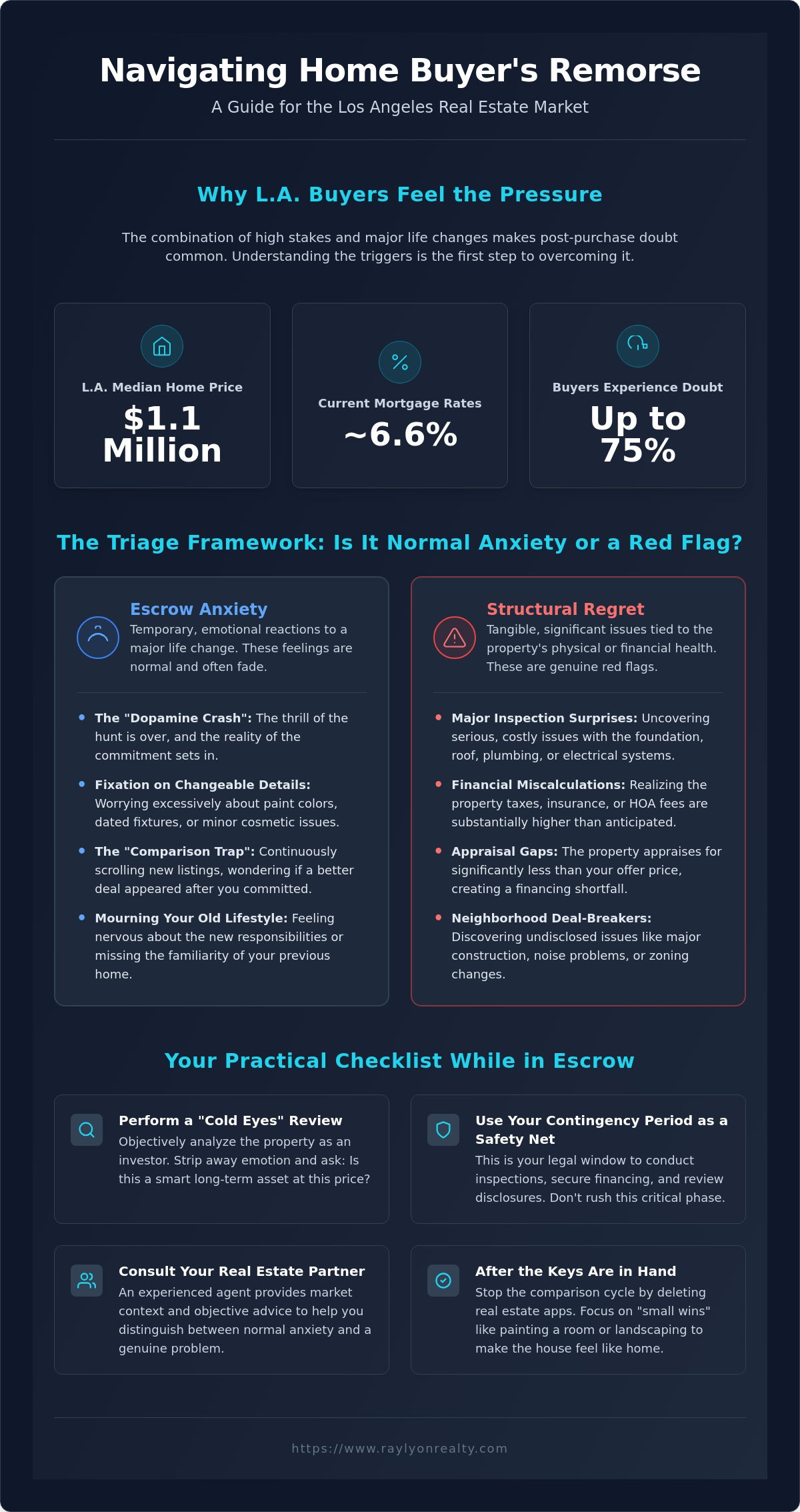
Buyer’s remorse is that sinking feeling of regret or anxiety that hits almost immediately after you sign an escrow agreement or close on a property. It’s not just a “bad mood.” It’s a complex psychological response to a massive financial commitment. In 2026, LA homeowners are particularly vulnerable. With median home prices in the City of Los Angeles holding steady between $1.0 million and $1.15 million, the stakes are incredibly high. When you combine those price points with 30-year fixed mortgage rates hovering around 6.6%, it’s natural to question if you’ve made a sound investment.
Many people find themselves searching for how to deal with home buyer’s remorse because they’ve hit the “Dopamine Crash.” For months, you’ve been on the hunt, fueled by the excitement of open houses and the thrill of the win. Once the offer is accepted, the adrenaline fades, replaced by the cold reality of property taxes and maintenance costs. You aren’t alone in this; industry data suggests that up to 75% of buyers experience some form of post-purchase doubt. Normalizing this feeling is the first step toward moving past it.
To better understand why these feelings surface and how common they are, watch this helpful video:
Common Triggers for Post-Purchase Dread
The comparison trap is often the biggest culprit. Even after your offer is accepted, you might find yourself scrolling through new listings, wondering if a better deal just hit the market. This digital stalking only fuels “financial claustrophobia,” where the weight of the monthly payment starts to feel like a cage. You might also find yourself stuck in a “What If” cycle. You start questioning the Santa Monica commute or wondering if a different neighborhood would have been a better fit for your lifestyle. These thoughts are usually a reaction to stress rather than a sign of a bad purchase.
The Biological Reality of Big Decisions
Your brain is wired to protect you from risk. When you make a high-stakes, largely irreversible choice, your amygdala can go into overdrive. It’s vital to distinguish between a genuine gut feeling about a property defect and a standard panic attack brought on by the closing process. The first 48 hours after an accepted offer are notoriously the hardest because the magnitude of the change is still sinking in. Understanding that this is a biological response can help you stay grounded as you move through the contingency period.
The Triage Framework: Escrow Anxiety vs. Structural Regret
Figuring out how to deal with home buyer’s remorse requires a clear distinction between cold feet and a cold house. At Ray Lyon Realty, we use a triage framework to help our clients categorize their feelings. Most buyers experience “Escrow Anxiety.” This is an emotional, temporary reaction to the sheer magnitude of the change. It’s the brain’s way of processing a million-dollar commitment in a market where the City of LA median price is $1.15 million. On the other hand, “Structural Regret” is tangible and permanent. It’s tied to the physical or financial health of the asset itself.
To move forward, you need to perform a “Cold Eyes” review. This means looking at your purchase objectively, as if you were an outside investor. Strip away the emotional attachment and the fear. Ask yourself: if I saw this property on the market today for the same price, would I still think it’s a smart long-term hold? In a market where 2026 appreciation is forecasted at a steady 1% to 4%, a solid property is still a winning play. If you’re struggling to find that objectivity, consulting with an experienced real estate professional can provide the market context you need to settle your nerves.
Signs You Have Escrow Anxiety (The Normal Stuff)
Escrow anxiety often manifests as a fixation on things that are easily changed. You might be losing sleep over a dated kitchen or a paint color that suddenly looks “off” in the afternoon light. It’s also common to feel nervous about the general responsibility of homeownership. You might even find yourself mourning your previous lifestyle or the familiarity of your old neighborhood. These feelings are usually about the transition, not the house. They tend to evaporate the moment you start making the space your own.
Signs of Structural Regret (The Red Flags)
Structural regret is different. This occurs when a fundamental flaw is discovered that changes the value proposition of the home. This might include the discovery of unpermitted work or major foundation issues during your inspection period. Financial red flags are equally serious. If you realize your monthly payment, calculated at today’s 6.6% rates, exceeds 35-40% of your take-home pay, your anxiety is a valid warning sign of financial overextension. Other deal-breakers include discovering unfixable issues like extreme neighborhood noise, safety concerns, or restrictive zoning that prevents your planned renovations.
Actionable Steps to Take While You Are Still in Escrow
If you’re currently in the middle of a transaction and wondering how to deal with home buyer’s remorse, remember that the escrow period is your greatest advantage. This isn’t just a waiting room for your keys. It’s a strategic window for due diligence. Your contingency period serves as a vital safety net, allowing you to investigate the property’s secrets without being fully committed. In 2026, LA buyers have more negotiating power than in previous years, meaning you have the leverage to address concerns before they become permanent regrets.
Leveraging a thorough home inspection is the most effective way to silence the “what if” cycle. By looking at the physical health of the asset, you move from emotional guessing to data-driven decision-making. If the inspection reveals significant issues, you aren’t stuck. You can negotiate for repairs or request closing cost credits to offset future expenses. With current market trends showing a move toward more balanced conditions, sellers are often more willing to cooperate to keep a deal together.
Maximizing Your Inspection Period
Don’t just read the final report. Attend the inspection in person to ask granular questions about the property’s systems. In addition to a general inspection, order specialized reports for the sewer line, roof, and thirdhand smoke residue, especially with new 2026 disclosure requirements. These reports eliminate “hidden cost” fears. Use the findings as a roadmap for future maintenance rather than just a list of problems. Knowing exactly what needs attention over the next five years turns a scary unknown into a manageable plan.
Understanding the Cost of Walking Away
Sometimes, walking away is the right financial move. If the “structural regrets” we discussed earlier are present, you must evaluate the risk to your Earnest Money Deposit (EMD). Expert real estate agents in los angeles ca are essential here. They help you navigate a clean exit while protecting your deposit through properly drafted contingency removals. Compare the potential loss of a deposit against the long-term cost of owning a home that doesn’t fit your financial or personal needs. An emotional reaction is temporary, but a bad investment can have a lasting impact.
How to Move Past Remorse After the Keys are in Hand
Once the keys are in your hand, the strategy for how to deal with home buyer’s remorse shifts from legal analysis to psychological anchoring. The most important first step is to delete all real estate search apps from your phone immediately. Continuing to browse active listings after closing is like checking a dating app after your wedding day; it only invites unnecessary comparison and doubt. Instead, revisit the original list of needs and wants that led you to this specific property. Remind yourself why this home stood out among the thousands of listings in Los Angeles. Focusing on the problems you solved, like finding a shorter commute or more square footage, helps silence the inner critic.
Peace of mind often comes from looking outside your four walls and connecting with your new environment. Whether you are settling into mar vista los angeles or the eclectic streets of Venice, local engagement is a powerful antidote to regret. Visit the neighborhood coffee shop, walk to the local park, or introduce yourself to the neighbors. Building these social roots helps you stop seeing the house as just a financial asset and start seeing it as the foundation of your new life. Realizing that you’ve joined a vibrant community can quickly outweigh any lingering anxiety about the purchase price.
Personalizing the Space
Focusing on “Small Wins” creates an immediate psychological shift. Painting a room or swapping out dated light fixtures moves the property from being “the house” to being “your home.” We recommend creating one “Sanctuary Space” early on, such as a bedroom or a cozy reading nook, where you can escape the stress of moving. It’s also wise to wait at least six months before committing to major structural renovations. Living in the space first helps you understand its natural flow and prevents rushed, expensive mistakes that could fuel further remorse.
The Financial Long Game
Perspective is everything. Remember that your home is a 5-10 year investment, not a short-term trade. Westside LA real estate has shown incredible historical resilience, even during periods of market normalization. With 2026 appreciation forecasted at a steady 1% to 4%, a well-chosen property is a solid long-term play. Focus on equity building and the significant tax benefits of homeownership to soothe any initial sticker shock. If you ever feel overwhelmed by the numbers, reaching out to a trusted real estate advisor can help you see the bigger strategic picture of your investment.
Why a Strategic Partner is the Best Defense Against Regret
Ultimately, the most effective way to understand how to deal with home buyer’s remorse is to prevent it from taking root in the first place. This starts with choosing a real estate partner who prioritizes your long-term satisfaction over a quick commission. At Ray Lyon Realty, we lean on granular local knowledge to vet every listing before you ever step foot on the property. We look past the staged furniture and fresh paint to analyze neighborhood appreciation trends and off-market data. This strategic approach ensures that you aren’t just buying a house; you’re securing a high-quality asset that fits your specific financial goals.
Our “No-Pressure” philosophy is a core part of our service. Rushed decisions are the primary breeding ground for regret, especially in the fast-moving Westside market where buyers often feel they must act in seconds. We believe in total transparency, which often means telling our clients when to walk away from a deal. If our network of specialists discovers a foundation issue or a zoning restriction that compromises the property’s value, we’ll be the first to advise caution. This commitment to honesty demystifies the property’s condition early in the process, giving you the confidence to move forward or the freedom to keep looking without guilt.
Expert Vetting and Local Insight
We bring a hands-on perspective to every transaction. Because of our extensive history in property renovation and investment, we can spot potential pitfalls that a standard inspection might miss. For example, we recently helped a Santa Monica buyer navigate intense inspection dread by bringing in a specialized contractor to provide a realistic repair budget for a dated electrical system. By turning a vague fear of “hidden costs” into a concrete set of numbers, we helped them close with total peace of mind. This level of insight is only possible when your agent has firsthand experience with the risks and rewards of the local market.
Ready to Find a Home You’ll Love Long-Term?
Our buyer representation process is designed to protect your interests and your sanity. Working with a top ranked real estate agent who truly knows the Westside makes all the difference in a competitive climate. We don’t just find you a house; we provide the strategic roadmap to ensure it’s a purchase you’ll be proud of for years to come. We’ll help you navigate the 2026 market with clarity and confidence. If you’re ready to start your search with a team that values your peace of mind, contact Ray Lyon Realty today for a strategic consultation.
Take the Next Step Toward Your New Home
Purchasing property in Los Angeles is a major milestone, but it’s natural for the weight of that choice to cause a few restless nights. We’ve explored how the Westside market’s unique landscape can trigger doubt, yet most of these feelings are simply part of a standard transition. By applying a clear triage framework, you can confidently separate temporary escrow anxiety from genuine structural concerns. Your contingency period remains your best tool for uncovering the truth about an asset, and once you’ve closed, small cosmetic wins will help you truly claim the space as your own.
Understanding how to deal with home buyer’s remorse is about shifting from emotional panic to strategic action. Ray Lyon brings years of personal property renovation experience to every relationship, ensuring your investment is vetted with an expert eye. Whether you’re navigating Santa Monica, Mar Vista, or Venice, our team focuses on your long-term satisfaction. We’re here to provide the clarity you need to move forward with total confidence. Download our “Confident Buyer Checklist” or schedule a strategy session with Ray Lyon. You’ve worked hard for this new chapter; it’s time to start enjoying it.
Frequently Asked Questions
Is it normal to cry or feel sick after my offer is accepted?
Yes, it is completely normal to feel physically ill or overwhelmed after your offer is accepted. This is often a “dopamine crash” following the high-intensity search for a home in a competitive market like Santa Monica. Your body is reacting to the sudden shift from the excitement of the hunt to the reality of a million-dollar commitment. Most buyers find that these physical symptoms of anxiety fade within a few days as they begin the logical inspection process.
Can I back out of a home purchase if I just changed my mind?
You can back out of a home purchase, but the financial consequences depend on your contract’s contingency status. If you are still within your inspection or appraisal periods, you can usually exit the deal and recover your deposit. However, “just changing your mind” after you’ve cleared all contingencies puts your earnest money deposit at risk. It’s essential to consult your agent to understand the specific legal protections in your California Residential Purchase Agreement.
How long does home buyer’s remorse typically last?
Home buyer’s remorse typically peaks in the first 48 hours after an offer is accepted and can last until a few weeks after move-in. For many homeowners, the feeling dissipates once they stop looking at other listings and start personalizing their new space. Learning how to deal with home buyer’s remorse often involves giving yourself a “grace period” of six months to fully adjust to the new monthly payment and lifestyle changes.
Should I tell my real estate agent that I’m having second thoughts?
Yes, you should be completely transparent with your real estate agent about your second thoughts. A professional agent acts as a strategic partner and can help you determine if your fear is based on emotional “cold feet” or a legitimate “structural regret.” They can provide objective market data or schedule specialized inspections to address your specific concerns. Open communication ensures you make a data-driven decision rather than one based on temporary panic. For buyers in other markets, dedicated experts like Lisa Hansen Realtor apply this same strategic approach to help clients navigate the complexities of a major home purchase.
Similarly, if your search extends to the Mississippi market, you can learn more about Dr. Zakk Varughese, Real Estate Broker – HomesRX to find a partner who specializes in protecting buyers from common pitfalls and ensuring long-term satisfaction.
What are the most common things people regret after buying a house?
The most common regrets involve maintenance costs, commute times, and neighborhood noise levels that weren’t apparent during a 20-minute open house. In Los Angeles, buyers often underestimate the time it takes to navigate traffic from the Westside to other hubs. Others regret the “financial claustrophobia” that comes with a high monthly mortgage. This is why we emphasize vetting the neighborhood and running a strict budget before removing your loan contingency.
How can I tell if I overpaid for my home in a competitive market?
You can determine if you overpaid by reviewing the bank’s appraisal and analyzing the most recent comparable sales in your specific ZIP code. While you might’ve paid a premium to win a bidding war, a home is only “overpriced” if its value doesn’t align with local market trends. In 2026, with City of LA median prices around $1.15 million, look at the property as a long-term investment rather than a short-term trade.
What happens to my earnest money if I back out during the contingency period?
Your earnest money deposit is generally protected as long as you back out for a reason covered by an active contingency. If you discover a foundation issue during the inspection or if your loan is denied at the 6.6% interest rate, you can typically cancel and receive a full refund. The risk only occurs if you waive these protections. This safety net is a primary strategy for how to deal with home buyer’s remorse during the escrow process.
Does everyone experience buyer’s remorse, even with their “dream home”?
Yes, even buyers who secure their “dream home” frequently experience a sense of letdown or doubt after the contract is signed. The “perfect” house still comes with a significant financial commitment and the stress of moving, which can overshadow the initial excitement. Remember that a dream home is built over time through memories and personalization, not just found on a listing page. High stakes naturally create high emotions for every buyer.