

In a market where a basic kitchen remodel can now cost up to $170,000, the smartest way to exit your property might be to put the hammer down and walk away. You likely already know that selling a fixer-upper in los angeles feels like walking a tightrope between soaring contractor fees and complex California disclosure laws. It is completely normal to feel anxious about leaving money on the table or getting tangled in new regulations like the SB 382 electrical disclosure requirements.
I am here to show you that a distressed property does not have to mean a distressed sale. You will learn exactly how to maximize your net profit by identifying which strategic upgrades are worth the investment and which ones are a waste of your time. We will dive into the 2026 market data, navigate the new FinCEN reporting rules for cash buyers, and provide a clear roadmap for a smooth escrow that keeps your equity where it belongs: in your pocket.
Key Takeaways
- Understand why the 2026 market demand for entry-level price points makes this the ideal time to list your property for maximum reach.
- Learn how to calculate the “Cost to Cure” to decide if strategic renovations or selling a fixer-upper in los angeles “as-is” will yield the highest net profit.
- Discover the “Bidding War” pricing strategy and why professional photography remains a non-negotiable tool for attracting high-value offers.
- Navigate mandatory California disclosure requirements, such as the TDS and SPQ, to protect yourself legally and ensure a smooth escrow process.
- See how partnering with a realtor who has personal property development experience gives you access to exclusive networks and a strategic market edge.
The 2026 Los Angeles Fixer-Upper Market: What Sellers Need to Know
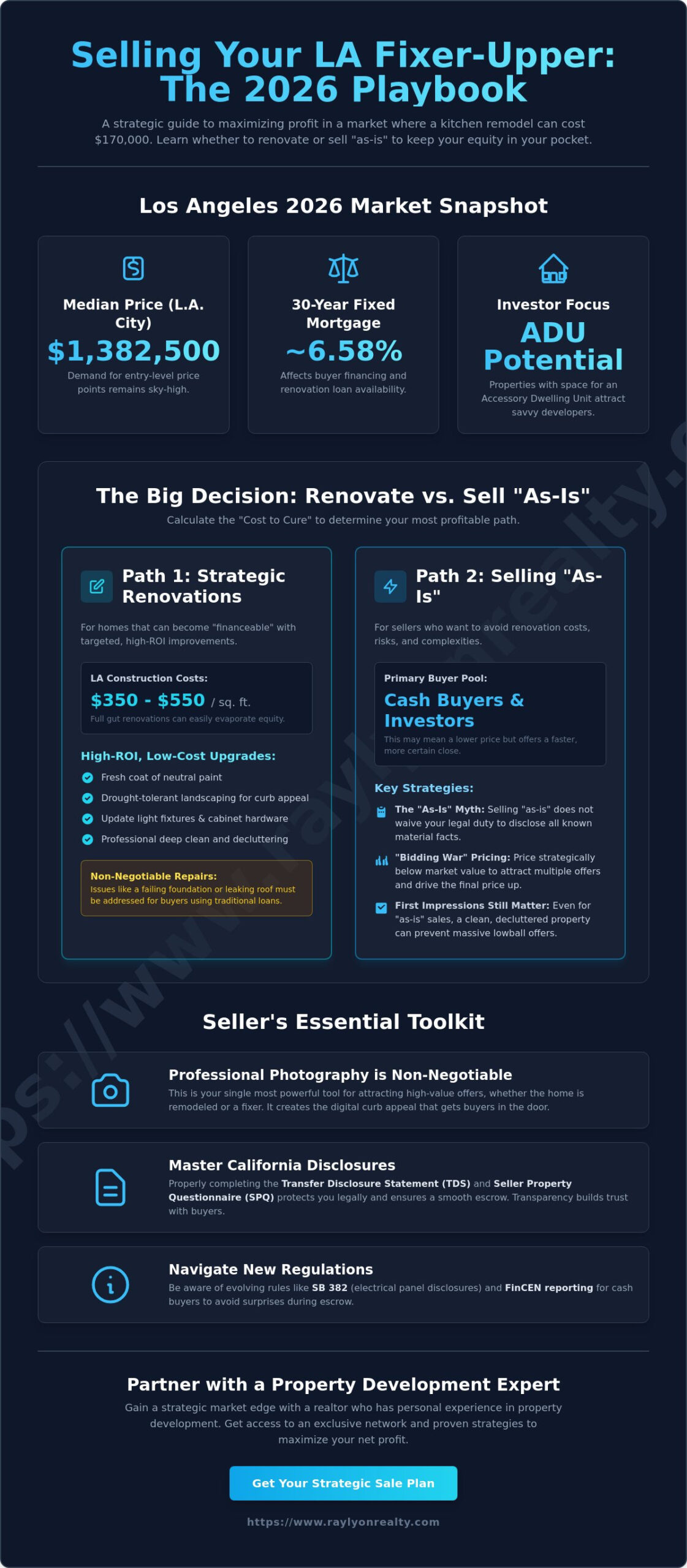
In the high-stakes world of Los Angeles real estate, the term “fixer-upper” is relative. On the Westside, you aren’t usually looking at a crumbling shack. Instead, you’re often dealing with a mid-century original that hasn’t been touched since the 1970s. Selling a fixer-upper in los angeles in 2026 requires a different mindset because the “entry-level” buyer is now someone looking at a million-dollar-plus price tag. With median prices in the City of Los Angeles hitting $1,382,500 as of April 2026, many families are priced out of turnkey homes. This creates a massive opportunity for sellers. These retail buyers are hunting for “sweat equity,” willing to take on cosmetic projects to get into a desirable neighborhood. They aren’t just looking for a deal; they’re looking for a way into the market.
To better understand what a typical LA renovation project looks like on the ground, watch this helpful video:
Westside LA Nuances: Santa Monica vs. Mar Vista
In Santa Monica, a “fixer” is often just a placeholder for a lot worth millions. Buyers there often plan to scrape the site for new construction. However, in Mar Vista, Los Angeles, the “bones” of the house matter more. Buyers here value the character of the original structure and look for homes where they can add value without a total teardown. A well-priced Mar Vista fixer can actually sell faster than a luxury renovation because it hits that sweet spot of affordability for young professionals. They want a house with good bones but dated cosmetics, allowing them to customize the space over time.
The 2026 Investor Landscape
The 2026 investor landscape is savvy and focused on utility. While 30-year fixed mortgage rates average around 6.58% as of May 2026, professional flippers and local developers are still active. They’re specifically hunting for properties with ADU (Accessory Dwelling Unit) potential to maximize future rental yields. When you list your property, you’ll likely see the legal definition of ‘as-is’ come up in negotiations. Institutional flippers look for high margins, while local developers might be more flexible if the property has unique expansion opportunities. Inventory remains tight, so even a distressed property can spark a bidding war if the potential for growth is clear.
The Big Decision: Selling “As-Is” vs. Strategic Renovations
Deciding whether to pick up a hammer or just hand over the keys is the most critical choice you’ll make. In Los Angeles, where standard-grade construction costs now range from $350 to $550 per square foot, a full gut renovation can quickly evaporate your equity. You have to calculate the “Cost to Cure” against the potential price bump. If a $50,000 renovation only adds $40,000 in value, you’re essentially paying $10,000 for the privilege of doing hard labor. However, some major repairs like a failing foundation or a leaking roof are non-negotiable for buyers using traditional 30-year fixed loans. If your home isn’t “financeable,” you’re restricted to cash buyers, which often means accepting a lower price point.
I always look at the psychological impact of a property’s condition. Even when selling a fixer-upper in los angeles, first impressions are the “handshake” of the house. A buyer might be willing to overlook a dated kitchen if the front yard looks inviting and the interior feels cared for. I help my clients identify the “tipping point” where a small investment prevents a massive low-ball offer. It’s about being strategic rather than exhaustive. You don’t need a designer showroom; you need a house that feels like a safe opportunity.
High-ROI Minor Upgrades for LA Sellers
Low-cost, high-impact changes are your best friend. A fresh coat of neutral paint can transform a “dingy” house into a “blank canvas” for a new family. In our climate, simple drought-tolerant landscaping adds massive curb appeal without the high water bills. Don’t underestimate the power of updating light fixtures and cabinet hardware. These small touches provide a modernized feel that suggests the home has been maintained. Most importantly, a deep professional clean and total decluttering are the cheapest ways to add perceived value. A clean house always feels more structurally sound than a messy one.
When to Walk Away: The Case for “As-Is”
Sometimes, the math simply doesn’t work in your favor. If you’re facing significant structural damage, systemic plumbing failures, or a maze of unpermitted additions, trying to fix them can open a “Pandora’s box” of city inspections and delays. In these scenarios, selling “as-is” to an investor or a developer is often the wisest path. It offers speed, certainty, and a clean break without repair contingencies. Just keep in mind that “as-is” isn’t a legal shield against transparency. You are still legally bound to follow California’s official disclosure requirements. Being upfront about defects protects you from post-sale legal headaches. If you’re feeling overwhelmed by these choices, consulting an experienced investment property agent can help you weigh the pros and cons of each path.
Pricing and Marketing Your Distressed Property for Maximum Reach
Pricing a distressed home is a psychological game. In a market where 34.0% of sales were over list price as of March 2026, the “Bidding War” strategy is your most powerful tool. By pricing your property slightly below its current market value, you create a sense of urgency. This drives a high volume of foot traffic through the door during that crucial first weekend. When multiple buyers compete, they often bid the price up beyond what they would’ve offered in a stagnant negotiation. It’s about creating a “fear of missing out” that motivates buyers to look past the peeling paint and dated carpets.
Don’t make the mistake of thinking professional photography is only for luxury estates. Even when selling a fixer-upper in los angeles, high-quality images are mandatory. Buyers scroll through hundreds of listings on their phones; a dark, blurry photo of a cluttered room will make them swipe left immediately. Your marketing needs to tell a story. You aren’t just selling a dated house; you’re selling the lifestyle of a specific neighborhood and the potential for a custom dream home. Use your listing description to highlight the “neighborhood lifestyle” and the unique character of the area, making the project feel like a rewarding journey rather than a chore.
The Art of the “Fixer” Listing
Transparency is your best legal and marketing defense. Be honest about the “needs work” aspect, but pivot quickly to the property’s hidden gems. Does the lot have R2 zoning? Is there a view of the hills or enough room for a substantial ADU? Use architectural renderings or virtual staging to help buyers visualize the “after.” Seeing a digital version of a modern open-concept kitchen next to the photo of the current 1960s galley kitchen bridges the gap between reality and possibility. It turns a “problem” into a “project” and helps buyers justify the investment.
Targeting the Right Buyer Pool
The buyer for a fixer-upper isn’t always a professional developer. Many first-time buyers use these properties as their only entry point into competitive Westside neighborhoods. To reach the most qualified audience, you need to leverage the networks of real estate agents in Los Angeles CA who specialize in investment opportunities. These professionals often have access to “coming soon” lists and off-market networks where serious buyers congregate. Social media is also a goldmine for finding the “DIY” enthusiast who’s looking for a home they can personalize. By casting a wide net across both traditional and digital platforms, you ensure your property gets the eyes it deserves.
Navigating California Disclosure Laws and the “As-Is” Myth
Many sellers mistakenly believe that checking the “As-Is” box on a contract acts as a legal shield. In reality, selling a fixer-upper in los angeles requires more transparency, not less. California law is strict: you must disclose every known material defect that could affect the property’s value or desirability. This is primarily handled through the Transfer Disclosure Statement (TDS) and the Seller Property Questionnaire (SPQ). In 2026, you also need to be aware of SB 382, which mandates specific disclosures about your home’s electrical system and any local requirements for gas appliance replacement. Skipping these details doesn’t just jeopardize your escrow; it leaves you vulnerable to lawsuits long after the moving trucks have left.
I often suggest a pre-listing inspection to my clients. It might seem counterintuitive to pay for an inspection when you already know the house has issues. However, knowing exactly what a buyer’s inspector will find allows us to price the home accurately and disclose everything upfront. This strategy prevents the “second negotiation” that often happens mid-escrow when a buyer tries to claw back money for newly discovered defects. If you’re selling to an LLC or a trust, remember that new FinCEN reporting rules effective March 1, 2026, add another layer of paperwork to cash transactions. Staying ahead of these requirements ensures your deal stays on track.
The Importance of Transparency
Full transparency builds a bridge of trust with savvy Westside buyers who are often looking for reasons to walk away. Unpermitted work is a common “hidden trap” in older LA homes. Whether it’s a converted garage or an unpermitted bathroom, disclosing these facts early prevents a deal from collapsing during the appraisal or loan approval process. Being upfront shows you’re a serious, honest seller. Industry experts consistently report that undisclosed water intrusion or structural issues are leading causes of post-sale real estate litigation. By revealing these issues now, you protect your profit later.
Managing Inspections and Credits
When the buyer’s inspection report inevitably comes back with a long list of grievances, don’t panic. Retail buyers often submit a Request for Repairs (RFR) as a starting point for negotiation. Instead of opening your walls for construction, we often use a “Credit in Lieu of Repair” strategy. This keeps the escrow moving by offering the buyer a specific dollar amount at closing to handle the fixes themselves. It protects your timeline and ensures you aren’t responsible for the quality of the repairs after the sale. If you want to ensure your disclosures are airtight, partner with a professional listing agent who understands the legal nuances of the LA market.
Why Ray Lyon Realty is Your Best Asset for a Fixer-Upper Sale
When you’re selling a fixer-upper in los angeles, you need more than just a sign in the yard and a listing on the MLS. You need a partner who has actually swung the hammer and managed the budgets. I’ve spent years in property development and flipping for profit, which means I see your home through the eyes of both a builder and a broker. I don’t just guess what a repair will cost or what a buyer will think; I know because I’ve been in those trenches myself. This personal history is the foundation of Ray Lyon Realty. It allows us to provide a strategic edge that most traditional agents simply can’t match.
Our deep roots in Westside neighborhoods like Santa Monica give us a granular understanding of local buyer behavior. We know which streets command a premium and which blocks are primed for the next wave of development. To help you cross the finish line, we provide access to a vetted network of contractors, stagers, and specialists. These are the same professionals I trust for my own projects. They understand how to prioritize the high-impact work that maximizes your net profit without blowing your timeline.
The Concierge Approach to Distressed Sales
We take a concierge approach to every distressed sale to ensure no equity is left on the table. We can coordinate minor, high-impact upgrades that transform the property’s appeal without requiring upfront costs from you. If speed is your main priority, we leverage our “Investor-First” network. This is a private group of local developers and cash buyers ready to make quick, off-market offers. Because I understand the “flip math” these buyers use, I negotiate from a position of strength. I’ll ensure you don’t get lowballed by savvy flippers who are looking to squeeze every penny out of your home’s potential.
Next Steps: Get Your Custom Property Strategy
Don’t rely on an automated “Zestimate” to determine the value of a complex asset. Those algorithms can’t see the ADU potential or the unique structural character of your home. We perform a “highest and best use” analysis to determine if your property is more valuable as a renovation project or a new construction site. This data-driven approach ensures we target the right buyer pool from day one. When you’re ready to see what’s possible, schedule your free fixer-upper strategy session with Ray Lyon. Let’s create a custom plan that turns your property’s challenges into a successful, high-profit closing.
Secure Your Equity and Simplify Your Sale
Success in the 2026 market comes down to knowing which repairs will actually move the needle and ensuring your legal disclosures are airtight. As we’ve explored, the right combination of strategic minor updates and a competitive “bidding war” price point can help you outperform the competition. You don’t need to be a construction expert to win; you just need a clear roadmap and the right team by your side.
Selling a fixer-upper in los angeles doesn’t have to be a source of constant stress. My personal background in property development and flipping gives you a distinct advantage when it’s time to negotiate with savvy investors. I’ll leverage my exclusive network of Westside contractors and my proven track record in Santa Monica and Mar Vista to protect your interests every step of the way. We’ll ensure your home’s “highest and best use” is realized, turning a complex asset into a significant financial win.
Ready to see what your home is truly worth in today’s landscape? Get a Professional Valuation for Your LA Fixer-Upper and take the first step toward a smooth, profitable escrow. You’ve done the hard work of holding the asset; now let’s make sure you get the reward you deserve.
Frequently Asked Questions
Can I sell a house in Los Angeles that is in poor condition?
Yes, you can absolutely sell a home in any condition. In the 2026 market, inventory remains tight and buyers are actively seeking entry-level price points to gain a foothold in the city. Selling a fixer-upper in los angeles is often faster than selling a luxury home because the pool of “sweat equity” buyers and investors is much larger. You just need to price it correctly to reflect the work needed.
Does “As-Is” mean I don’t have to fix anything before closing?
While “As-Is” means you aren’t contractually obligated to perform repairs, it doesn’t waive your legal duty to disclose defects. You must still provide a Transfer Disclosure Statement (TDS) and comply with new 2026 laws like SB 382 regarding electrical systems. If a buyer’s lender requires certain repairs for safety, you may still face a choice: fix the issue or lose the buyer to a cash investor.
How much do flippers usually pay for houses in LA?
Professional investors typically calculate their offers based on the “After Repair Value” minus renovation costs and their desired profit margin. Because standard construction costs in Los Angeles have reached $350 to $550 per square foot in 2026, these offers will be lower than the price of a turnkey home. They are paying for the convenience of a cash close and the risk they take on during the renovation.
Should I do a kitchen remodel before selling my fixer-upper?
A full kitchen remodel is rarely advisable for a fixer-upper because the costs in 2026 range from $35,000 to $170,000. You are unlikely to recoup every dollar spent on a major renovation in a distressed sale. Instead, focus on minor “cosmetic” wins like fresh paint or deep cleaning. These low-cost efforts improve first impressions without the massive financial risk of a gut remodel that a buyer might tear out anyway.
How do I find out if my renovations require permits in LA?
You should consult the Los Angeles Department of Building and Safety (LADBS) to verify permit requirements for any structural, electrical, or plumbing work. In the City of Los Angeles, even minor-sounding changes often require official oversight. If you have already performed unpermitted work, it’s vital to disclose this to potential buyers to avoid legal complications or “deal-killer” discoveries during the home inspection or appraisal process.
What are the most important disclosures when selling a fixer in California?
The most critical documents are the Transfer Disclosure Statement (TDS) and the Seller Property Questionnaire (SPQ). As of January 1, 2026, you must also provide specific disclosures about the electrical system and any local mandates for gas appliance replacement. If you’ve used digitally altered photos to show “potential” in your listing, California law now requires you to disclose those alterations to every prospective buyer who views the property.
Is it better to sell to an investor or on the open market in Westside LA?
Selling to an investor offers speed and certainty, but the open market often yields a higher net profit. Many retail buyers in Westside neighborhoods are willing to pay a premium for the chance to build “sweat equity.” When selling a fixer-upper in los angeles, we analyze your specific timeline and financial goals to determine which buyer pool will provide the most favorable outcome for your specific property and situation.
How long does it take to sell a distressed property in Santa Monica?
Distressed properties in high-demand areas like Santa Monica often sell faster than the county-wide median of 32 days. While the overall Los Angeles market has seen a 4% year-over-year decrease in sales as of May 2026, the Westside remains a micro-market with intense competition. A well-priced fixer-upper in a prime coastal zip code can attract multiple cash offers within the first week of hitting the market.