
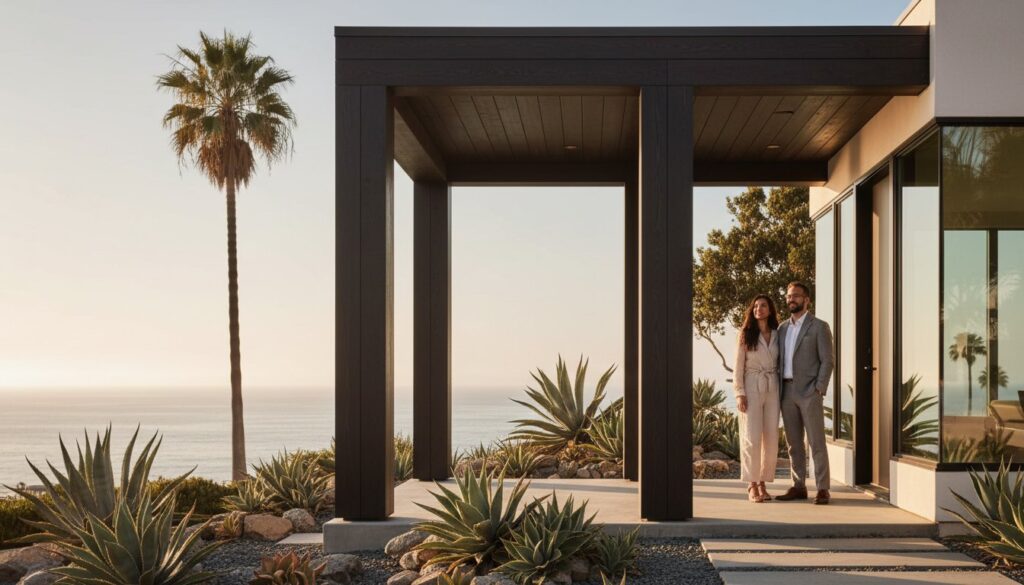
Last Tuesday, a homeowner in Pacific Palisades watched a $3.2 million deal nearly stall because a home inspector poked a screwdriver straight through a rotted porch column. It’s a common frustration in our coastal climate where salt air and damp mornings can turn solid wood into a liability. Supporting posts: are often the most overlooked part of a Westside property, yet they serve as both the literal backbone of your porch and the first thing a buyer sees from the curb. You likely agree that curb appeal is the ultimate “lipstick” for a listing, but it’s hard to feel confident when you aren’t sure if a post is purely decorative or holding up your entire roof.
This guide will help you navigate the difference between aesthetic upgrades and essential structural repairs so you can avoid those stressful 11th hour inspection surprises. We’ll show you how to choose materials that withstand the 65% average humidity of coastal LA while matching your home’s unique architectural style. By the time you finish reading, you’ll have the strategic knowledge to turn these functional elements into a high-end design feature that drives top-dollar offers and secures a much better appraisal.
Key Takeaways
- Learn to distinguish between load-bearing supporting posts: and purely aesthetic pillars to ensure your home remains structurally sound during renovations.
- Discover how a minor repair to supporting posts: can protect a $1.5M deal by eliminating the “red flags” that cause buyers to worry during the escrow process.
- Supporting posts: find out which materials hold up best against the California sun and salt air to maximize your exterior’s long-term ROI.
- Master Ray’s “lipstick on a house” strategy to focus your budget on high-impact details, like updated supporting posts: that drive competitive, top-dollar offers.
- Get an insider’s look at how professional flippers evaluate the structural charm of supporting posts: to help your property stand out in the competitive Westside LA market.
What are Supporting Posts and Why Do They Matter for Your Home?
A supporting post is the vertical member that transfers weight from a porch roof to the foundation. While that definition sounds purely functional, these elements are the unsung heroes of residential architecture. Supporting posts: serve a vital dual role by providing the necessary strength to hold up heavy roof structures while simultaneously framing your home’s entryway. In high-stakes markets like Santa Monica and Pacific Palisades, these features act as architectural anchors that define the character of a property.
Think of these supports as the bones of your home’s “face.” A structural post must be engineered to handle specific compression loads, ensuring your porch doesn’t sag or collapse over time. Beyond safety, they provide the vertical lines that draw a visitor’s eye toward the front door. Because they sit at the very front of the lot, they’re often the first thing a neighbor or a buyer notices from the sidewalk.
To better understand how these components function and how to spot potential issues, watch this helpful video from the experts at This Old House:
The Anatomy of a Porch Post
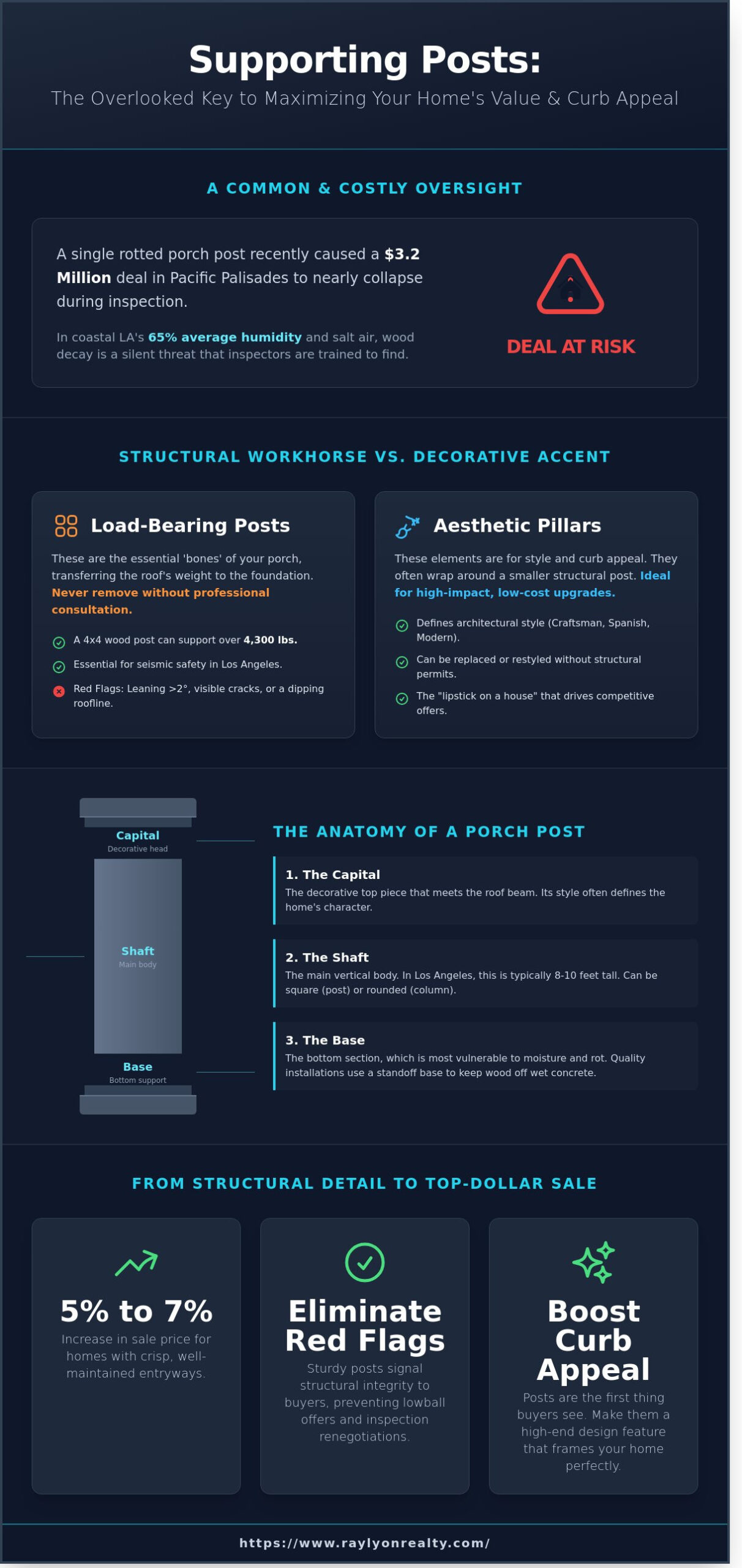
Every post consists of three primary parts: the base, the shaft, and the capital. The base sits at the bottom and often includes a standoff base to keep the wood from touching wet concrete. The shaft is the long vertical body, typically standing 8 to 10 feet tall in standard Los Angeles builds. The capital is the decorative head that meets the beam above. While people use the terms interchangeably, a post is generally square and utilitarian, whereas a column follows specific classical proportions and is often rounded.
First Impressions: The Real Estate Perspective
Supporting posts: carry immense weight in the world of Westside real estate. When a buyer pulls up to a curb, sturdy and well-maintained supports signal that the homeowner cares about structural integrity. If a post looks weathered or shows signs of “deferred maintenance” at the base, it triggers a psychological red flag that the rest of the house might have hidden issues. We’ve seen that homes with crisp, updated entryways often sell for 5% to 7% more than those with visible exterior wear. Strategic Seller Representation involves identifying these small structural details to ensure your home hits the market with maximum impact and a premium price tag.
Structural vs. Decorative: Identifying the Right Support Posts
Before you grab a sledgehammer to open up your porch, you need to know exactly what those Supporting posts: are doing. In Los Angeles, where seismic safety is a 100% priority, guessing can lead to a 5-figure repair bill if your roof starts to sag. Identifying the difference between a load-bearing column and a purely aesthetic one is the first step in any curb appeal project. It’s the difference between a simple weekend DIY and a complex permitted construction job.
Architecture in neighborhoods like Silver Lake or Hancock Park often dictates the post style. Craftsman homes typically feature tapered wood columns on stone pedestals. Spanish Colonial homes often use thick, stucco-wrapped supports. Modern builds lean toward slim, high-strength steel. If you aren’t sure what you’re looking at, consult a pro to evaluate structural vs. decorative columns before making changes. Removing a structural element without temporary shoring can cause immediate ceiling cracks or window alignment issues throughout the front of the house.
Load-Bearing Posts: Safety First
Structural posts are the workhorses of your home. A standard 4×4 pressure-treated wood post can often support over 4,300 pounds, provided it’s under 8 feet tall. Steel posts handle significantly more weight and are common in modern LA renovations. Look for signs of trouble like 1/4-inch wide cracks at the base, leaning more than 2 degrees, or a roofline that dips visibly. A buyer’s inspector will flag these issues 9 out of 10 times during escrow, so fixing them now protects your equity. If you’re curious about your home’s current market position, you can always check your home’s value with our team.
Decorative Wraps and Non-Structural Options
Sometimes a post is structurally sound but visually dated. This is where we talk about putting “lipstick” on the problem to maximize your return. If you have a boring 4×4 post, you don’t always need a full replacement. Decorative wraps made of polyurethane or PVC provide the look of a custom Craftsman pillar without the $2,500 price tag of solid mahogany. These materials resist the rot that affects 30% of older wood posts in humid coastal pockets like Santa Monica. Using a wrap allows you to upgrade the Supporting posts: while keeping the original structural core intact. It’s a strategic way to boost curb appeal without the permit headaches of a major structural overhaul.
The Real Cost of Neglecting Porch Posts During a Home Sale
Imagine losing a $1.5 million deal over a $500 repair. It happens more often than you think in the competitive Los Angeles market. When a buyer walks up to your front door, they’re looking for reasons to say no. Peeling paint or a visible crack at the base of your porch creates a “Red Flag” effect. This small sign of neglect suggests that if you didn’t take care of the visible parts of the house, the hidden systems like plumbing and electrical are likely failing too. Supporting posts: they act as a visual shorthand for the overall health of your property.
- First Impressions: Savvy buyers know that “cosmetic” fixes often hide structural rot.
- Negotiation Leverage: A $500 pre-listing fix prevents a buyer from asking for a $5,000 credit during escrow.
- Psychological Safety: Solid posts signal a home that has been loved and professionally maintained.
The Escrow Killer: Dry Rot and Termites
Coastal humidity in neighborhoods like Santa Monica and Pacific Palisades makes wood posts especially vulnerable to moisture. During the inspection period, pros will use a metal probe to check for “soft spots” where the wood meets the deck or concrete. If the wood is soft, you’re looking at a termite or dry rot report that could scare off nervous first-time buyers. Replacing a damaged post before the first open house is the smartest move you can make to keep your escrow timeline on track. It’s much cheaper to hire a contractor on your own terms than to pay for a rush job required by a buyer’s lender.
Appraisal and Loan Contingencies
Structural issues can directly impact a buyer’s ability to secure a loan. If an appraiser flags a porch post as a safety hazard or a sign of structural instability, the lender may refuse to fund the loan until the repair is certified. This delay can kill a deal in a shifting market where every day counts. The return on investment for porch posts is significant when you realize they protect your total appraisal value. For those looking to flip or manage Investment Properties, ensuring your supporting posts: are in top shape is a non-negotiable step for maximizing ROI. A sturdy front porch is the “lipstick” that actually has some muscle behind it.
Choosing and Maintaining Supporting Posts for Maximum ROI
Selecting the right materials for Supporting posts: can make the difference between a high-value sale and a headache during the inspection period. While traditional wood offers undeniable warmth, it demands a rigorous maintenance cycle every 24 months in the intense Southern California sun. Fiberglass options provide incredible strength, often rated for over 15,000 pounds of axial load, while resisting the expansion and contraction that causes paint to flake on natural timber. For a Mar Vista bungalow, an 8×8 rough-sawn cedar post preserves that historic Craftsman charm. Conversely, a sleek Santa Monica condo benefits from the clean lines of square fiberglass columns that won’t pit or corrode in the salty morning mist.
The goal is to match the posts to your home’s unique character. Whether you’re aiming for rustic charm or a grand, timeless estate feel, looking at well-designed properties can provide a wealth of inspiration. For instance, premier event venues often showcase exceptional architectural details and curb appeal; you can find out more by exploring examples of their design choices.
- Wood: Best for authenticity; requires sealing every 2 years.
- Fiberglass: Best for structural loads; virtually maintenance-free.
- Polyurethane: Best for decorative upgrades; impervious to moisture.
The Case for Polyurethane in Coastal LA
Westside homeowners are moving toward “set it and forget it” materials to combat the 70% average humidity found near the coast. Polyurethane posts are a savvy choice because they are completely impervious to the Formosan termites that cause millions in local property damage annually. These synthetics don’t warp or twist when temperatures shift 20 degrees between day and night. High-end manufacturers now use molds from real timber, ensuring your Supporting posts: mimic the grain of Douglas Fir so closely that buyers can’t tell the difference from the curb.
Installation Best Practices
Proper installation prevents the “deferred maintenance” red flags that kill deals. Never let a wood post sit directly on concrete. Use a galvanized steel standoff base to keep the material at least 1 inch above the surface, allowing for drainage. This simple 15 dollar part can extend the life of your post by a decade. If you are simply replacing a decorative porch wrap, it is a manageable weekend project. However, if the post holds the weight of a second-story balcony, hire a licensed contractor. A structural error can slash your home’s market value by 12% or more during a professional appraisal.
Ready to maximize your home’s value before hitting the market? Contact Ray Lyon Realty to get a professional assessment of your property’s competitive advantage.
How Ray Lyon Realty Evaluates Your Home’s Structural Charm
Ray Lyon doesn’t just look at the paint colors. He looks at the bones. With over 15 years of experience flipping properties and managing 10 plus custom home builds, Ray brings a contractor’s eye to every listing. He knows that Supporting posts: are often the difference between a smooth escrow and a deal-killing inspection report. We don’t believe in just “putting lipstick on a house” without addressing what’s underneath. Our philosophy is simple: we help you invest in structural repairs that offer a 2x return on investment while saving you from over-spending on purely cosmetic upgrades that buyers might change anyway.
When a structural issue arises, we don’t scramble. We tap into a vetted network of local contractors who specialize in Los Angeles foundations and porch reconstructions. These professionals often provide quotes within 24 hours; this ensures that a wobbly post doesn’t stall your momentum. We then position these upgrades as a premium “peace of mind” feature in our marketing materials. We show buyers that the home is as solid as it is beautiful, turning a potential liability into a verified selling point.
The Block-to-Block Knowledge Advantage
Los Angeles isn’t a monolith. A buyer in Eagle Rock looks for different structural cues than one in Santa Monica. Ray uses his block-to-block knowledge to identify which architectural details, like tapered craftsman columns or minimalist steel Supporting posts:, will drive the highest bids in your specific zip code. This expertise also allows us to find off-market opportunities. We look for homes with “bad posts” but “great bones,” helping our clients secure properties that others overlook because they’re afraid of a little heavy lifting. Ray’s personal experience with property management since 2008 means he knows exactly which “bones” are worth the investment.
Ready to Maximize Your Sale Price?
Selling a home is stressful, but it doesn’t have to be. We guide our sellers through a detailed prep process designed to trigger multiple offers. Our team handles the nitty-gritty details, from coordinating structural inspections to managing the final staging. Our clients trust us because we’ve been in their shoes, building, buying, and selling our own investments for over a decade. If you want a partner who knows the difference between a cosmetic fix and a structural necessity, let’s talk. Get a professional evaluation of your home’s value and see how we can elevate your property’s potential today.
Secure Your Westside Investment for the Long Term
Your home’s structural health shouldn’t be a guessing game. Whether you own a 1920s bungalow in Santa Monica or a contemporary build in Venice, specific architectural elements define your property’s market value. Supporting posts: these serve as the literal backbone of your home’s porch and roofline. Ignoring a single instance of wood rot can result in a $5,000 repair credit during the escrow process. I’ve navigated these exact challenges while building my own home and flipping properties throughout Los Angeles. You need an advocate who knows the difference between a simple “lipstick” update and a necessary structural repair. My team provides block-to-block knowledge of the Westside market along with a trusted network of expert contractors. We specialize in identifying off-market opportunities and maximizing ROI for every client we represent. It’s time to ensure your property stands out for both its beauty and its bones. Contact Ray Lyon Realty to see how we can maximize your home’s value. We’re ready to help you move forward with total confidence and peace of mind.
Frequently Asked Questions
How can I tell if my porch post is load-bearing?
You can identify a load-bearing post by checking if it supports a horizontal beam or the roof structure directly above it. In Los Angeles homes built before 1960, 95% of these vertical elements are structural rather than decorative. If you see a beam resting on the post or if the post continues into the foundation, it’s definitely holding weight. Removing one without temporary shoring could lead to a ceiling collapse within minutes.
What is the best material for supporting posts in a coastal environment?
Fiberglass or pressure-treated wood rated for Ground Contact (UC4A) are the most durable supporting posts: for homes within 3 miles of the Pacific Ocean. Salt air in Santa Monica or Venice can corrode standard metal fasteners in under 24 months. Using fiberglass prevents the rot and rust that typically affects 60% of coastal wooden structures. These materials withstand the high moisture levels while maintaining their structural integrity for decades.
Do I need a permit to replace my front porch posts in Los Angeles?
Yes, the Los Angeles Department of Building and Safety (LADBS) requires a permit for replacing load-bearing supporting posts: because they’re vital to your home’s structural frame. As of 2024, a standard “Express Permit” for minor structural repairs costs approximately $250. Skipping this step can complicate your home sale later. I’ve seen deals stall during the 10 day inspection period because of unpermitted structural work that didn’t meet current seismic codes.
How much does it typically cost to replace a supporting post?
Homeowners should budget between $1,500 and $3,500 per post for professional replacement in the Southern California market. This price includes roughly $500 for high-quality materials and $1,000 to $3,000 for specialized labor and temporary structural support. Costs can fluctuate by 20% depending on whether you choose simple square timber or custom turned columns. It’s a small price to pay to avoid the “deferred maintenance” label during an appraisal.
Can I just wrap my old wooden posts instead of replacing them?
You can wrap a post only if a licensed inspector confirms the internal wood has 0% rot or termite damage. Many homeowners use PVC or composite wraps to add “lipstick” to their exterior, but hiding decay is dangerous. A 2023 report from the American Wood Council found that trapping moisture behind a wrap can accelerate internal rot by 40%. If the core is soft, you’re just masking a structural failure.
Will new porch posts actually increase my home’s appraisal value?
High-quality porch upgrades often provide a return on investment of 80% or more. According to the 2024 Cost vs. Value report, curb appeal improvements can add $12,000 to a median-priced LA home’s valuation. Buyers make a decision within the first 30 seconds of arriving at a property. Sturdy, attractive posts signal that the home is well-maintained, which helps us secure multiple offers and a higher final sale price.
Of course, posts are just one part of the equation. A pristine lawn creates an equally powerful first impression. Homeowners looking for a dramatic and fast improvement can explore Sod Installation, which provides an immediate boost to a property’s visual appeal.
How do I identify termite damage in my supporting posts?
Look for tiny “kick-out” holes or mud tubes at the base where the wood meets the concrete. Drywood termites cause $5 billion in annual property damage across the United States, and they love the soft grain of older porch wood. Try the “screwdriver test” on the bottom 6 inches of the post. If you can push the tip 0.5 inches into the wood with minimal pressure, you have an active infestation.
What is the difference between a porch post and a newel post?
A porch post is a tall vertical member that supports the weight of a roof, while a newel post is a shorter anchor for a staircase railing. Standard porch posts in California are usually 8 to 10 feet tall to accommodate high ceilings. In contrast, a newel post rarely exceeds 42 inches in height to meet local safety codes. While both impact your home’s style, only the porch post is critical for holding up the roof.